Savings targets can feel either impossible or vague without a clear framework. A more realistic approach is to build savings in practical layers—stability, resilience, and freedom—then match those layers to your current life stage. That way, progress stays measurable even when income changes, family needs shift, or goals evolve.
Think of savings like stacking blocks in a specific order. Each layer has a job, and the earlier layers make the later ones stronger.
A solid plan builds layers in order: stabilize cash flow, then protect against shocks, then grow long-term options.
Before choosing any “months of savings” target, define what a month actually costs when you strip life down to essentials.
| Layer | Goal | Typical target | Where to keep it |
|---|---|---|---|
| Stability | Prevent overdrafts and stress between paydays | 1 month of essentials | High-yield savings or checking buffer |
| Resilience | Cover job loss, medical costs, urgent home/car needs | 3–6 months of essentials (more if risk is higher) | High-yield savings / money market |
| Freedom | Build long-term options and major-goal funding | Investable assets beyond reserves | Retirement accounts + diversified brokerage |
Emergency savings is not a one-size-fits-all number. It’s a risk decision based on income stability, fixed costs, dependents, and how quickly you could replace income.
If high-interest debt is in the picture, a practical compromise is keeping a starter emergency buffer (often one month of essentials) while paying down the most expensive balances aggressively—then rebuilding to the full emergency target once the interest rate pressure is lower.
Life stages aren’t rules; they’re common patterns. Use them as starting points, then adjust for real-world variables like job security, housing costs, and caregiving responsibilities.
| Life stage | Stability target | Resilience target | Freedom focus |
|---|---|---|---|
| 18–24 | 1 month essentials | 1–3 months essentials | Start investing small; build habits |
| 25–34 | 1 month essentials | 3–6 months essentials | Retirement contributions + goal funds |
| 35–44 | 1–2 months essentials | 6+ months essentials | Balance retirement, kids, housing |
| 45–54 | 1–2 months essentials | 6–12 months essentials (risk-dependent) | Accelerate retirement; simplify debt |
| 55+ | 2 months essentials | 6–12 months essentials + cash runway | Withdrawal planning and downside protection |
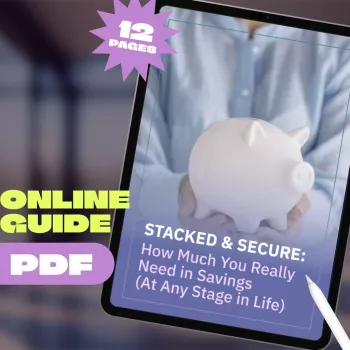
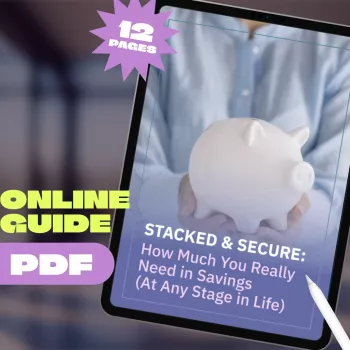
If you want a structured, step-by-step tool, see Stacked & Secure: How Much You Really Need in Savings (At Any Stage in Life) – Digital Guide. For shoppers focused on controlling discretionary spending while they build reserves, the No-Buy Year Wardrobe Discipline Toolkit | 3-in-1 Digital Bundle for Fashion Enthusiasts can help reinforce rules and reduce impulse buys so cash flow can stack in your favor.
For practical guidance on emergency savings, visit the Consumer Financial Protection Bureau. To understand deposit protection, review the FDIC’s deposit insurance basics. For retirement account rules and plan details, the IRS retirement plans hub is a reliable starting point.
For many households, 3–6 months of essential expenses is a strong default. If your job is very stable and you have dual income and low fixed costs, 1–3 months may be workable; if income is variable, you’re self-employed, or you carry higher risk, 9–12 months can be the safer target.
Build a starter emergency buffer first so you don’t rely on credit for surprises, then prioritize high-interest debt payoff while keeping that buffer intact. Once costly debt is under control, rebuild the emergency fund toward your full target.
Keep emergency savings somewhere safe and accessible, such as an FDIC- or NCUA-insured high-yield savings account or money market account. Long-term goals generally belong in investment accounts, not in volatile assets that could drop right when you need cash.






Leave a comment