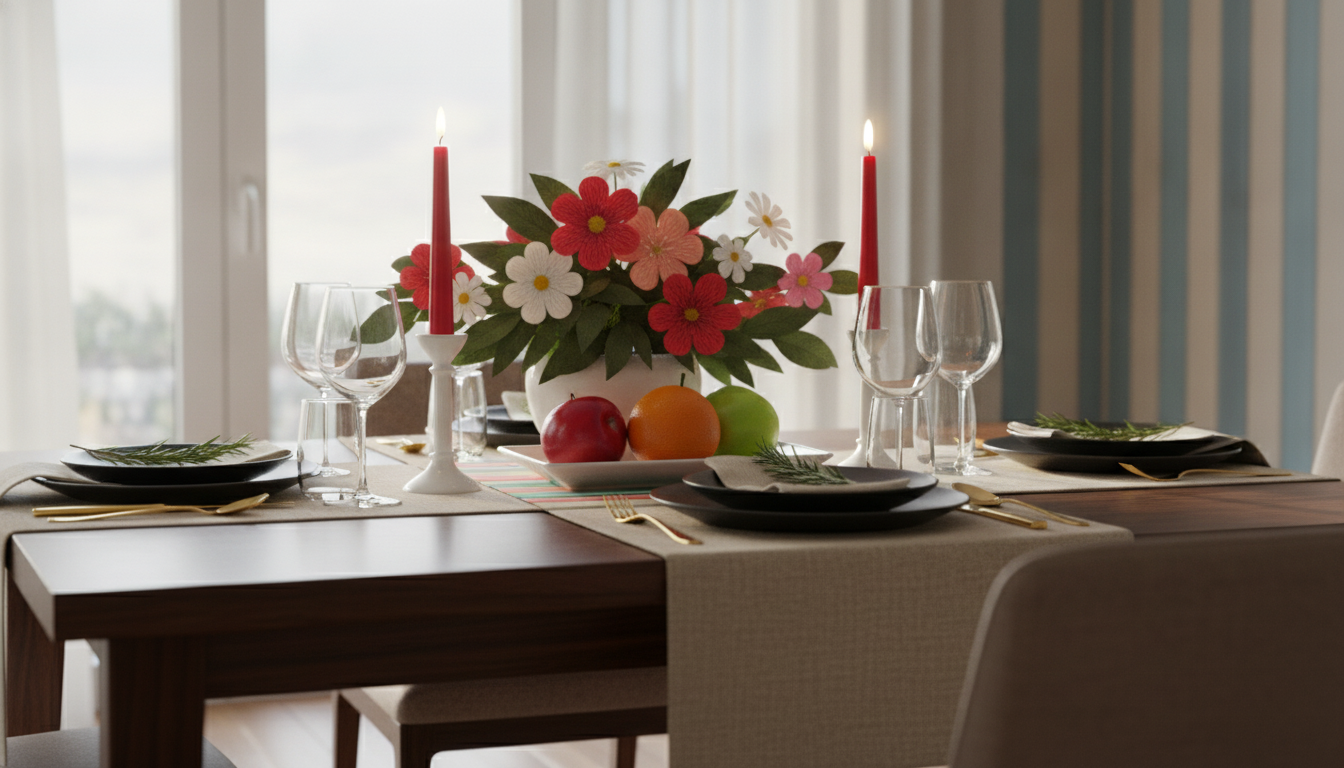
A polished dining table comes from a few repeatable choices—scale, layering, and a clear focal point—rather than buying more decor. A simple checklist helps you build an everyday table that still feels elevated, then swap a few elements to match the season, the menu, or the occasion without starting from scratch. For more guidance, see Dining Table Decor Ideas for Everyday – Maison de Cinq.
Before picking a runner or centerpiece, decide how the table needs to function. Measure length and width, then choose what portion stays clear for serving and passing dishes. A reliable rule is to keep the center pathway usable for hands and platters—especially on weeknights when the table does real work. For further reading, see Everyday Dining Table Decor Ideas – Classic Casual Home.
Keep tall decor low enough for conversation. If you love height, use one “statement height” moment only (like a single vase or a pair of taper candles), and place it so it doesn’t block face-to-face sightlines. Long rectangular tables usually look best with linear styling—runners, garlands, or grouped trios—while round tables shine with one centered cluster that feels intentional from every seat.
Finally, consider chair clearance. If decor forces plates to the edge or gets bumped by elbows during seating, it will feel fussy instead of elegant. A beautiful table should be comfortable to sit at.
Your foundation sets the tone faster than any centerpiece. Bare wood leans modern and minimal; it looks best when you add warmth through texture—think woven placemats, a ceramic bowl, or linen napkins. A runner is the most flexible everyday option because it centers the design and makes seasonal swaps quick (change the runner and one accent color, keep the rest). A full tablecloth instantly reads formal, so pair it with simpler center decor to avoid visual clutter.
Texture matters as much as color. Linen feels relaxed and elevated; cotton reads classic; jute or seagrass adds casual warmth; woven vinyl can look crisp and modern while being easy to wipe clean.
A centerpiece looks “designed” when it’s built in layers instead of scattered. Use this formula as a repeatable blueprint:
| Season | Foundation | Centerpiece Formula | Accent Color Ideas |
|---|---|---|---|
| Spring | Light linen runner | Low tray + bud vases + fresh greenery | Soft green, blush, pale yellow |
| Summer | Bare wood or woven runner | Shallow bowl + citrus/stone fruit + simple stems | White, cobalt, sunny orange |
| Fall | Textured runner (linen/jute) | Wood tray + taper candles + leaves/pods | Rust, olive, warm neutral |
| Winter | Dark runner or full cloth | Evergreen garland + candle cluster + metallic accents | Black + gold, cream + silver |
Modern tablescapes look effortless when they’re edited. Limit the palette to 2–3 colors plus one metal finish, and repeat each color at least twice across the table (napkins + stems, or candles + place cards). Use negative space on purpose: one long runner with a centered, low arrangement often looks more modern than many small items competing for attention.
Favor fewer, larger pieces over a collection of tiny decor. One sculptural vase can carry the whole look, especially when paired with matte ceramics and clear glass for depth. If the runner is patterned, keep napkins and plates mostly solid so the table reads calm and intentional.
Dining Room Table Decor Checklist – Printable Guide for Elegant Dining Room Table Decor Ideas, Modern & Seasonal Tablescapes is designed for quick planning (everyday to holiday) using the same layered structure. If hosting makes you nervous and you want the table to feel welcoming in conversation as well as style, pair it with Speak Easy: How to Talk to Anyone with Confidence and Authentic Charm.
For additional inspiration on classic place setting rules and entertaining details, see Martha Stewart’s table setting ideas and Better Homes & Gardens’ table setting guides.
Compare related options such as Dinner-Ready Looks | Chic Evening Outfit Checklist | What Outfits Work for Evening Dinners | Instant Digital Download to match features, dimensions, and use case before choosing.
Use one focal centerpiece contained on a tray or shallow bowl, keep most items low, and limit yourself to 2–3 colors plus one metal finish. Leave functional space for place settings and serving so the table feels inviting, not crowded.
A simple, low arrangement that’s easy to move works best: a tray plus a small vase (or bud vases) and greenery, or a bowl with seasonal fruit. Add a small candle cluster if you want warmth without adding height.
Keep neutral basics (runner, tray, candleholders, clear vases) and rotate a small seasonal swap kit: napkins, stems/greenery, and one accent color. Finish with edible elements like citrus, pears, or pomegranates for a fresh seasonal cue.






Leave a comment