Fear of flying can show up as racing thoughts, body tension, panic symptoms, or a strong urge to avoid travel altogether. With the right tools—grounded in how anxiety works—it’s possible to feel calmer before takeoff, steadier during turbulence, and more confident each time you fly. This guide breaks down practical steps and introduces a supportive digital download designed to help build a repeatable plan for real-world flights.
Flight anxiety often feels “true” because it pulls attention toward threat. Common patterns include catastrophic thoughts (“What if the plane drops?”), scanning for danger (listening for unusual sounds), sensitivity to sensations (heart rate, dizziness), and reassurance-seeking (checking flight stats, asking others if it’s safe).
Avoidance can bring quick relief, but it can accidentally strengthen fear over time. When the brain learns “I escaped, so I stayed safe,” it treats flying as a bigger threat next time. Even subtle “escape plans” (repeatedly checking turbulence forecasts, sitting with a finger hovering over the call button, or bracing through the whole flight) can keep the alarm system turned up.
Turbulence, unfamiliar sounds, and lack of control can amplify threat perception. A helpful reframe is that anxiety is a false alarm system—loud and uncomfortable, but not always accurate. Learning to respond differently to the alarm is what changes the experience.
Flight anxiety tends to run in a loop: a trigger sparks anxious thoughts, which spark body sensations, which spark behaviors that (unintentionally) keep the fear going. Triggers can include booking the ticket, airport crowds, boarding, takeoff, turbulence, announcements, claustrophobia, or being away from home.
Typical thoughts include “Something is wrong,” “I can’t handle this,” “I’ll panic and lose control,” or “Turbulence means danger.” The body responds with a normal stress surge: adrenaline, stomach flipping, shortness of breath, and muscle tension. Those sensations can feel alarming, which makes the mind double down on danger.
Common maintenance behaviors include checking flight and turbulence info repeatedly, excessive reassurance, avoiding flights, or white-knuckling without skills. The goal isn’t to eliminate every anxious thought—it’s to interrupt the cycle by changing your response.
Start with tools that regulate the body, because the body is often what convinces the mind that something is wrong.
| Moment | What to do | How long |
|---|---|---|
| Boarding anxiety spikes | Name 3 sensations, relax jaw/shoulders, exhale longer than inhale | 1–3 minutes |
| Takeoff feels overwhelming | Pick a fixed point, slow exhale rhythm, repeat a coping phrase | 3–8 minutes |
| Turbulence starts | Plant feet, loosen grip, remind: bumps are normal air currents; return to breath count | 2–10 minutes |
| Panic symptoms rise | Allow sensations, avoid fighting them, use grounding + slow exhale, small sips of water | 5–15 minutes |
| Intrusive “what if” thoughts | Label thought as “anxiety story,” redirect to audio/book, re-check posture and breathing | 2–5 minutes |
For travel wellness routines that support steadier energy and hydration habits, some flyers like using a structured guide such as AI-Powered Diet Plans for Radiant Skin | Smart Nutrition Guide | Personalized ai diet plan for skin health eBook to simplify decisions before and during a trip.
Aircraft sensations can be intense even when they’re routine. Engine noise changes, banking turns, and “bumps” can reflect normal operations. Turbulence is common airflow variation; the FAA’s aviation weather guidance can help clarify what it is and why it happens (Federal Aviation Administration: Turbulence).
If you want more background on how anxiety functions in the body and mind, the National Institute of Mental Health and the American Psychological Association both provide clear, evidence-based overviews.
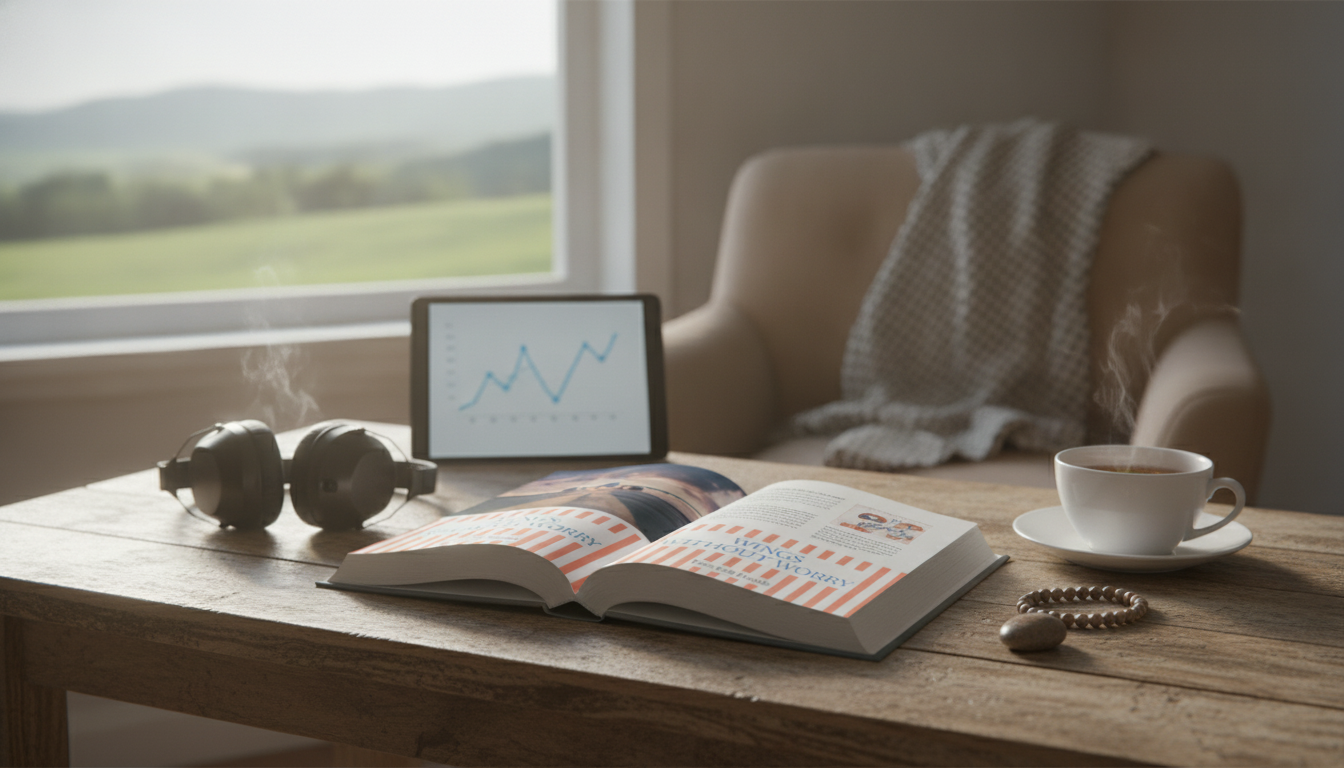
If you’re looking for a portable structure you can reuse on every trip, the Wings Without Worry digital download is designed to support calmer flying with practical, organized steps.
Unpredictable movement triggers the body’s threat response, which can make normal sensations feel like danger. Turbulence is common airflow variation; focusing on a longer exhale and relaxing muscles helps reduce the alarm response and restores a sense of control.
Slow the exhale first, then ground yourself in your senses, loosen tight muscles, and let sensations peak and pass. Use a brief script like “This is uncomfortable, not dangerous” to stay oriented while the wave moves through.
Relief can start quickly once you use tools consistently, but lasting change usually builds across repeated practice and multiple flights. Tracking small wins and following a structured routine helps progress feel steadier over time.







Leave a comment