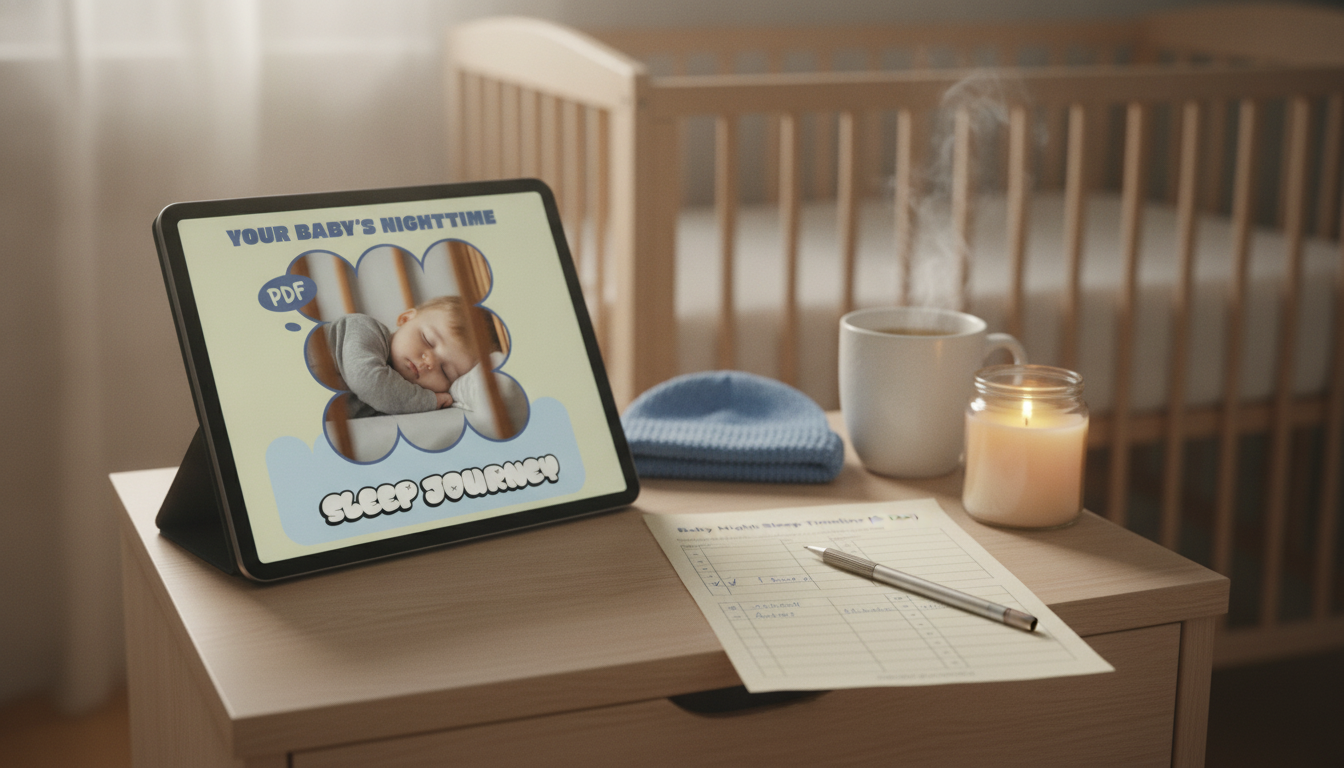
Night sleep changes fast in the first year—sometimes week to week. A simple, repeatable routine and a clear view of what’s typical at each stage can reduce guesswork and make nights feel more manageable. Below you’ll find common sleep milestones, when longer stretches often begin, and a printable-style checklist you can use to track routines, environment, and feed/sleep patterns. For more guidance, see Infant development: Milestones from 4 to 6 months – Mayo Clinic.
For safe sleep basics (back to sleep, firm flat surface, clear crib), refer to the American Academy of Pediatrics safe sleep recommendations. For further reading, see Infant Safe Sleep | Johns Hopkins Medicine.
| Age | Common night pattern | What helps most |
|---|---|---|
| 0–2 months | Short stretches with frequent feeds | Safe sleep setup, responsive feeding, day/night cues |
| 2–4 months | First longer stretch may appear | Simple bedtime routine, consistent sleep space |
| 4–6 months | More consolidated nights for some | Predictable timing, calming wind-down, appropriate naps |
| 6–9 months | Longer nights with periodic regressions | Consistency, comfort strategies, managing nap timing |
| 9–12 months | Many can sleep longer; some still wake | Steady routine, daytime calories, soothing boundaries |
For additional infant sleep safety guidance, the CDC’s sleep information can be a helpful reference point for household routines and sleep hygiene concepts.
The most useful routine is the one you can do even on hard nights. Aim for 10–30 minutes, keep the order the same, and let it be calm rather than “busy.”
| If baby wakes… | Quick check | Try this |
|---|---|---|
| Within 30–60 minutes of bedtime | Overtired? Transfer disruption? | Earlier bedtime, slower wind-down, steadier transfer |
| Every 1–2 hours | Hunger? Discomfort? Sleep association? | Assess feeding, check clothing/room temp, consistent soothing plan |
| Same time each night | Habit wake? Environmental trigger? | Adjust schedule slightly, reduce light/noise, pre-empt with gentle settling |
| Crying seems unusual | Illness/pain signs? | Check temperature and symptoms; contact clinician if concerned |
If you’d like a ready-to-use, print-and-go version, see Your Baby’s Nighttime Sleep Journey – Printable Baby Sleep Checklist for New Parents | When Do Babies Start Sleeping Through Night Guide.
For household communication during the “who’s on duty tonight?” phase, some parents also like using a quick script-based approach to keep check-ins calm and clear; Speak Easy: How to Talk to Anyone with Confidence and Authentic Charm | eBook Guide for How to Talk to Anyone with Ease and Confidence, Social Skills, Communication Confidence can be a helpful, low-effort read for building smoother conversations when everyone’s tired.
Timelines vary widely, but many babies begin longer stretches somewhere around 2–6 months. Even then, night waking can remain normal through the first year due to feeding needs, growth spurts, and development, so it’s best to align changes with your pediatric clinician’s guidance.
Frequent night wakings are expected for newborns because their sleep is irregular and they often need to feed around the clock. Focus on safe sleep setup, clear day/night cues, and tracking patterns rather than trying to force long stretches.
Pick one or two consistent steps for a full week: keep a simple bedtime routine, shift bedtime earlier if overtiredness is common, and do quick environment checks (dark room, comfortable temperature, consistent sound). A basic checklist helps you spot what actually changes outcomes.







Leave a comment