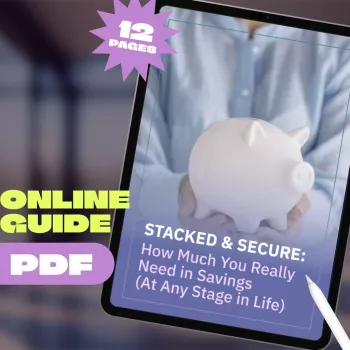
Financial security isn’t one universal number—it’s the point where your bills, near-term needs, and biggest “what if” risks are covered without forcing you into debt or panic. For most people, that comes down to having layered savings that each do a different job: a cash buffer for everyday surprises, a larger emergency fund for income shocks, and longer-term savings that keep life moving forward.
A practical starting target is a $1,000–$2,500 starter emergency fund to handle common expenses like car repairs or a medical copay. From there, the classic benchmark is 3–6 months of essential living expenses in an emergency fund (rent/mortgage, utilities, groceries, insurance, minimum debt payments). If income is variable, the household relies on one paycheck, or job security is shaky, 6–12 months can feel dramatically more secure.
Beyond emergencies, “secure” often means being able to absorb predictable costs without disruption. That might include a sinking fund for irregular but expected expenses (holiday travel, annual insurance premiums, home maintenance) and a short-term goals fund for planned purchases (appliances, a move, a wedding). Finally, long-term security usually requires consistent retirement investing so you’re not depending on future income alone.
The number that makes you feel secure should match your actual lifestyle math. A household with $4,000 in essential monthly expenses may feel stable at $12,000–$24,000 in a true emergency fund, while someone with $2,500 in essentials might feel fine at $7,500–$15,000. If you want benchmarks by life stage and how “stability,” “resilience,” and “freedom” savings differ, see this guide to savings targets by age.
For Savings for Financial Security: Starter, 3–6, or 12 Months?, the best answer depends on fit, material, care instructions, and how the product will be used day to day.
An emergency fund is for unexpected disruptions like job loss or urgent repairs. A sinking fund is for known upcoming costs you can predict and plan for, like annual bills or replacing a laptop.





Leave a comment