
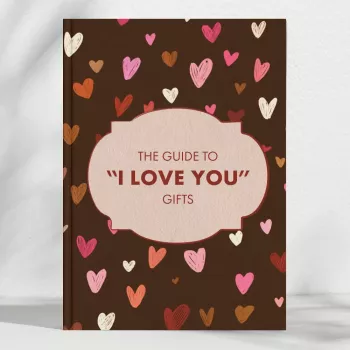
Finding the right “I love you” gift can feel surprisingly hard: the moment matters, the relationship matters, and the gesture should feel true to the person receiving it. The goal isn’t to spend the most—it’s to communicate something unmistakable. The Guide to “I Love You” Gifts: A Thoughtful eBook for Every Relationship is built to turn that pressure into clarity, with gift directions and decision prompts that fit different personalities, love languages, budgets, and timelines—so the final choice feels intentional rather than random.
The most memorable “I love you” gifts don’t rely on shock value. They feel like proof that you pay attention.
If you want a quick framework for matching your idea to the person, it helps to understand love languages (words, time, service, gifts, touch). The official overview at The Five Love Languages is a useful reference point, especially when you’re trying to avoid “nice, but not me” gifts.
A great gift is calibrated. It meets the relationship where it is—not where you wish it were, and not where it used to be.
| Relationship | What to focus on | Examples of thoughtful directions |
|---|---|---|
| New relationship | Low pressure, clear warmth | Coffee date + handwritten note; small hobby-related item |
| Committed partner | Meaning + everyday usefulness | Personalized keychain; upgraded version of something they use daily |
| Long-term | Shared story, shared future | Weekend getaway; memory book; home comfort upgrade |
| Family member | Support and gratitude | Care package; framed photo with a message; help with a task |
| Close friend | Recognition and belonging | Experience together; “you matter” note; tailored self-care items |
If a gift misses someone’s love language, it can still be “nice” but not emotionally satisfying. A small adjustment in delivery often makes the difference.
For broader relationship guidance—especially around communication and repair—resources from the American Psychological Association (APA) can help you keep your gesture supportive rather than complicated.
When you’re stuck, it’s rarely because there are no options—it’s because too many options blur together. The Guide to “I Love You” Gifts: A Thoughtful eBook for Every Relationship focuses on quick clarity: the message, the fit, and the plan.
If part of the stress is not knowing how to say what you feel, pairing your gift with stronger communication can help. Speak Easy: How to Talk to Anyone with Confidence and Authentic Charm is a practical add-on for writing a better card message, starting a vulnerable conversation, or simply delivering your “I love you” with less awkwardness.
If you want a ready-to-use structure for making those choices quickly, start with The Guide to “I Love You” Gifts and keep it bookmarked for the next time an occasion sneaks up. For a small, thoughtful add-on when you want to include a “care package” feel, a digital checklist-style gift can also be a nice touch for the right person, such as Comparing Pet Food Like a Pro | Digital Checklist for Pet Parents (perfect if your recipient is a devoted pet parent who loves practical tools).
Choose something low-pressure but specific to them, like a small hobby-related item, a planned date, or a note that references a shared moment. Avoid overly expensive gifts or intensely personal keepsakes too soon so the gesture feels warm, not weighty.
Lean on specificity and presentation: pair a simple item with a well-written note, a short playlist, a printed photo, or an at-home experience. Relevance (what it says about them) consistently lands better than cost.
Yes—especially for long-distance, last-minute moments, minimalists, or anyone who likes guidance and planning. To make it feel like a gesture rather than a file, bundle it with a personal message and a simple plan (like a date night or a shared activity).



Leave a comment