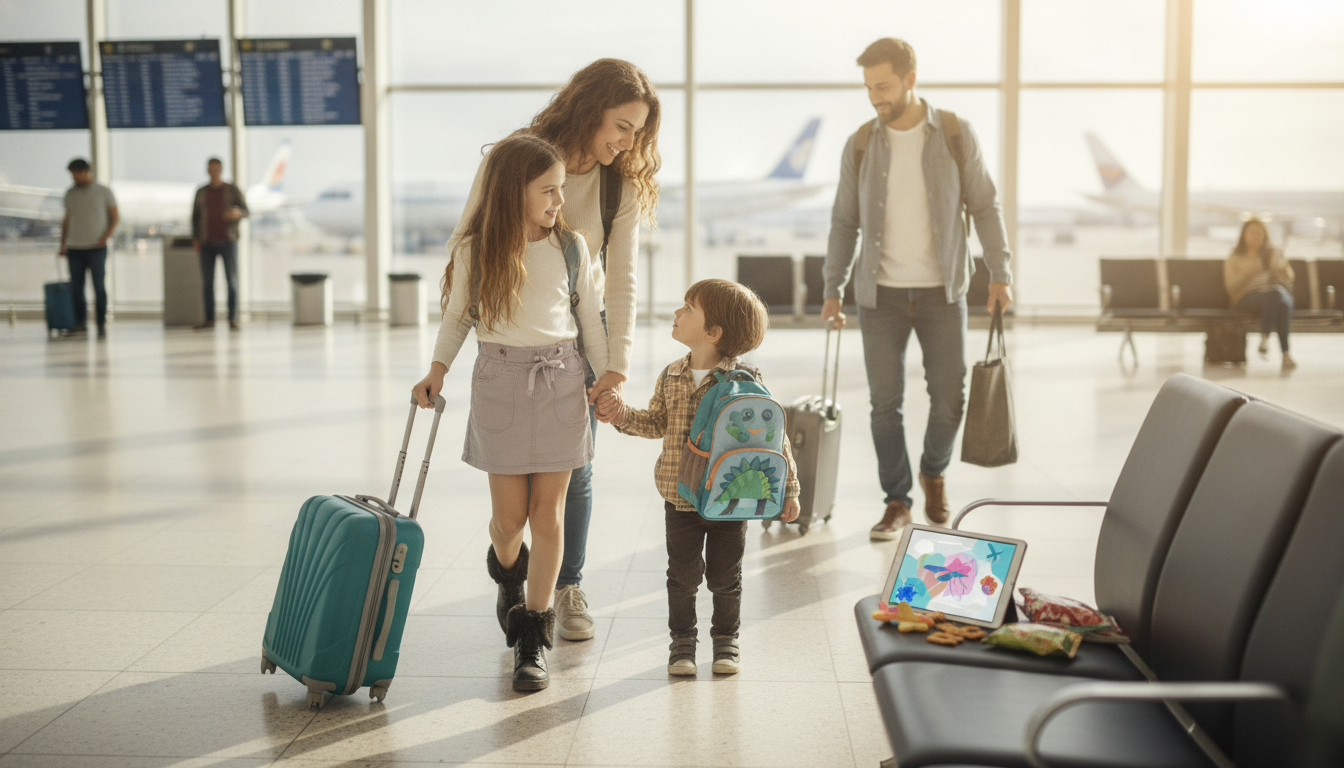
Family flights feel dramatically easier when you treat the day like a repeatable routine instead of a one-off survival mission. The goal isn’t perfection—it’s keeping the essentials reachable, staying ahead of ear pressure and hunger, and having a quick “what now?” plan when timing changes. Use the step-by-step flow below to help kids stay comfortable and help you stay calm.
Start with the “3 Windows” Plan: Before Airport, In Transit, In Seat
Break the travel day into three windows so your decisions stay simple and predictable.
- Before airport: Confirm IDs/documents, double-check seats, and build a realistic timeline. With kids, arriving earlier than you used to is often the cheapest stress-reducer available.
- In transit (car/train/shuttle + terminal): Keep snacks, wipes, and documents together in one grab-and-go pouch. Let checked baggage carry the “nice-to-have” weight so your hands stay free.
- In seat: Pre-load entertainment (offline), pack a small comfort kit, and plan a simple takeoff/landing routine to reduce ear discomfort.
One consistent family script helps kids cooperate: “Snack, bathroom, refill water, then board.” Repetition reduces negotiation.
Booking Choices That Reduce Stress Before the Day Even Starts
Smart booking decisions do a lot of the emotional heavy lifting long before you reach the airport.
- Flight timing: If possible, align with naps and meals. A slightly longer itinerary can be easier than a tight connection with hungry kids.
- Seats: Prioritize keeping the family together. Aisle seats can help with frequent bathroom trips; window seats can help some kids feel grounded and less overstimulated.
- Strollers and car seats: Confirm your airline’s gate-check rules and whether your child restraint is approved for aircraft use. The FAA offers guidance on child safety seats and best practices.
- Buffer time: Plan extra minutes for security, bathroom breaks, and last-minute snacks.
- If a connection is unavoidable: Choose longer layovers and airports known for family amenities.
For official guidance that’s worth a quick skim before you pack, see TSA: Traveling with Children and FAA: Child Safety on Airplanes.
Carry-On Essentials: What Must Be Reachable in the First 10 Minutes
Most in-flight stress comes from “I know we packed it…where is it?” Solve that by splitting your bag into layers.
- Create a “seat pocket kit” separate from the main backpack: wipes, tissues, hand sanitizer, a small trash bag, and a few bandages.
- Pack two snack categories: “clean” snacks (minimal crumbs) and “emergency” snacks (high-value treats saved for delays).
- Bring a change of clothes per child in a compressible bag; add a spare top for the caregiver on flights with toddlers.
- Hydration: refillable water bottles (empty through security) plus electrolyte packets can help with mood and headaches.
- Noise management: child-size headphones or ear protection; consider a comfort item that’s easy to grip and not easily lost.
Quick Packing Checklist (Carry-On vs. Personal Item)
| Item |
Personal item (under seat) |
Carry-on (overhead) |
| Documents + boarding passes + meds |
Yes (top pocket) |
No |
| Seat pocket kit (wipes, tissues, sanitizer, trash bag) |
Yes |
No |
| Snacks (mix of clean + emergency) |
Yes (small portions) |
Yes (backup stash) |
| Change of clothes |
Optional (1 set for toddler) |
Yes |
| Chargers + power bank |
Yes |
Optional |
| Entertainment (tablet/books/stickers) |
Yes (flight set) |
Yes (extra options) |
Airport Flow: Security, Boarding, and the Bathroom Loop
The airport is where little discomforts stack quickly. A repeatable loop prevents the classic “we just went” problem.
- Run the bathroom loop before boarding: bathroom, wash hands, refill water, quick snack—then head to the gate.
- Security strategy: put liquids and electronics in one easy-to-remove pouch; dress kids in slip-on shoes when possible.
- Two-adult split (when available): one adult stays “logistics-only” (documents, bags, gate info) while the other stays “kid-needs-only” (food, water, bathroom, comfort).
- Boarding: family boarding helps when installing car seats and securing overhead space. If your child struggles with sitting still, boarding later (when allowed) can reduce seat-time frustration.
In-Flight Comfort: Ears, Tummies, and Motion
Comfort is mostly about timing: do the small helpful actions before discomfort peaks.
Behavior and Boredom: A Low-Conflict Activity System
Fast Parent Tools for Real Situations (Without Overthinking)
For health and prevention basics when traveling with children, the CDC’s guidance is a solid reference: CDC: Traveling with Children.
A Ready-to-Use Family Flight Guide (Checklists + Calm Routine)
If you want one organized system you can reuse for every trip—packing, airport flow, in-seat rhythm, and contingency planning—save a copy of Kids Airplane Travel Made Easy – A Stress-Free Family Flight Guide with kids airplane travel tips, Packing Checklists & AI Travel Tools for Parents. The best time to set it up is the day before travel: pack, charge devices, confirm seats, and stage the personal item by the door.
For parents who also want a smoother way to communicate confidently with airline staff, hotel front desks, and rental counters during travel days, Speak Easy: How to Talk to Anyone with Confidence and Authentic Charm can be a helpful companion.
FAQ
What should be in a child’s personal item for a flight?
Pack under-seat essentials only: documents/meds, wipes/sanitizer, snacks, an empty refillable water bottle, a small entertainment kit, and headphones. For toddlers, add one full change of clothes (and consider a spare top for the caregiver), all grouped into a few easy-grab pouches.
How can kids avoid ear pain during takeoff and landing?
Use swallowing to equalize pressure: water, snacks, a pacifier, or gum for older kids, starting before descent and continuing through landing. If ear pain is persistent or severe, consult a clinician for individualized advice.
How do you handle a flight delay with kids without a meltdown?
Run a predictable reset: bathroom, wash hands, refill water, snack, then a movement break, followed by a rotating activity schedule. Save one or two “high-value” treats or brand-new activities for the toughest stretch of the delay.
Recommended for you




Leave a comment