Social overthinking can turn a quick chat into hours of replaying, second-guessing, and self-criticism. The good news: you don’t need perfect confidence to feel better—you need a repeatable plan that interrupts the loop in real time, shortens the “post-event replay,” and builds small habits that make social situations feel lighter over time.
Rumination is a well-known pattern of repetitive thinking that can keep stress active long after the moment has passed. If you’ve ever felt stuck in mental replays, that’s not a character flaw—it’s a threat-reduction strategy that’s gotten a little too loud. (For a clear definition, see the American Psychological Association’s entry on rumination.)
Social overthinking often shows up as:
It feels convincing because the brain is built to detect threat and reduce uncertainty. Analyzing can create the illusion of control: if you can figure out what went wrong, you can prevent it next time. The hidden cost is steep—drained energy, more avoidance, and less presence in the next interaction because your attention is split between the moment and your internal commentary.
A more helpful reframe: overthinking is a safety strategy, not a personality trait. If it’s overactive, it can be retrained.
Use this quick sequence right before a meeting, party, date, or even a casual run-in.
When overthinking tries to pull you into your head, use this as a “return to the room” checklist.
| What’s happening | What to say to yourself (10 words or less) | What to do next (smallest step) |
|---|---|---|
| Replaying what you just said | “Return to the room.” | Look at the person’s face and ask a follow-up question |
| Worrying you sounded awkward | “Awkward is allowed.” | Slow exhale; keep your next sentence simple |
| Not sure what to say next | “Curiosity counts.” | Ask: “How did that start?” or “What do you enjoy about it?” |
| Thinking they’re judging you | “I don’t have the data.” | Notice 3 details around you; refocus on their words |
| Feeling trapped in the conversation | “Exits are normal.” | Use a soft exit line and step away for 2 minutes |
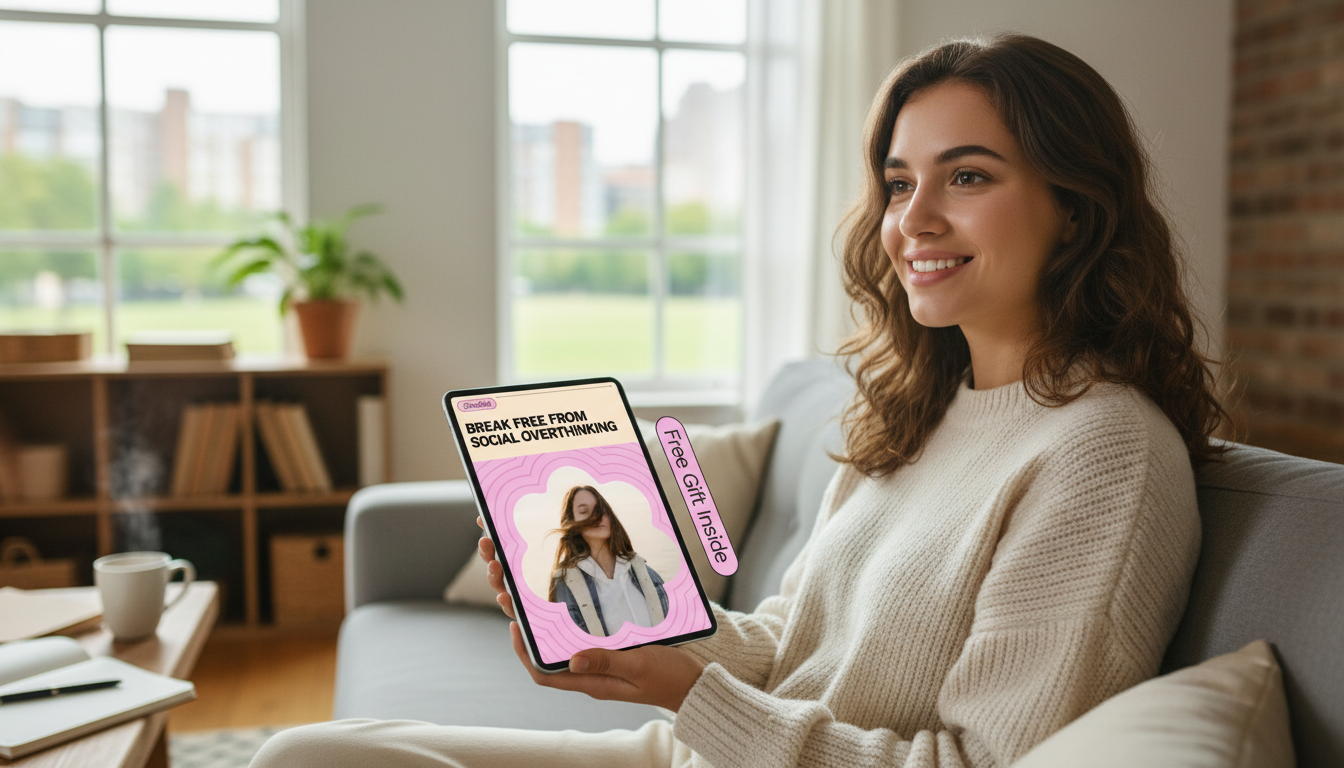
If you want a ready-to-use format, Break Free from Social Overthinking – The Ultimate Checklist to Stop Overthinking Social Situations is designed to be easy to pull up on your phone or print for quick reference.
To build stronger conversation flow alongside the checklist, Speak Easy: How to Talk to Anyone with Confidence and Authentic Charm focuses on practical communication skills that make it easier to stay engaged instead of stuck in self-monitoring.
Extra support can be a smart next step if overthinking leads to persistent avoidance, panic symptoms, or significant impact at work or in relationships. Approaches often used include CBT techniques for rumination, gradual exposure, and skills-based practice. If anxiety symptoms feel broad or intense, the National Institute of Mental Health overview of anxiety disorders can help you recognize common patterns.
Post-event overthinking is often rumination—your brain trying to reduce threat and uncertainty by analyzing what happened. A short debrief with a timer (one thing fine, one lesson, one next-step) helps close the loop without spiraling.
Label the spiral (“danger scan”), take a slower exhale, shift attention outward to something sensory, and ask a simple follow-up question. Keeping responses “good enough” (clear and kind) reduces the need to self-edit mid-conversation.
They overlap, but they aren’t identical: social anxiety usually includes stronger fear, avoidance, and physical symptoms, while overthinking can occur on its own. If it’s impairing your daily life, screening and professional support can help.






Leave a comment