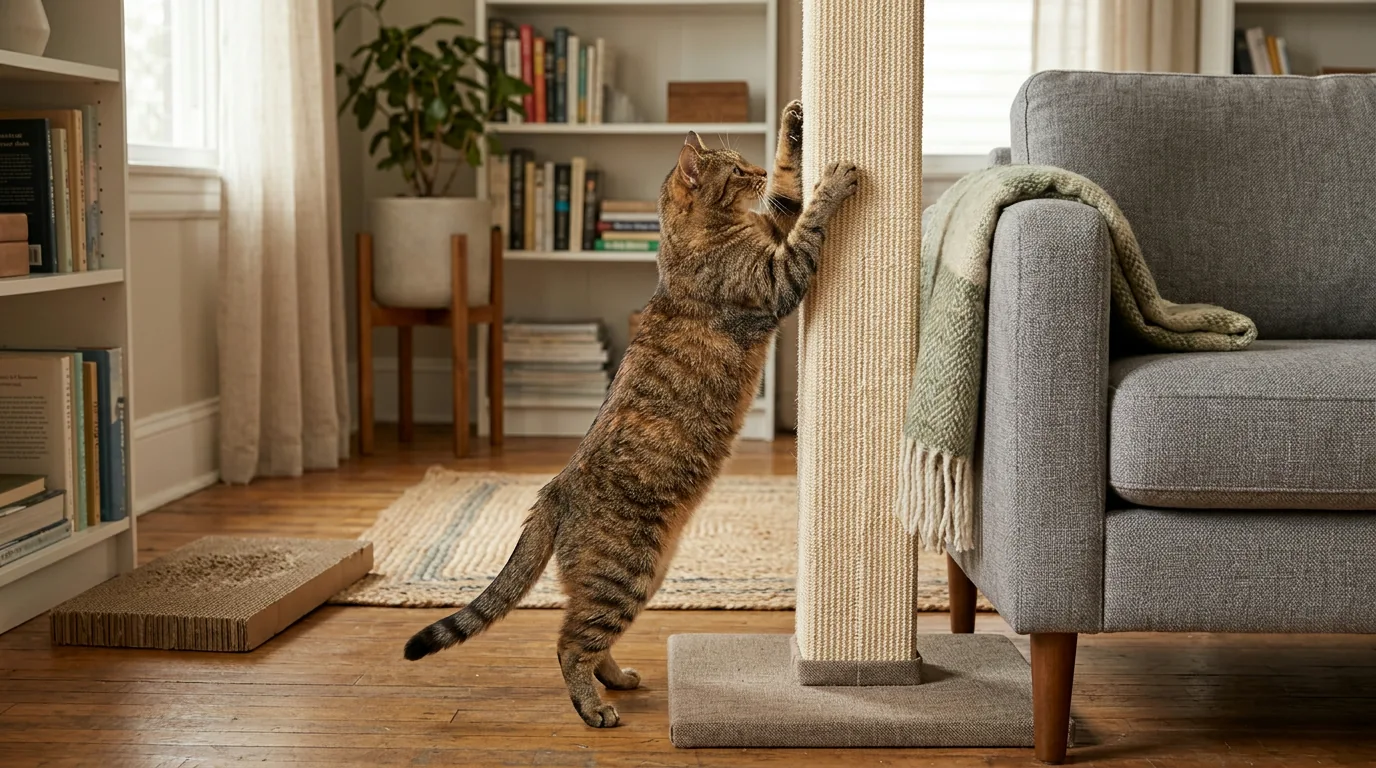
Furniture scratching usually isn’t “bad behavior” or revenge—it’s a normal cat need showing up in an inconvenient place. Scratching helps your cat shed the outer nail layers, keeping claws functioning normally. It also delivers a full-body stretch: many cats want a tall, stable surface so they can extend shoulders, spine, and hips all at once.
Scratching is also communication. Cats leave scent from glands in their paw pads, plus visible marks that say “I’m here” and “this area is mine.” That’s why couches and chairs win by default: they’re sturdy, textured, and positioned in social traffic zones where those signals matter most. One more thing that makes furniture “stick”? If your cat scratches and you rush over—even to scold—you can accidentally reinforce the behavior with attention.
For deeper background on what scratching is and why cats do it, you can also reference the ASPCA’s overview: Cat Behavior: Scratching.
International Cat Care has a helpful perspective on meeting scratching needs as part of normal feline behavior: Scratching behaviour in cats.
Our team’s fastest “no-drama” redirect is to make the right scratching choice easier and more rewarding than the couch.
Height matters more than most people expect. Many cats prefer posts around 28–36 inches or taller so they can fully extend.
Place the scratcher within 1–3 feet of the scratched furniture first. Once your cat is consistently choosing it, you can gradually nudge it toward your preferred long-term spot—slowly enough that your cat doesn’t revert to the couch.
| Scratcher type | Best placement | Best for cats who… | Common mistakes to avoid |
|---|---|---|---|
| Tall vertical post (sisal) | Next to favorite sofa corner; near entryway; near sleeping spot | Stretch high; scratch after waking; mark high-traffic areas | Too short; wobbly base; tucked in a low-traffic room |
| Vertical scratch board (wall-mounted or leaning) | Right on the targeted wall/couch side; near room transitions | Like firm resistance; prefer flat surfaces over posts | Mounted too low; loose mounting; placed far from the target zone |
| Horizontal cardboard scratcher | Near play area; near window perch; beside couch edge | Prefer ground-level scratching; like shredding texture | Placed on slippery floors without grip; not replaced when worn out |
| Angled scratcher/lounger combo | Living room “hangout” zone; near human seating | Want a scratch + lounge option; enjoy multi-use furniture | Too lightweight; located away from the social area |
If you want a step-by-step plan you can reference in real time, we created Why Your Cat Targets Your Furniture – A Practical Guide Explaining Why Does My Cat Scratch Furniture & How to Stop It.
For broader behavior-and-environment guidance, the AAFP’s feline behavior guidelines are a strong reference point: Feline Behavior Guidelines.
When you combine smart placement, the right scratcher styles, and calm reinforcement, most cats switch their habits without a battle. If you want a quick-reference version you can follow during real-life moments—setup, routine, and troubleshooting—use our downloadable guide: Why Your Cat Targets Your Furniture – A Practical Guide Explaining Why Does My Cat Scratch Furniture & How to Stop It.
If you’re building a more complete “pet parent toolkit,” our team also keeps these in stock: Comparing Pet Food Like a Pro | Digital Checklist for Pet Parents and Spotting Signs of Pain in Dogs | Printable Checklist for Pet Owners.
The post may be too short, wobbly, the wrong texture, or simply in the wrong location. Place an additional scratcher right next to the targeted furniture and reward scratcher use immediately so your cat learns the new “best” spot fast.
Results are mixed, and sprays usually work best as a backup—not the main solution. Focus first on making the correct scratch option more attractive and using physical deterrents like tape or furniture guards on the target area.
Yes—sudden increases can point to stress, environmental changes, or discomfort. If you also notice hiding, appetite changes, litter box issues, or unusually frantic behavior, contact your veterinarian.






Leave a comment