Cottagecore vs Grandmacore: A Pocket Checklist for Quick Visual ID
Cottagecore and grandmacore often overlap—florals, vintage touches, cozy textures—yet they signal different moods. Cottagecore tends to feel like a day outside (garden paths, sun-warmed linen, practical romance), while grandmacore feels like a day in (tea cups, cardigans, heirloom comfort). The guide below breaks down the easiest “spot it at a glance” cues, plus a pocket checklist you can keep on your phone or print for thrifting and outfit planning. For more guidance, see Grandmacore and Grandpacore Aesthetic – NATIV3.
For a quick background on how these aesthetics are commonly defined, see Cottagecore (overview) and a broader fashion-context explainer like Vogue’s cottagecore trend guide. For further reading, see Grandmacore & Mushroomcore Aesthetic Guide – Сottagecore clothes.
The fastest way to tell them apart
- Cottagecore reads as pastoral and outdoorsy: meadow romance, garden practicality, countryside softness.
- Grandmacore reads as homey and nostalgic: lived-in comfort, heirloom warmth, indoors-first coziness.
- When in doubt, look for setting cues: baskets, fields, aprons, and sun-faded linen lean cottagecore; doilies, porcelain, cardigans, and cozy interiors lean grandmacore.
- Many looks are hybrids—use the dominant signal (setting, silhouette, and texture) to label the vibe.
Quick visual checklist: cottagecore vs grandmacore
| What you notice first |
Leans Cottagecore |
Leans Grandmacore |
| Color mood |
Sun-washed creams, soft greens, butter yellow, dusty rose |
Warm beiges, burgundy, muted jewel tones, cozy browns |
| Prints |
Dainty florals, gingham, toile with nature scenes |
Bolder florals, tapestry patterns, patchwork, classic stripes |
| Fabrics |
Linen, cotton, eyelet, lightweight knits |
Wool blends, heavier knits, corduroy, quilted textures |
| Silhouette |
Prairie dresses, pinafores, puff sleeves, airy skirts |
Cardigans, sweater vests, midi skirts, layered “indoor cozy” fits |
| Accessories |
Straw hat, woven basket bag, ribbon ties, simple pearls |
Cameos, brooches, crochet bags, vintage frames, embellished buttons |
| Shoes |
Mary Janes, simple flats, boots for garden walks |
Loafers, classic pumps, cozy slippers-inspired flats |
| Setting cues |
Picnic blanket, greenhouse, countryside path, fresh bread |
Tea set, lace curtains, knitting basket, porcelain figurines |
Cottagecore: signature signals to look for
- Nature-forward details: botanical embroidery, leaf motifs, herb-garden colors, sun hats.
- Practical romance: aprons, pinafore layers, functional pockets, sturdy boots paired with a soft dress.
- Light and airy textures: breathable linen, cotton voile, eyelet lace, gentle ruffles.
- Styling that suggests “outside”: baskets, flowers, fruit, books, baking, garden tools.
A quick litmus test: if the outfit looks ready to pick strawberries, press flowers in a book, or walk a country lane without changing shoes, cottagecore is probably the lead aesthetic.
Grandmacore: signature signals to look for
- Nostalgia-forward details: heirloom jewelry, brooches, vintage buttons, hand-me-down charm.
- Cozy layering: cardigan-over-everything energy, sweater vests, collared blouses, sensible silhouettes.
- Home textures: crochet, quilting, heavier knits, tapestry-like patterns, doilies and lace accents.
- Styling that suggests “inside”: tea service, cozy reading chair, knitting/crochet, framed photos.
Another quick litmus test: if the look feels like it belongs near a window with lace curtains—warm drink in hand, novel on the table—grandmacore is likely doing the driving.
Edge cases: when a look sits in the middle
- Floral dress + cardigan: decide by fabric weight and accessory choice (basket bag = cottagecore; brooch + loafers = grandmacore).
- Lace can go either way: airy eyelet and cotton lace lean cottagecore; ornate lace with vintage hardware leans grandmacore.
- Gingham can go either way: paired with aprons, straw, and simple jewelry reads cottagecore; paired with heavier knits and classic accessories reads grandmacore.
- Use a 3-signal rule: setting cue + silhouette + texture. If two of three point the same direction, label it that aesthetic.
This “two-out-of-three” method helps when a piece is versatile (like a neutral cardigan) or when styling for photos where the background can swing the entire read.
Pocket checklist: how to use a quick visual ID guide
- Before buying: scan for dominant signals (fabric weight, print scale, accessory style) to avoid impulse mismatches.
- While thrifting: check collars, buttons, knit density, and pattern scale first—these show up even when items are wrinkled or on crowded racks.
- For mood boards and content: keep visual consistency by repeating two “anchor cues” (example: cottagecore = linen + basket; grandmacore = cardigan + brooch).
- For closet planning: sort staples into “always cottagecore,” “always grandmacore,” and “bridge pieces” to build outfits faster.
Bridge pieces are the secret weapon: a white blouse, a floral midi skirt, classic Mary Janes, or a neutral cardigan can swing either direction depending on texture, jewelry, and setting.
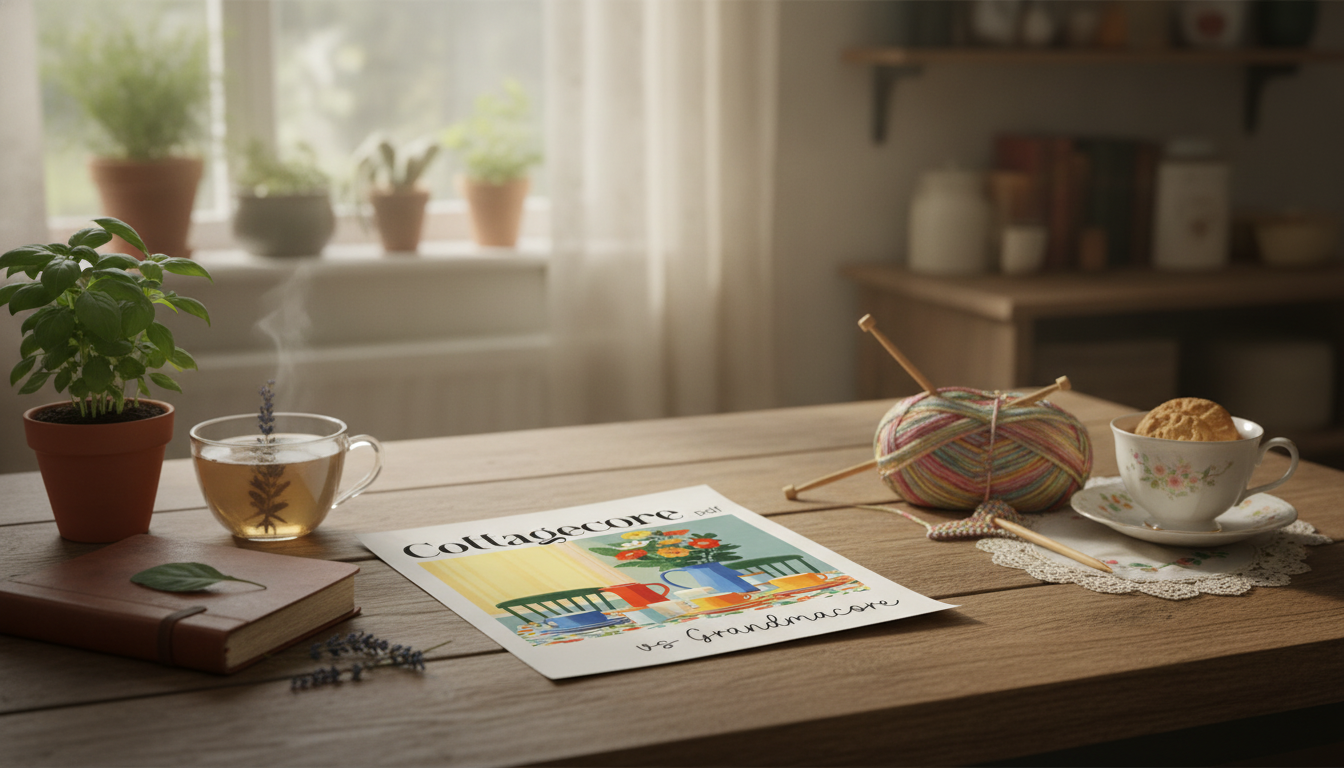
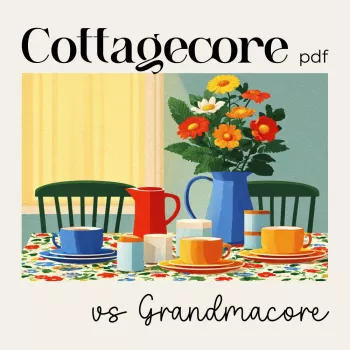
Printable cheat sheet: what’s included and who it’s for
- Designed for quick decisions: a compact checklist format that can be saved, printed, or referenced while shopping.
- Useful for beginners and collectors: helps separate similar vintage-inspired looks without overthinking.
- Great for: outfit planning, capsule building, thrifting, styling photos, and curating boards.
Shop printable guides
FAQ
Can an outfit be both cottagecore and grandmacore?
Yes—many outfits blend them. Use the dominant signals (setting cues, fabric weight, and accessories) to decide which aesthetic leads, or label it a hybrid.
What are the quickest items to swap to change the vibe?
Accessories and layering usually do the most work. A basket bag, ribbon ties, and airy fabrics push cottagecore, while a cardigan, brooch, and heavier knits push grandmacore.
Does vintage automatically mean grandmacore?
Not necessarily. Vintage can be styled pastoral (cottagecore) or homey (grandmacore); the silhouette, textures, and props determine how it reads.
Recommended for you





Leave a comment