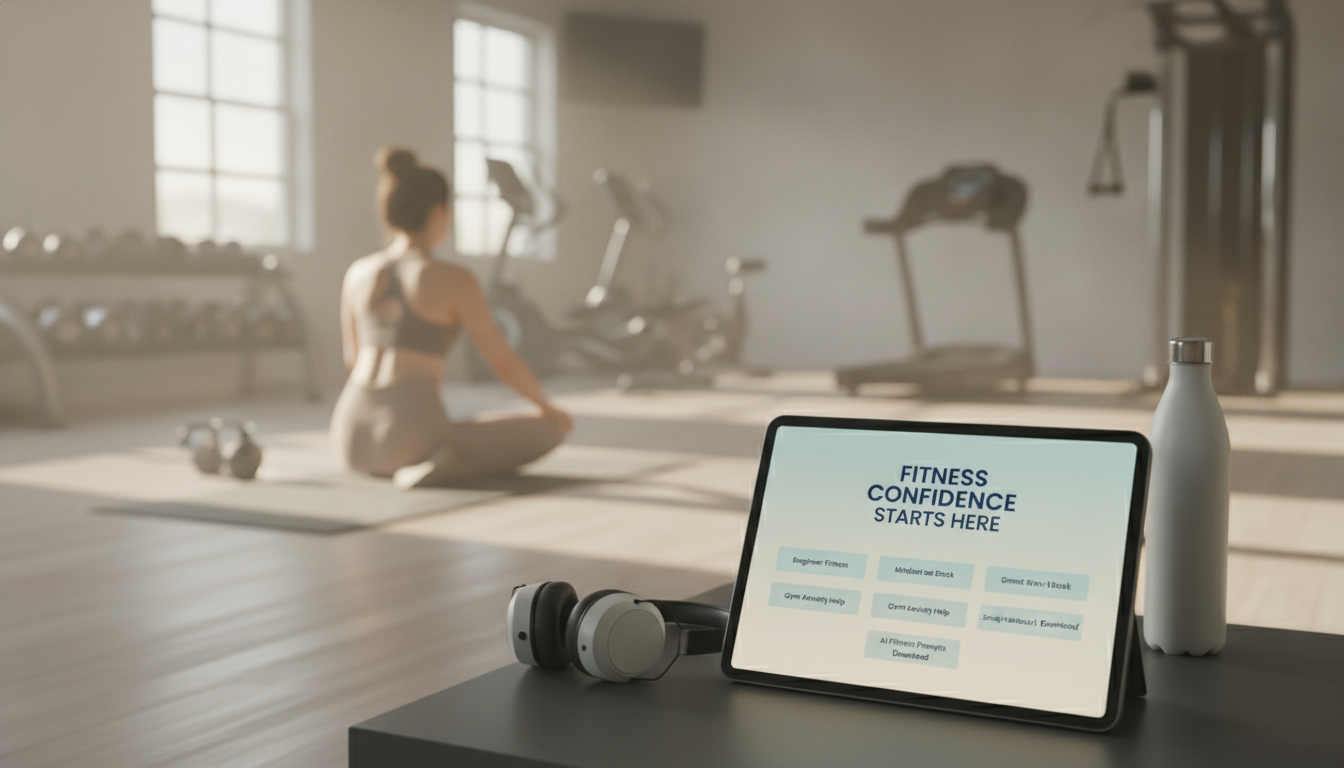
Fitness confidence usually doesn’t show up first—it’s built after you collect a few proof points that you can handle the environment and follow through. Early on, that’s tough because everything feels unfamiliar: new equipment, new norms, and a lingering fear that someone is watching or judging. Even if nobody is paying attention, your nervous system can still treat the gym like a high-stakes social setting. For more guidance, see Physical activity and self-esteem: testing direct and indirect … – PMC.
Another confidence killer is all-or-nothing thinking. Miss one workout and it can feel like the whole plan is “ruined,” which makes avoidance more likely. Add unclear goals (“get fit” or “lose weight”) and anxiety rises because uncertainty feels unsafe. Finally, comparison steals attention. If you measure your day-one workout against someone else’s year-five routine, your own progress becomes hard to notice. For further reading, see The Transformative Impact of Exercise on Self-Esteem.
A small mindset shift can take the emotional weight off your routine while still moving you forward.
If you like having a simple checklist to follow, Fitness Confidence Starts Here – Beginner Fitness Confidence Guide (Download) is built around minimum wins, gym-calming routines, and a repeatable structure you can stick with.
Gym anxiety often spikes at the start—walking in, choosing where to go, deciding what to do. A calm arrival routine lowers decision stress and gives your brain something predictable to follow.
| Minute | What to do | Why it helps |
|---|---|---|
| 0–2 | Walk to a familiar spot, set down water, open notes with the workout plan | Reduces uncertainty and decision fatigue |
| 2–5 | Warm-up: easy treadmill walk or gentle cycling | Lowers stress response and increases comfort |
| 5–7 | Choose weights you can lift confidently; practice 3 slow reps | Builds control and reinforces safety |
| 7–10 | Start the first exercise set with a modest target (e.g., 8 reps) | Creates an early win to anchor confidence |
Complex routines can be exciting, but simplicity is what creates consistent wins. A straightforward plan also makes it easier to meet general health recommendations for activity over time (see the Physical Activity Guidelines for Americans and resistance training guidance from ACSM).
As a bonus, exercise can support mood and stress regulation, which makes it easier to keep showing up (see NHS guidance on exercise and mental health).
Confidence improves faster when each session becomes feedback instead of a verdict. Keep check-ins short and consistent so they don’t feel like homework.
If confidence is also a social hurdle (asking for a spot, navigating busy areas, or simply making small talk), Speak Easy: How to Talk to Anyone with Confidence and Authentic Charm can support the communication side of showing up consistently.
Optional support tools (like guided reflection questions) also help you treat setbacks as useful data instead of self-criticism. For a compact, beginner-friendly system, use Fitness Confidence Starts Here – Beginner Fitness Confidence Guide (Download).
Many beginners start feeling noticeably more comfortable within 2–6 weeks of consistent exposure. Confidence tends to follow repeated routines, tracking small wins, and keeping the stakes low with a baseline plan you can maintain.
Keep it short and simple: warm up, then do 3–5 basic movements with light weights and a clear time cap. Decide your first two exercises before you walk in so you can start calmly without overthinking.
Yes—social-evaluative anxiety is common, especially in unfamiliar spaces. Off-peak timing, a small “comfort zone” setup, a scripted start, and slow breathing can make the next session feel significantly easier.






Leave a comment