Backyard Oasis: Bring Wildlife to Your Doorstep With a Simple Yard Plan
A thriving backyard habitat doesn’t require a large property or complicated landscaping—just the right mix of food, water, shelter, and safer garden habits. With a few intentional zones and a small set of weekly routines, even a modest yard (or rental patio with containers) can welcome birds, butterflies, bees, and beneficial insects while staying neat and enjoyable for people, too.
Start With a Quick Yard Snapshot
Before buying plants or adding features, spend 15 minutes “reading” your space. This quick snapshot prevents the most common frustrations—sun plants placed in shade, water sources set where they’re constantly dirty, or a beautiful bed that fails because it’s in a windy corner.
- Note sunlight patterns: Where is morning sun vs. afternoon sun? Which spots bake in heat, and which stay cool? Mark windy corners and naturally damp or dry areas.
- List what already exists: Mature trees, hedges, lawn, bare soil, leaf litter, fences, downspouts, existing feeders/baths, and any tucked-away corners.
- Identify current visitors: Even “ordinary” guests (sparrows, robins, ants) tell you what’s nearby and what your yard already supports.
- Check local rules: Review HOA restrictions, water feature regulations, and any community policies on pesticide/herbicide use.
The Four Needs of Backyard Wildlife
Wildlife shows up—and stays—when your yard consistently meets four basic needs. A single feeder can help, but the biggest gains come from supporting natural food chains and safe resting places.
- Food: Aim for season-long blooms, seed heads, berries, and host plants (not just nectar plants). This feeds pollinators and the insects birds rely on for raising chicks.
- Water: Provide a reliable, clean source. Moving water often attracts more species and is easier to keep fresh.
- Shelter: Layer habitats—ground cover, shrubs, small trees, and canopy—plus a few “messy” areas for nesting and overwintering.
- Places to raise young: Host plants for caterpillars, safe cover near feeding areas, and less disturbance during peak nesting times.
Plan Your Habitat Zones (Even in Small Yards)
Think in zones, not square footage. A small yard with clear zones often outperforms a large yard that’s mostly lawn.
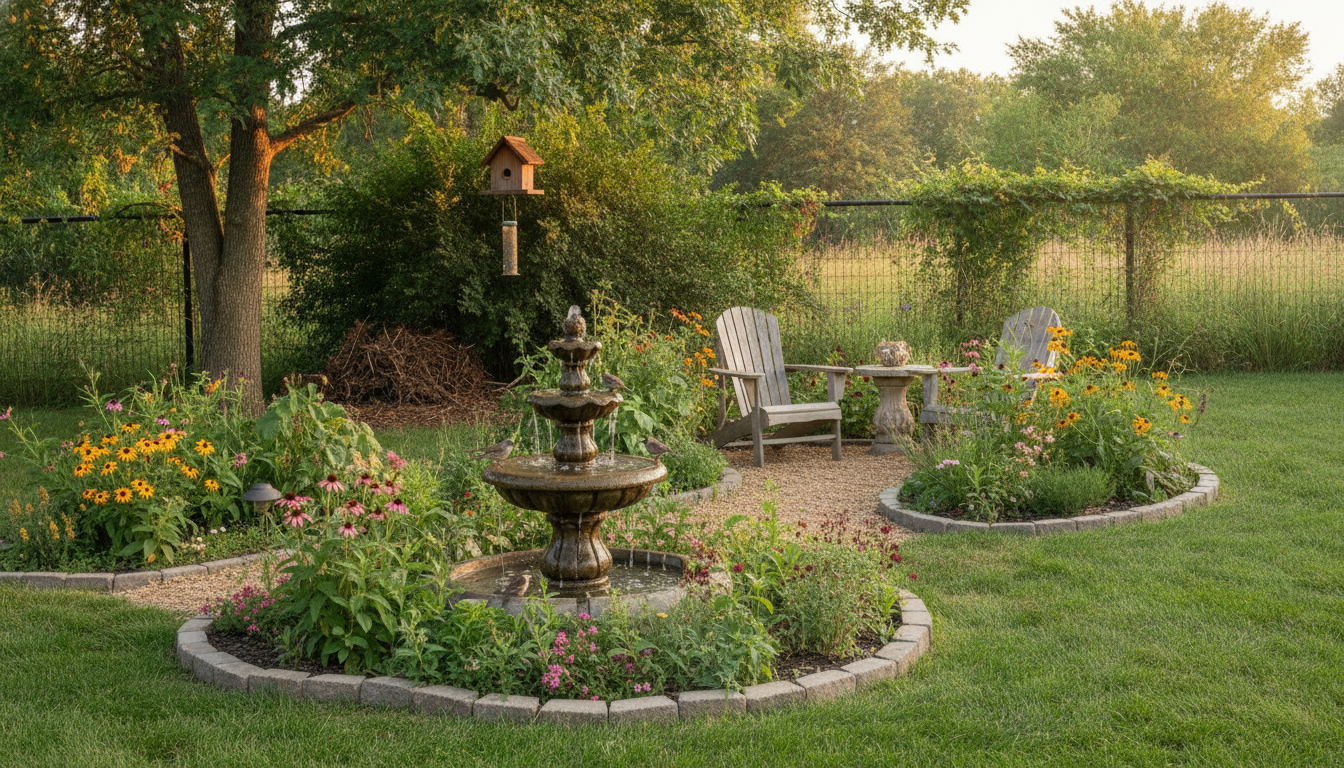
- Core zone: Dense native shrubs or mixed hedging for cover, placed away from heavy foot traffic.
- Edge zone: Flowering perennials and grasses along borders, paths, or fence lines—edges concentrate wildlife activity.
- Viewing zone: A feeder, bird bath, or pollinator container bed near a window or patio to keep activity close without disturbing nesting areas.
- Quiet corner: A leaves/brush area or small log pile that supports frogs, beetles, moths, and other beneficials.
Habitat Features and Who They Help
| Feature |
Best For |
Placement Tip |
Maintenance |
| Shallow bird bath |
Songbirds, pollinators |
Near cover, out of reach of cats |
Rinse/refill every 1–2 days |
| Native flowering strip |
Bees, butterflies, beneficial insects |
Sunny edge or along a path |
Deadhead lightly; leave some seed heads |
| Dense shrub cluster |
Nesting birds, small mammals |
Back fence line or corner |
Prune outside nesting season |
| Brush/log pile |
Overwintering insects, amphibians |
Shaded, low-traffic area |
Minimal; refresh yearly |
| Small water dripper/fountain |
Birds, butterflies |
Stable base; nearby outlet/solar |
Clean weekly; prevent algae |
Choose Plants That Work Hard All Year
Plants are the backbone of a backyard habitat plan. The goal is to keep the yard “feeding” wildlife from early spring through late fall, while also offering structure for shelter.
- Prioritize native plants when possible: They typically support more local insects and birds than many ornamentals. For region-specific suggestions, use the Audubon Native Plant Database.
- Build a bloom sequence: Early spring flowers, summer nectar, and fall blooms plus seed heads for late-season food.
- Include host plants: Caterpillars need specific leaves; birds need the resulting insects to feed chicks. The Xerces Society offers practical pollinator resources and plant guidance.
- Mix structure: Combine groundcovers, clumping grasses, flowering perennials, shrubs, and (if you have room) one small tree.
Water Without the Worry
Water is often the fastest way to boost wildlife activity, especially during hot or dry spells. The key is keeping it safe, shallow, and clean.
For broader habitat guidelines and certification ideas, the National Wildlife Federation’s Garden for Wildlife program is a helpful reference point.
Make the Yard Safer for Wildlife
A Simple Weekend Upgrade Path
Printable-Style Checklist for a Nature-Loving Garden
A Guided Plan to Pull It All Together
FAQ
How quickly will wildlife show up after changes?
Water and cover often attract birds within days, especially during warm weather. Pollinators increase as blooms appear, while broader diversity usually builds over a full growing season as plants mature and start producing more nectar, seeds, and shelter.
Do native plants matter if a feeder is already out?
Yes. Native plants support the insects that feed baby birds and provide season-long food and shelter that a feeder can’t replace, especially during nesting season and late fall.
How can a yard be wildlife-friendly without looking messy?
Use intentional structure: defined edges, mulched paths, and grouped plantings. Keep a tidy viewing zone near the patio or window and reserve one clearly designated “wild” corner for leaves, stems, and brush habitat.
Recommended for you





Leave a comment