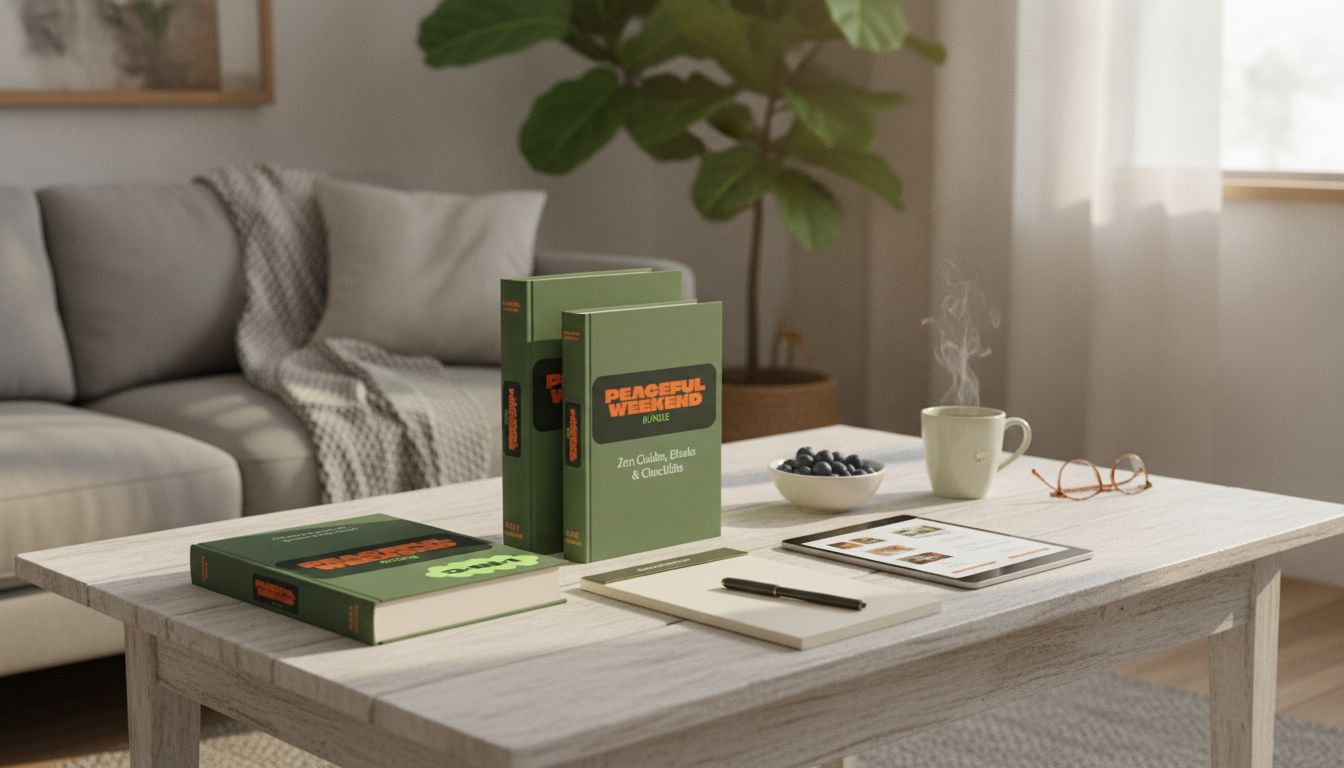
A peaceful weekend rarely happens by accident. A compact toolkit—one that mixes short Zen-style guides, easy-to-skim eBooks, and practical checklists—can turn scattered downtime into a clear, calming rhythm. The goal is not to “do more,” but to remove friction: decide what matters, protect rest, and create small moments of quiet that actually stick.
A weekend reset gets easier when the tools match real energy levels (and real attention spans). A solid relaxation toolkit usually has three layers:
If you want all three formats in one place, the Relaxation Toolkit for a Peaceful Weekend: 3-in-1 Bundle – Zen Guides, eBooks & Checklists is designed specifically for short, repeatable weekend rhythms rather than big, complicated transformations.
It’s common to have “free time” on paper and still feel like the weekend disappears. A few patterns tend to create that rushed feeling:
If stress has been running high, it can help to remember that stress is not only “in the mind”—it shows up physically and behaviorally, too. The American Psychological Association’s overview of stress is a useful reference point for understanding how stress affects the body and why recovery needs consistent downshifts (APA — Stress).
Friday night sets the tone. The goal is to make Saturday morning feel like an exhale, not a scramble.
When Friday night feels social or noisy, a gentle communication plan can protect your downtime without guilt spirals. For people who find saying “no” stressful or awkward, Speak Easy: How to Talk to Anyone with Confidence and Authentic Charm can pair well with a quiet-weekend plan—especially if you want simple scripts and calmer conversations around boundaries.
This plan works best in short sessions (5–25 minutes) instead of long marathons. Frequent calm moments build a steadier baseline, and a few intentional pauses can do more than a single big “self-care day.”
| Time | Saturday | Sunday |
|---|---|---|
| Morning | 10–15 min Zen guide + light movement; simple breakfast; choose 1 priority for the day | Short reflection prompt; tidy reset (15 min); slow breakfast |
| Midday | eBook chapter or section (20–30 min) + a walk; check-in: energy level (low/medium/high) | Creative calm (journaling, cooking, craft) + brief “tech break” |
| Afternoon | Restorative break (nap, breath practice); low-stakes pleasure activity | Outdoor time or gentle stretch; plan 1 small kindness for Monday-you |
| Evening | Warm shower/bath ritual; screen-light boundary; calming read | Weekend close: choose Monday’s first step; prepare a soothing bedtime routine |
For the “quiet attention” ingredient, mindfulness doesn’t have to be intense or mystical. Even brief practices can be effective and safe for many people when done gently; the National Center for Complementary and Integrative Health summarizes what research suggests about meditation and mindfulness (NCCIH — Meditation and Mindfulness).
The Relaxation Toolkit for a Peaceful Weekend: 3-in-1 Bundle – Zen Guides, eBooks & Checklists is a structured-but-gentle option for people who want a calmer weekend without complicated tools.
For many people, Sunday night sleep improves when the wind-down is predictable and stimulation drops earlier. A simple bedtime routine and basic sleep hygiene can help; the Sleep Foundation’s sleep hygiene guide is a practical overview (Sleep Foundation — Sleep Hygiene).
Short blocks (5–30 minutes) repeated through the day work better than one long session for most schedules. Consistency matters more than duration, and leaving space for unstructured rest helps the weekend feel truly restorative.
Yes—especially when you use an earlier wind-down, reduce late-day stimulation, and keep an evening ritual predictable (dim lights, calming read, gentle breathing). If insomnia is persistent or severe, professional support can be important.
Try a mini reset: 5 minutes breathing, 10 minutes tidy, 20 minutes walk/stretch, 10 minutes reflection, and 15 minutes calm pleasure (music, warm shower, reading). The goal is to reduce mental load and give your nervous system a clear downshift.






Leave a comment