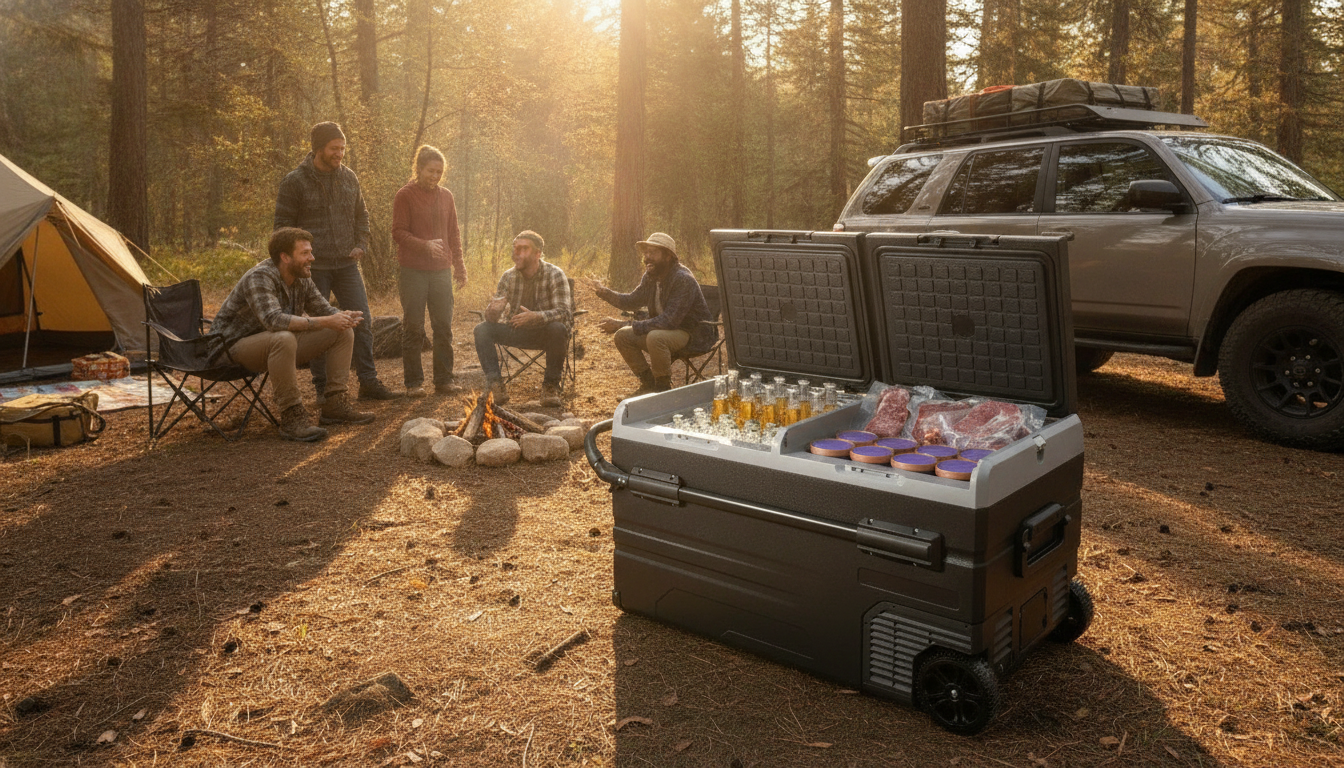
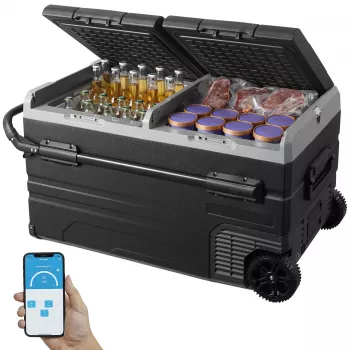
A large-capacity powered cooler can make long drives, camping weekends, and jobsite lunches simpler—especially when fresh food and frozen items need different temperatures. A 115L dual-zone portable car refrigerator is built for that exact mix: one compartment can stay in a refrigerator range for drinks and produce, while the other can run colder for frozen foods and long-haul storage. Below is a practical guide to dual-zone benefits, why wheels matter at this size, how adjustable freezing behaves in real use, and easy habits that help your setup run efficiently and keep food safer.
Dual-zone storage removes the “one temperature for everything” compromise. Instead of choosing between keeping beverages crisp or keeping proteins frozen, you can plan the load with two goals at once.
At 115 liters, capacity is a major advantage—and so is portability. Once you add drinks, meal containers, and frozen goods, the total weight can climb fast. Integrated wheels turn a “two-person lift” problem into a manageable pull from garage to vehicle to campsite.
Adjustable freezing is what makes a dual-zone unit flexible. One side can be set colder (freezer territory) while the other remains in a refrigerator range. The most reliable results come from matching your temperature targets to what you actually packed and how often you’ll open each lid.
For food safety basics—especially when transporting perishable foods—refer to the USDA FSIS refrigeration guidance and the CDC food safety resources.
Not every outing needs dual-zone capability, but it shines when you’re trying to carry a mixed load across multiple days. The table below highlights where each option fits best.
| Option | Best for | Limits to consider |
|---|---|---|
| Dual-zone portable car refrigerator | Mixed loads (fresh + frozen) on road trips, camping, tailgates | Heavier and higher upfront cost; needs a power source |
| Single-zone powered fridge/freezer | Simple loads where one temperature is enough | Cannot reliably keep frozen and chilled items separately at the same time |
| Traditional ice chest | Short trips, backup storage, low budget | Melting ice, soggy packaging, frequent replenishment |
How you position and secure a portable refrigerator matters almost as much as the temperature you set. A little planning improves performance and reduces annoyance on the road.
Yes—dual-zone designs are made to run two compartments at different temperature targets. For the most consistent results, load both sides with pre-chilled/pre-frozen items and keep vents clear so airflow can stabilize each zone.
Cool-down time depends on starting food temperature, ambient heat, how full the unit is, and how often the lid opens. Pre-cooling at home and loading cold items typically helps it reach target temperatures much faster than starting with room-temperature contents.
Separate raw and ready-to-eat foods, keep raw meat tightly sealed, and store it in the coldest section to prevent drips. Pre-chill items, use bins to contain spills, and minimize lid openings to keep temperatures steadier.




Leave a comment