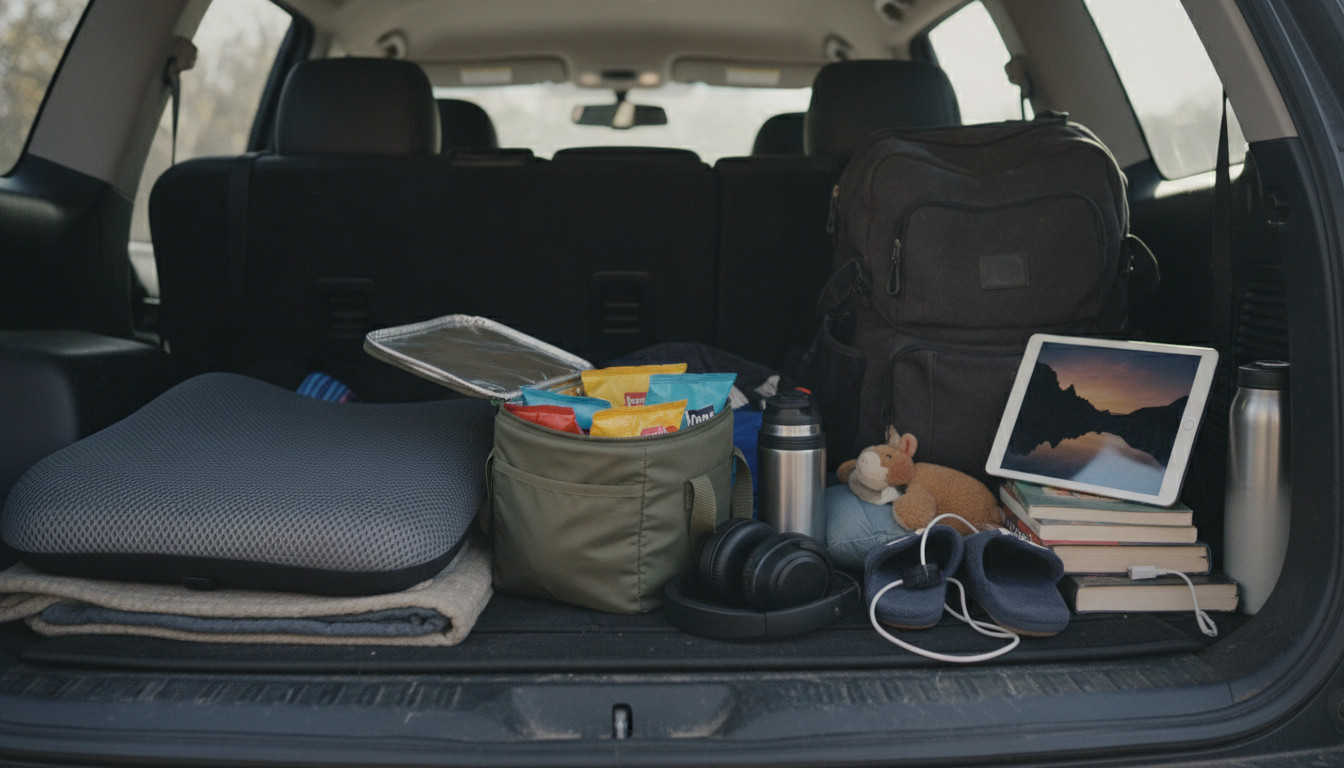
Long drives feel easier when your car supports your body, stays calm and quiet, and reduces small annoyances that build up over hours. Start by dialing in your seating position, then tackle cabin comfort (temperature, noise, and air quality), and finish with smart prep that keeps essentials within reach.
Adjust the seat so your hips sit slightly higher than your knees, with your back supported from lower spine to shoulders. Keep your arms slightly bent at the wheel, and set the headrest so the middle supports the back of your head. If your seat lacks lumbar support, add a slim lumbar cushion; if the seat base feels too firm, a thin seat cushion can reduce pressure points without raising you too high.
Keep the cabin cool and consistent—overly warm air increases drowsiness. Use a sunshade when parked, and aim vents toward your upper body rather than your hands only. For noise, check tire pressure (overinflation can increase harshness) and remove loose items that rattle. Even small changes—like adding door-pocket organizers or tightening cargo—can make the ride feel calmer.
Set up a small, grab-and-go kit: water bottle, lip balm, tissues, pain reliever (if appropriate), snacks that won’t crumble, and a charging cable. If you use navigation, mount your phone at eye level so you’re not constantly looking down. A clean windshield and properly adjusted mirrors also reduce strain by improving visibility.
Every 90–120 minutes, stop to reset: walk for a few minutes, roll your shoulders, and stretch calves/hips. Micro-adjust your seatback angle and hand position occasionally to avoid locking into one posture for hours.
For a deeper checklist—seats, quiet cabin upgrades, and practical aids—read the full guide here: https://jocunda.com/guide-long-drive-comfort-seats-quiet-cabin-smart-aids/.
Bring water, easy snacks, a charging setup, sunglasses, a light layer, and any supportive items like a small lumbar cushion. Keep the most-used items in the front seat area so you’re not twisting or reaching while driving.






Leave a comment