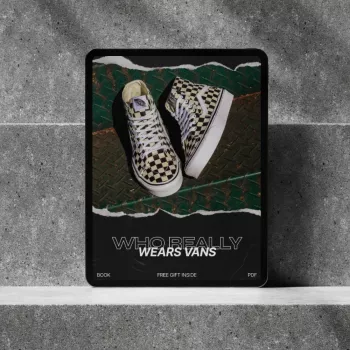
Vans sits at the intersection of skate heritage, music scenes, and everyday casual style. That mix creates a surprisingly wide audience with shared values—authenticity, comfort, and cultural belonging—but different reasons for choosing the shoe. This guide breaks down the most common demographic and psychographic segments, what they’re trying to express, and how marketers and creatives can translate those signals into sharper positioning and content.
Vans endures because it doesn’t rely on being the “newest” thing; it operates like a cultural shorthand. Its roots in skateboarding, DIY customization, and long-running ties to underground music scenes create built-in heritage cues that people recognize instantly (even if they’ve never set foot on a board). The classic silhouettes—Old Skool, Authentic, Slip-On—work like a uniform piece: simple enough to blend into wildly different aesthetics without looking like a costume.
Price also matters. Vans often feels like an accessible entry point compared to many sneaker brands, lowering barriers for teens and young adults who want to participate in a scene without spending premium dollars. And because the brand’s meaning is carried by communities (skate, punk, indie, streetwear) more than performance claims, it tends to feel “earned” over time. For plenty of wearers, the point is identity continuity—buying the same model for years, letting scuffs and fading become part of the story. For background on the brand’s roots and positioning, see Vans – About.
Vans most reliably pulls teens through early 30s, but the audience doesn’t stop there. Older consumers often come in through skate and music culture, or simple nostalgia for what they wore in earlier eras. Classic models are broadly unisex with low styling friction, so purchase behavior often crosses gender identity lines more fluidly than brands that lean heavily on “men’s” vs. “women’s” sneaker storytelling.
Income-wise, mid to lower-mid household incomes often over-index because Vans is price-accessible, but higher-income buyers still choose it for simplicity and scene alignment. Geographically, the strongest presence shows up where culture clusters: urban/suburban areas with skate parks, music venues, colleges, and creative communities. Canvas options also make the brand popular in warmer climates where breathable, low-profile shoes are practical. Life-stage adoption is especially visible among students, early-career creatives, service and hospitality workers who need comfortable casual footwear, and parents buying for kids and teens.
Demographics explain who buys; psychographics explain why the shoe feels like the correct choice. A major driver is authenticity signaling: a preference for brands that seem built through culture rather than manufactured through hype. Another is anti-flash taste—comfort with minimal logos and familiar silhouettes. In this mindset, status isn’t communicated through price; it’s communicated through ease and belonging.
| Segment | Primary motivation | What they want to signal | Creative angle that lands | Channels that often work |
|---|---|---|---|---|
| Skate-core loyalists | Board feel + credibility | Real participation, not cosplay | Local skate stories, raw footage, functional details | Skate shops, grassroots events, community creators |
| Music-scene regulars | Comfort + venue culture | Belonging to a scene | Gig photography, band collabs, behind-the-scenes | Live events, playlists, local venue partnerships |
| Streetwear minimalists | Versatility + clean design | Taste without trying too hard | Simple styling grids, colorway focus, silhouette comparisons | Instagram, lookbooks, product pages, UGC |
| Campus casuals | Price + outfit match | Effortless everyday cool | Outfit formulas, back-to-school edits, sizing help | TikTok, campus ambassadors, short-form video |
| Nostalgia adopters | Familiarity + heritage | Continuity and authenticity | Then/now storytelling, classics spotlight, archival cues | Email, long-form content, heritage landing pages |
Prioritize real environments—sidewalks, venues, studios, skate spots—over sterile sets. Wear-in, personalization, and candid moments outperform perfection when the goal is cultural believability. For context on how younger audiences interact with platforms and content formats, see Pew Research Center – Internet & Technology.
Credibility is earned through participation: local creators, community events, and small scenes tend to land better than generic “youth culture” casting. Campaign framing works best when it’s “everyday icon”—one shoe supporting many identities—without pretending it’s universal for everyone. If you need investor-level brand background and how a parent company talks about portfolio strategy, consult VF Corporation – Annual Reports.
Vans has deep skate roots, but it’s widely worn beyond skateboarding in music scenes, campus casual style, and streetwear. What the shoe “means” changes by segment: for some it’s credibility, for others it’s versatility or familiarity.
Common buyers include skate-core loyalists, music-scene regulars, campus casuals, streetwear minimalists, and nostalgia adopters. Across those groups, shared values tend to be authenticity, comfort, and an easy-to-style silhouette.
Start with real participation and community ties, then use grounded visuals and references that match the actual scene you’re working with. Avoid stereotypes and token subculture imagery, and keep the tone lived-in rather than overly polished.





Leave a comment