An instant, wall-mounted electric water heater can free up space and deliver hot water on demand—if voltage, amperage, and flow-rate expectations match the installation. This guide explains how a 110V/220V unit with an LCD display and remote control typically performs, what to verify before buying, and how to set it up for reliable daily use.
At-a-glance benefits and best-fit homes
- On-demand heating: reduces standby heat loss compared with tank-style storage heaters, since water is heated only when needed.
- Wall-mounted footprint: a practical fit for apartments, small utility rooms, cabins, workshops, and secondary sinks.
- Comfort control: LCD temperature visibility plus remote control can make daily adjustments quicker and more consistent.
- Best use cases: handwashing sinks, kitchen sinks, and low-to-moderate flow showers (depending on inlet temperature and available electrical capacity).
- Not ideal when: multiple fixtures need hot water at once, or when incoming water is very cold and the home doesn’t have enough electrical capacity to support higher power draw.
Key features that matter day to day
- Dual-voltage compatibility (110V/220V): this can expand where the heater can be installed. In real-world use, output is typically much stronger at 220V because higher voltage generally enables higher wattage and better temperature rise at practical flow rates.
- LCD display: makes it easier to repeat a preferred setting, which is especially helpful for households with kids, guests, or multiple users who want consistent water temperature.
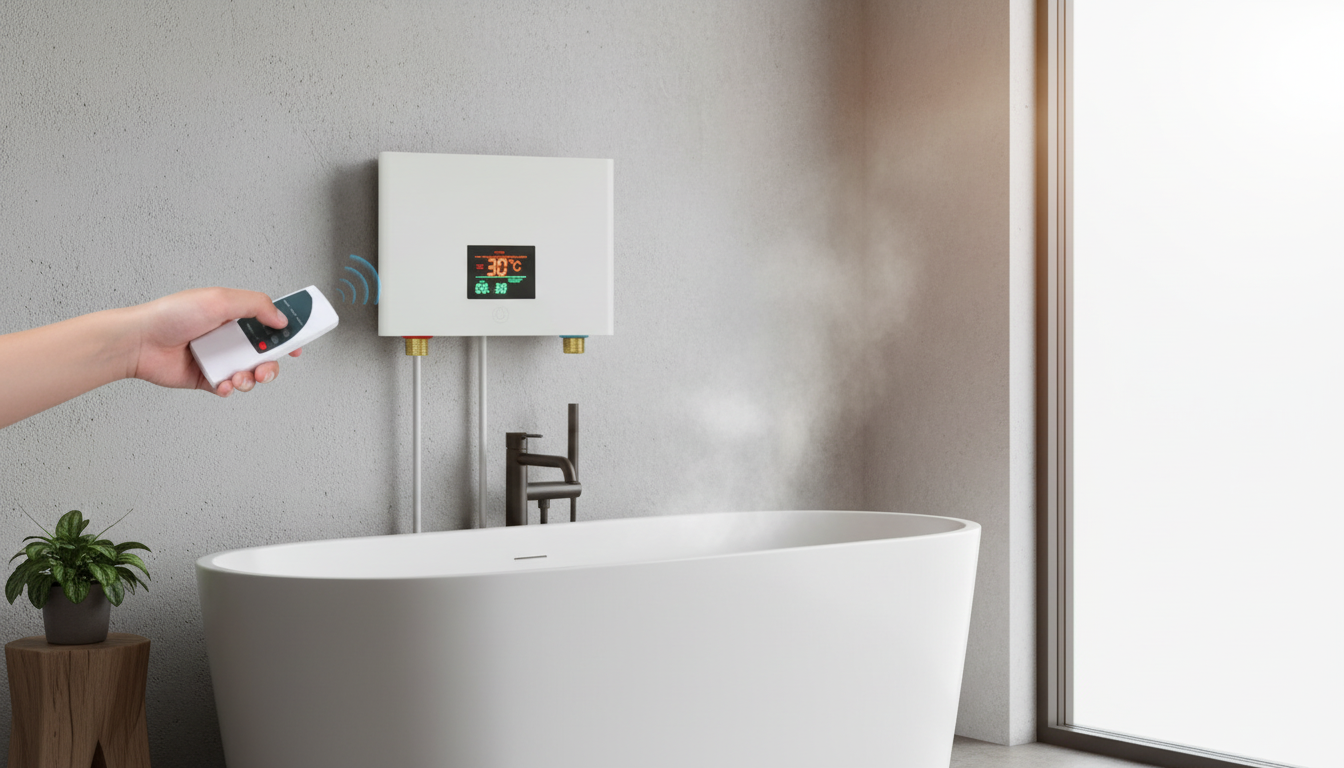
- Remote control convenience: helpful when the unit is mounted high on a wall or tucked behind a door swing, letting you adjust the temperature without reaching around hot plumbing.
- Instant heating behavior: water is heated as it passes through the unit; stability depends on flow rate, inlet temperature, and available power.
- Compact design: often enables retrofits in places where a tank won’t fit, such as tight closets or small mechanical corners.
Electrical and plumbing requirements to verify before installation
Tankless electric heaters are often limited more by the electrical setup than by the plumbing. Before ordering, confirm the basics below and plan for code-compliant protection in wet locations. For general background on how demand-type systems operate, see the U.S. Department of Energy guidance on tankless water heaters. For safety in kitchens, baths, and laundry areas, review CPSC information on GFCIs.
- Circuit capacity: confirm whether you’re installing on 110V or 220V, and ensure you have the correct dedicated breaker and wire gauge to match the heater’s rated load.
- Location: mount on a solid wall with clearance for plumbing connections, airflow (if required), and service access.
- Water pressure and flow: high flow can reduce outlet temperature; extremely low flow can affect activation depending on design.
- Plumbing fittings: verify inlet/outlet sizes, adapter needs, and add shutoff valves so the unit can be serviced without shutting down the whole home.
- Grounding and protection: proper grounding is essential; GFCI/RCD protection may be required by local code, especially near sinks and showers.
- Professional installation: many households benefit from using a licensed electrician and/or plumber to meet local electrical and building requirements.
Pre-installation checklist (quick scan)
| Item |
What to confirm |
Why it matters |
| Voltage option |
110V or 220V available at install location |
Power level affects maximum hot-water output |
| Dedicated circuit |
Correct breaker size and wiring per rating |
Prevents nuisance trips and overheating risks |
| Water shutoffs |
Hot/cold isolation valves installed |
Makes maintenance safer and easier |
| Mounting surface |
Studs/masonry anchors and level placement |
Reduces vibration and leak risk from strain |
| Distance to fixture |
Short run if possible |
Reduces heat loss and wait time |
Temperature rise, flow rate, and what “instant” feels like
“Instant” means the unit starts heating when it senses water flow—there’s no tank to run out. However, the water still needs to travel through your pipes, so a short plumbing run (point-of-use placement) usually feels fastest. The most important performance concept is temperature rise: how many degrees the heater can raise incoming cold water at a given flow rate.
Using the LCD and remote control effectively
Safety, maintenance, and longevity basics
Product snapshot and buying notes
Recommended in-stock options
Quick product snapshot
| Detail |
Value |
| Model |
Instant Wall-Mounted Electric Water Heater with LCD & Remote Control |
| Voltage |
110V / 220V |
| Mounting |
Wall-mounted |
| Controls |
LCD display + remote control |
| Availability |
In stock |
FAQ
Can an instant electric water heater run a shower comfortably?
It can, but comfort depends on available power (220V typically performs better), incoming water temperature, and your shower’s flow rate. A low-flow showerhead and a stable water pressure supply can help maintain a warmer, steadier outlet temperature.
Is 110V or 220V better for an instant wall-mounted heater?
220V is generally better because it typically supports higher heating capacity and a larger temperature rise at practical flow rates. 110V can work well for lighter point-of-use needs like a handwashing sink or a small kitchen application.
What maintenance does a tankless electric water heater need?
Most units benefit from periodic descaling in hard-water areas, cleaning any inlet screen/filter, and checking plumbing and electrical connections for signs of wear or leaking. Maintenance frequency depends heavily on local water hardness and how often the heater is used.
Recommended for you



Leave a comment