Spotting Real vs. Fake New Balance Sneakers: Complete Checklist Guide
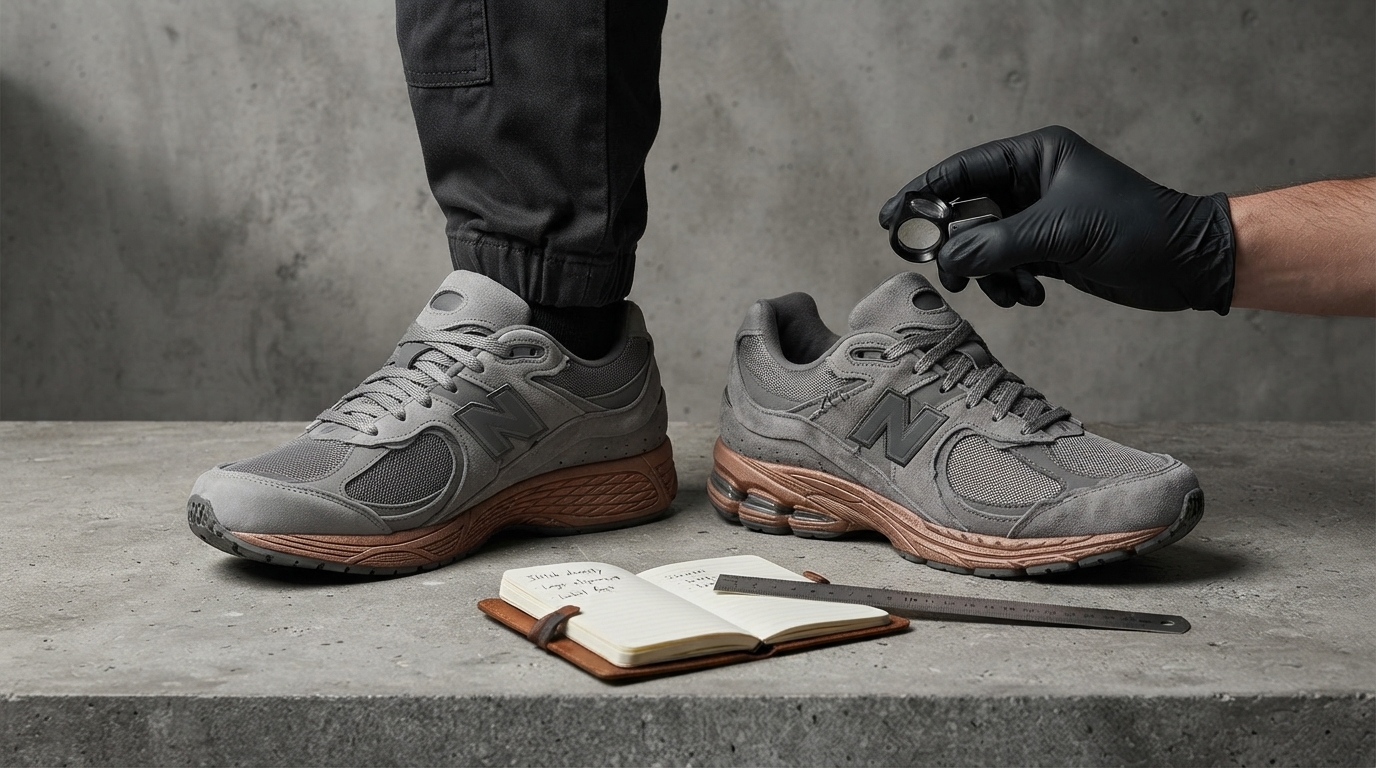
Counterfeit New Balance sneakers can look convincing in photos, but small inconsistencies usually show up when you know where to look. Use the checklist below to verify authenticity in three stages: before buying online, during unboxing, and with a hands-on inspection. Catching red flags early helps avoid wasted time, uncomfortable wear, and complicated returns.
Start With the Listing: Quick Red Flags Before Buying
- Price check: Be cautious with unusually low pricing, “factory surplus” claims, or steep discounts on newly released colorways.
- Seller signals: Watch for no purchase history, inconsistent location details, rushed messaging, or refusal to provide additional photos.
- Photo quality: Stock images only, cropped shots that avoid the size tag or box label, and heavy filters that hide texture are common warning signs.
- Policy check: Missing returns, unclear delivery timelines, or “final sale” language on common models can indicate risk.
- Proof request: Ask for clear photos of the size tag, box label, insole print, outsole pattern, and heel embroidery before paying.
Box, Label, and Paperwork Checks (Before the Shoes Even Come Out)
- Box build: Authentic boxes typically feel sturdy with clean corners; counterfeit boxes may be thin, overly glossy, or poorly folded.
- Box label alignment: Look for straight placement, sharp printing, and consistent fonts.
- Model and color code: Confirm the style name/color matches the actual shoe colorway and materials.
- UPC/SKU consistency: Compare the label code with the inside size tag. Mismatches are a frequent counterfeit tell.
- Extras: Be wary of random “auth cards,” generic hangtags, or misspelled inserts that aren’t typical for the model.
Fast Checklist: Box & Label Pass/Fail
| Check |
Looks Legit |
Suspicious |
| Printing on box label |
Sharp edges, consistent font weight |
Blurry text, uneven spacing, mixed fonts |
| Label placement |
Straight and evenly applied |
Crooked, bubbling, or peeling |
| SKU/UPC vs. size tag |
Codes match across box + shoe |
Codes differ or format looks off |
| Colorway match |
Materials/colors match label description |
Color/material differs from label |
| Packaging quality |
Sturdy box, clean folds |
Thin box, messy folds, strong glue odor |
Materials and Build Quality: What Genuine Pairs Usually Get Right
- Upper materials: Expect consistent mesh density, suede/nubuck that feels even (not plasticky), and clean panel edges.
- Stitching: Stitch length is usually uniform and lines are straight. Loose threads or skipped stitching commonly shows up on fakes.
- Glue and finishing: A little glue can happen, but heavy smearing along midsole seams is a warning sign.
- Symmetry: Left and right shoes should match closely in panel shape, logo placement, and toe box height.
- Odor check: A harsh chemical smell can point to low-grade adhesives used in counterfeits.
Logo, Typography, and Details That Counterfeits Commonly Miss
- “N” logo: Inspect edge crispness, border thickness, and placement. Uneven borders or slightly “floating” logos are common issues.
- Heel branding: Look for clean embroidery or print with consistent letter spacing; sloppy stitching is a frequent counterfeit trait.
- Tongue label: Compare font weight and spacing, and check whether it’s applied straight with clean edges.
- Reflective elements (if applicable): Reflectivity should look even under light; patchy shine can signal incorrect materials.
- Small text accuracy: Misspellings, strange kerning, or inconsistent capitalization are strong indicators of a fake.
Inside the Shoe: Size Tag, Insole, and Lining Checks
- Size tag clarity: Authentic tags are typically crisp and readable; fakes may be faded, blurry, or misaligned.
- Formatting: Look for consistent layout, spacing, and symbol placement. Odd line breaks and inconsistent alignment can be a tell.
- Insole print: Check for centered, durable printing; cheap ink that smears easily is suspicious.
- Footbed feel: Genuine pairs often have more structured support; overly flat, flimsy footbeds can indicate a poor-quality replica.
- Lining quality: Inspect for puckering, uneven seams, or rough edges that can irritate the foot.
Outsole and Midsole: Pattern, Foam, and Wear Signals
- Outsole pattern: Compare to official photos for the specific model; fakes often get lug shapes and spacing wrong.
- Midsole paint lines: Look for clean edges and consistent texture; messy paint or mismatched foam density is a red flag.
- Compression test: Press the foam—overly rigid or overly squishy can indicate the wrong compound.
- Heel stability: Authentic construction tends to feel stable; counterfeits can twist more easily in-hand.
- Early wear: If purchased “new” but shows uneven scuffing or dirt in grooves, consider a return.
A Simple Decision Flow: When to Keep, Question, or Return
Printable Checklist and Photo Reference Pack
Helpful Official References
For model photos and release details, cross-check against the New Balance Official Site. For safe online buying and dispute basics, review the Federal Trade Commission’s online shopping tips. To understand why counterfeit goods can be risky beyond appearance, see U.S. Customs and Border Protection’s counterfeit goods information.
FAQ
Can counterfeit New Balance sneakers have a real-looking box and tags?
Yes. Packaging is often replicated, so it’s important to cross-check SKU/UPC codes across the box label and the inside size tag and confirm the build quality, logos, and typography match authentic references.
What is the fastest way to check authenticity when buying online?
Request clear photos of the size tag, box label, insole print, heel branding, and outsole pattern. If the seller refuses, rushes the sale, or sends vague/low-quality images, treat it as a strong warning sign.
What should be done if a pair seems fake after it arrives?
Take clear photos of every issue (labels, logos, stitching, outsole), compare against official references, avoid wearing them outdoors, and start a return or dispute as quickly as possible within the platform’s timeframe.
Recommended for you

Leave a comment