
Being upside down on a car loan—owing more than the vehicle is worth—can make your budget feel stuck. It’s especially stressful when the car is aging, repairs are stacking up, or your income changes. The smartest path forward depends on your negative equity gap, interest rate, credit, and how urgently you need the payment to drop. Below are clear options, trade-offs, and a decision path to regain flexibility without accidentally increasing your long-term cost.
Negative equity happens when your loan payoff amount is higher than your car’s current market value (either private-party value or trade-in value). It’s common—and it can happen quickly—because car values typically drop fast in the early years while loan balances can fall slowly.
Typical causes include a small down payment, a long term (72–84 months), a high APR, rolling an old loan balance into a new loan, rapid early depreciation, and financing add-ons (service contracts, GAP, accessories) into the loan.
The first year is often the toughest: depreciation is steep, but most of your early payments go to interest—especially when APR is high. A practical early warning sign is when refinancing offers look surprisingly bad because your loan-to-value (LTV) is too high for lenders to approve an attractive rate.
Before making any move, gather your key numbers: a current payoff quote (including per-diem interest), at least two market value estimates, your remaining term, APR, and monthly payment.
Start with an accurate payoff. Your statement balance isn’t the same as a payoff quote, which includes interest through a specific “good-through” date. Next, estimate value realistically. If you’re planning a dealer transaction, use conservative trade-in estimates because they’re often lower than private-party pricing.
The negative equity gap is simple: payoff minus expected sale/trade value. That gap must be covered by cash, rolled into another loan, or addressed through a settlement plan. Also define a realistic target payment before choosing a strategy—because lowering the payment at any cost can backfire if you extend the term or accept a higher APR.
| Item | How to find it | Example |
|---|---|---|
| Loan payoff (good-through date) | Lender payoff quote | $18,900 |
| Estimated trade-in value | Multiple online estimates + dealer quote | $14,500 |
| Estimated private-party value | Listing comparisons in local area | $16,200 |
| Negative equity (trade path) | Payoff − trade-in value | $4,400 |
| Negative equity (private sale path) | Payoff − private value | $2,700 |
| Monthly payment relief needed | Budget target − current payment | $120/month |
If your car is reasonably reliable and your payment is still manageable, keeping the vehicle and shrinking the gap is often the lowest-cost option.
A consistent extra amount applied to principal can speed up equity growth. Even $25–$75 extra per month can matter over 6–12 months, especially if it prevents you from rolling negative equity into another loan.
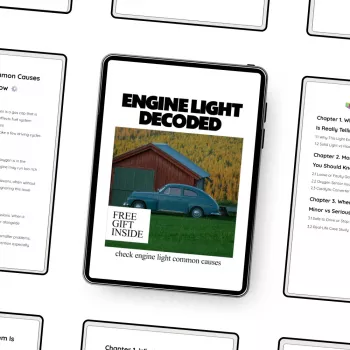
Review insurance deductibles and coverage, plan maintenance to avoid expensive breakdowns, and cut discretionary driving to reduce fuel and wear. If warning lights are causing repair uncertainty, a clear checklist can help you avoid panic decisions; see Engine Light Decoded – Check Engine Light Guide, Car Diagnostic eBook, Engine Warning Light Checklist for Drivers.
For consumer guidance on auto financing rights and common pitfalls, review the Consumer Financial Protection Bureau (CFPB) auto loan resources and the Federal Trade Commission (FTC) buying a car guidance. For a plain-language explanation of negative equity and how it happens, see Experian’s overview of negative equity.
Aim for a down payment, shorter loan terms, and vehicles with slower depreciation. For a step-by-step action plan, worksheets, and decision checklists, see Upside Down on a Car Loan – Practical eBook Guide on Being Upside Down on a Car Loan What to Do for Financial Relief.
Paying extra principal is often the lowest-total-cost route because it reduces negative equity fastest without resetting depreciation. Trading can make sense if the car is unreliable or operating costs are rising, but only if the replacement loan has strong terms (low APR, shorter term, and cash down to offset the gap).
It can, but approval and good rates usually depend on LTV limits, credit, and income stability. Refinancing tends to work best when negative equity is modest and the new APR is clearly lower; otherwise, paying down principal and waiting for depreciation to slow can improve your options.
The vehicle is typically sold (often at auction), fees are added, and you may still owe a deficiency balance if the sale proceeds don’t cover the payoff. The credit impact can be severe, so contacting the lender early about hardship options or a workout plan can reduce the damage.






Leave a comment