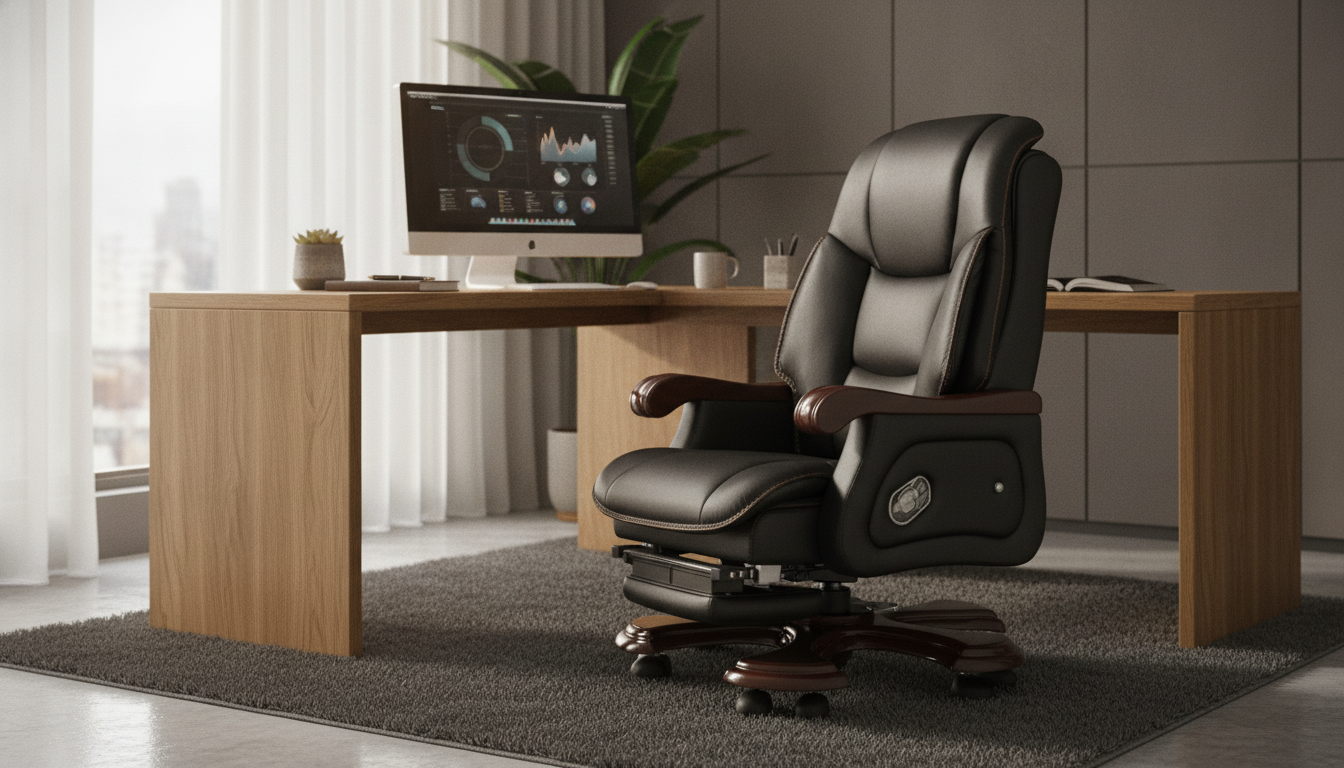
A luxury ergonomic swivel office chair blends posture-focused support with premium materials and effortless mobility—ideal for long work sessions where comfort, alignment, and a polished look all matter. The right chair setup helps reduce pressure points, encourages a neutral spine, and keeps movement smooth so reaching, turning, and repositioning feel natural instead of strained.
Ergonomics is about supporting a neutral posture: head stacked over shoulders, shoulders over hips, and feet firmly supported. When a chair is tuned correctly, it should feel “quiet” on the body—no hot spots, no sharp edges digging in, and no constant need to fidget just to stay comfortable.
Luxury shows up in what you notice over time: material quality, stable construction, refined finishes, and movement that stays smooth without squeaks, wobble, or uneven tilt. A premium chair also maintains consistent comfort across long sessions, rather than feeling good for 10 minutes and then slowly creating pressure at the tailbone or along the thighs.
Swivel and rolling mobility are more than convenience. They help reduce repeated torso twisting by letting the chair move with you—especially helpful when you’re shifting between keyboard, phone, notes, and side surfaces.
Look for a height range that allows your knees to sit roughly level with your hips while your feet rest flat on the floor (or on a footrest). When the seat is too high, you’ll feel pressure under the thighs; too low, and your hips can tuck under, encouraging a slumped spine.
Seat depth should support most of the thigh while leaving a small gap behind the knees to avoid circulation pressure. If the front edge presses into the back of your knees, you’ll unconsciously slide forward—reducing back support and increasing fatigue.
A contoured backrest should maintain the natural lower-back curve without forcing an exaggerated arch. The goal is gentle support that meets your lower back where it naturally rests, so you can sit back fully without feeling pushed forward.
Chairs that recline smoothly and let you fine-tune tilt tension encourage small posture changes throughout the day. These micro-movements can reduce stiffness during long work blocks compared to staying locked upright for hours.
Armrests should help your shoulders stay relaxed while keeping wrists aligned with the desk surface. Adjustable height is especially useful for dialing in a comfortable elbow angle and preventing “shoulder shrugging,” which often leads to neck tension.
Controlled movement matters. A stable base prevents rocking or drifting, and smooth casters keep repositioning effortless. Matching caster type to your flooring helps prevent skidding on hard surfaces or dragging on carpet.
If the goal is executive-level comfort with a clean, premium look, the Luxury Ergonomic Swivel Office Chair is built for comfort-forward desk work with swivel mobility for easy reach and repositioning. Its premium positioning suits executive offices, design-focused home workspaces, and conference rooms where appearance and long-session comfort both matter.
In-stock availability supports faster workspace upgrades—useful when you’re redesigning an office or replacing seating that’s starting to feel unstable or unsupportive. For best results, pair the chair with a desk height that keeps shoulders relaxed and elbows near a right angle.
| Detail | Value |
|---|---|
| Product | Luxury Ergonomic Swivel Office Chair |
| Price | 1605.99 USD |
| Availability | In stock |
| Product page | https://jocunda.com/luxury-ergonomic-swivel-office-chair/ |
A smart setup reduces the need for compensation. A simple adjustment order helps everything “stack” correctly:
For additional workstation guidance, consult authoritative references like OSHA’s Computer Workstations eTool, NIOSH’s resources on ergonomics and musculoskeletal disorders, and Cornell’s ergonomics guidance for chair and workstation setup.
It should feel neutral and supported without forcing your posture: feet stable, hips supported, lower back gently supported, shoulders relaxed, and no pressure behind the knees.
Using recline and tilt for small posture changes is typically more comfortable over long periods. Staying rigidly upright for hours can increase muscle fatigue and stiffness.
If the seat presses into the back of your knees, it’s too deep. If your thighs feel unsupported and your weight shifts toward the tailbone, it may be too shallow.



Leave a comment