Smart Body Care in Cold Climates: Practical Winter Wellness for Skin, Hair, and Daily Comfort
Cold climates can quietly change how skin, hair, and the body handle moisture, barrier protection, and recovery. A smart winter routine focuses on preventing dryness and irritation before they start—using simple, repeatable habits that work at home, outdoors, and while traveling. For more guidance, see 9 Tips To Stay Healthy During the Long, Cold Winter Months.
Why Cold Weather Changes Skin and Hair So Fast
Winter dryness isn’t just “cold air.” It’s a chain reaction that starts with humidity and ends with a stressed-out barrier. For further reading, see Your winter skin survival kit – American Academy of Dermatology.
- Low humidity pulls moisture from skin and hair, increasing dryness, dullness, and static.
- Cold air and wind can weaken the skin barrier, making redness and sensitivity more likely—especially on cheeks, hands, and around the nose.
- Indoor heating often drops humidity even further, which can worsen itchiness, flaking, and tightness.
- Long, hot showers feel soothing, but they can strip protective oils and aggravate dryness when they’re frequent or too hot.
Dermatology guidance consistently points to gentle cleansing, quick moisturizing, and avoiding overly hot water as core habits for winter comfort. See practical tips from the American Academy of Dermatology and the health overview from NIH MedlinePlus.
Build a Winter-Proof Skin Barrier (Face and Body)
Think of your winter routine as “cleanse less aggressively, moisturize more strategically.” The goal is to reduce water loss and support the barrier you already have.
- Cleanse gently: Use a mild, fragrance-free cleanser and skip rough scrubs that can trigger irritation.
- Moisturize strategically: Apply a richer moisturizer right after bathing while skin is still slightly damp.
- Seal in hydration on very dry areas: For hands, shins, elbows, and around nails, add an ointment or balm layer over lotion.
- Protect exposed skin outdoors: Use a barrier cream and cover up when wind is strong (a scarf can be a skincare tool).
- Use sunscreen even in winter: UV reflects off snow and can contribute to dryness and irritation.
Quick winter skin routine by situation
| Situation |
What to do |
Helpful products/types |
| After shower |
Pat dry, moisturize within 3 minutes |
Thick cream; fragrance-free lotion |
| Hands cracking |
Moisturize after each wash; balm at night |
Hand cream + petrolatum-based ointment |
| Windy outdoor time |
Cover skin; reapply barrier layer |
Barrier cream; scarf/face covering |
| Itchy patches |
Reduce hot water; moisturize more often |
Thick emollient; gentle cleanser |
Hair and Scalp Care When Air Is Dry
Winter hair problems usually come down to dehydration plus friction (hats, collars, scarves). Small changes can reduce breakage and scalp discomfort.
- Wash less often if possible: Fewer shampoo days can help reduce scalp and strand dehydration.
- Condition every wash: Add a leave-in conditioner to reduce tangles, breakage, and static.
- Protect ends: A tiny amount of oil or serum on the ends can reduce friction from winter gear and help with flyaways.
- Watch scalp signals: Flakes and tightness may improve with gentler shampoos and less hot water—especially if your scalp feels “squeaky” after washing.
- Air-dry when practical: Frequent heat styling can compound dryness; if you blow-dry, keep heat moderate and focus on roots rather than over-drying the ends.
Hands, Feet, and Lips: The Cold-Climate Trouble Spots
These areas tend to dry out first because they’re either exposed (hands, lips) or trapped in friction and sweat (feet).
- Hands: Wash with lukewarm water, moisturize immediately after, and wear gloves outdoors (and for wet chores).
- Feet: Choose breathable socks, rotate shoes/boots so they fully dry, and moisturize heels to prevent cracking.
- Lips: Apply a bland, occlusive lip balm regularly and avoid licking lips—saliva evaporates fast and can worsen dryness.
- Nails and cuticles: Massage in cuticle oil or a thick cream to reduce splitting and hangnails.
Smart Indoor Habits That Reduce Winter Dryness
Indoor air is where many people lose the most moisture—quietly and constantly.
- Aim for comfortable humidity: A humidifier can help in very dry homes; clean it regularly to prevent buildup.
- Choose shorter, lukewarm showers: This protects skin oils and makes your moisturizer work better.
- Wear breathable layers: Overheating indoors can lead to sweating and irritation, followed by extra dryness.
- Place moisturizer where it’s used: Keep a small pump by sinks, a tube by the bed, and a pocket-sized option in your coat.
Cold-Weather Living: Outdoor Comfort and Recovery
Winter comfort is a mix of protection and recovery—especially on windy days.
A Practical Winter Wellness eBook to Keep the Routine Simple
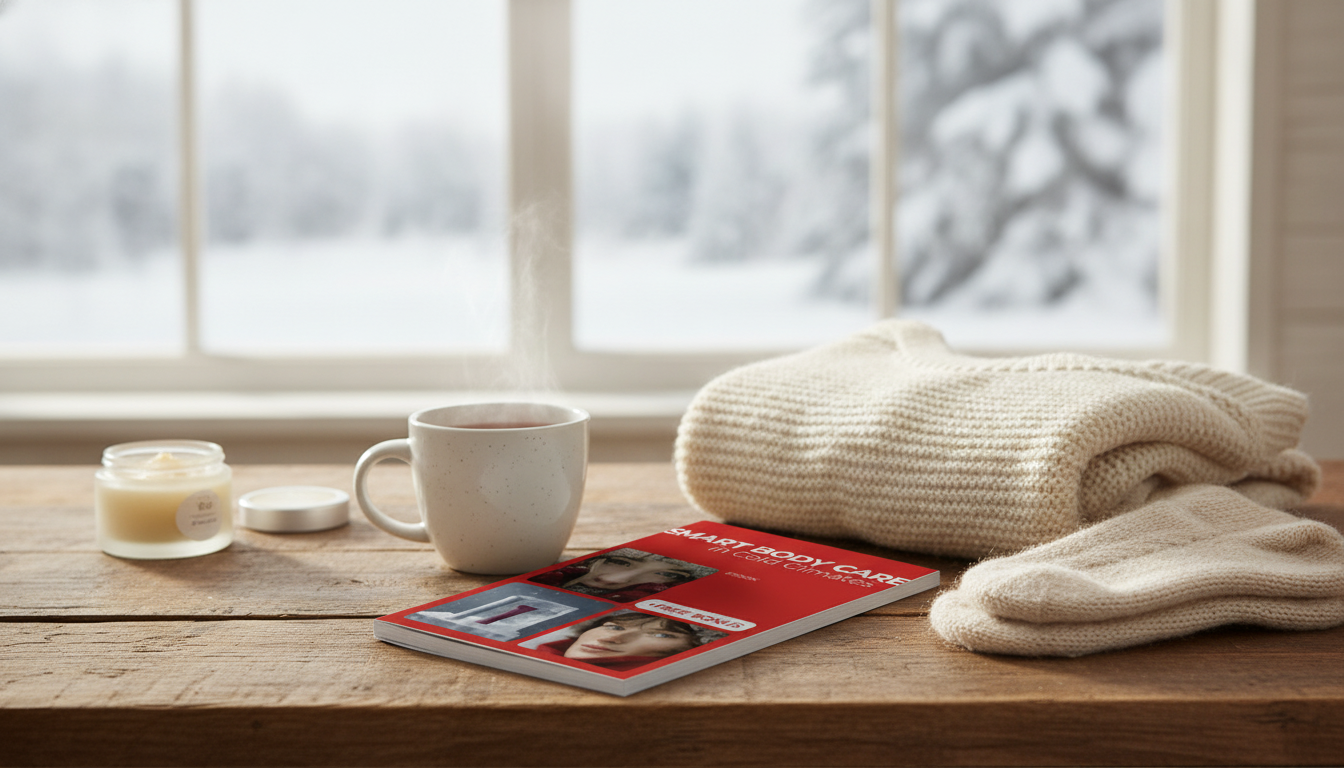
If you want a streamlined plan you can follow all winter, explore Smart Body Care in Cold Climates – Practical Winter Wellness eBook for Healthy Skin, Hair & Cold Weather Living.
Extra winter-ready digital guides (useful for travel and busy seasons)
FAQ
How often should moisturizer be applied in winter?
Apply moisturizer after every shower or hand wash, and add extra applications during the day if skin starts to feel tight or itchy. The most important application is immediately after bathing, when skin is slightly damp.
Are hot showers bad for winter skin?
Long, hot showers can strip the skin’s protective oils and make dryness worse. Shorter showers with lukewarm water, followed by moisturizing right away, are usually more comfortable in winter.
What helps with winter hair static and breakage?
Condition every wash, use a leave-in conditioner, and avoid overwashing to reduce dehydration. Minimizing heat styling and using a small amount of oil or serum on the ends can also help, along with choosing softer, less “grabby” hat materials.
Recommended for you







Leave a comment