
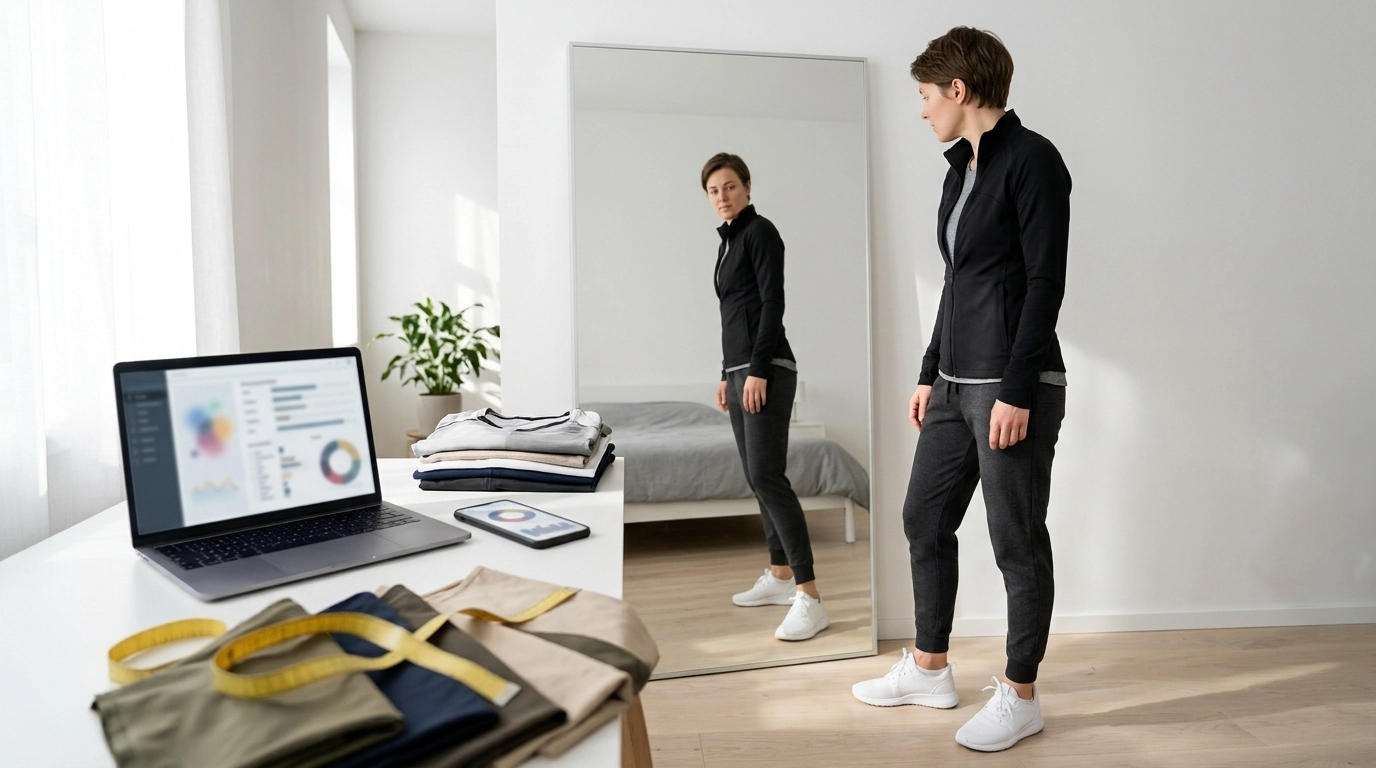
Second-guessing an outfit can drain time and confidence before the day even starts. The goal isn’t a perfect look—it’s a reliable, repeatable way to get dressed that feels calm, cohesive, and “good to go.” Below is a practical system built around a quick decision flow, fast fit-and-cohesion checks, and small habits that build trust in your choices over time.
Outfit doubt often isn’t about fashion knowledge—it’s about mental load. When mornings are busy, your brain treats clothing decisions as higher-stakes than they need to be, especially when there are too many options and no clear filter.
If appearance-related distress feels persistent or intense, it can be helpful to read about when to seek support. Cleveland Clinic provides context on appearance-related distress and body dysmorphic disorder here: Body dysmorphic disorder and appearance-related distress.
This routine is designed to reduce spiraling by limiting how many times you “start over.” You’ll make one clear choice, confirm it behaves, then finish the look with intention.
| Check | What to look for | Quick fix |
|---|---|---|
| Comfort | No pinching, slipping, scratchy fabric, or constant tugging | Swap the problem piece first (often shoes or waistband) |
| Proportion | Balanced top/bottom volume; hem lengths feel intentional | Change shoe height, add a tuck, or switch to a slimmer/wider layer |
| Cohesion | Colors feel related; details don’t compete | Repeat one color in two places or remove one “extra” accessory |
| Appropriateness | Matches setting and movement needs | Add/remove a layer; switch bag or outerwear to shift formality |
| Confidence signal | One element you genuinely like stands out | Add a signature item: earrings, belt, watch, scarf, or lipstick |
Default outfits aren’t rigid uniforms—they’re formulas you trust. This is where confidence compounds, because repetition creates evidence. In psychology, that “I can handle this” belief is often described as self-efficacy, and it grows through successful reps.
If the goal is fewer outfit regrets and quicker mornings, a simple system helps more than more clothes. The Getting Dressed Without Doubt Kit is a 3-in-1 bundle designed to make outfit decisions easier to repeat.
| Timeframe | Focus | Outcome to aim for |
|---|---|---|
| Day 1 | Run the checklist once; change only one item | A finished look without spiraling |
| Days 2–3 | Note what felt best (fit + comfort) | Two reliable outfit formulas |
| Week 1 | Photograph 5 winning looks | A personal lookbook for fast mornings |
| Week 2 | Do a mini edit: remove top 10 doubt items | Less friction and fewer wrong-turn outfits |
For confidence that extends beyond clothing—like speaking up in meetings, networking, or social plans after work—pair the style routine with communication support such as Speak Easy: How to Talk to Anyone with Confidence and Authentic Charm.
Confidence rises when decisions become repeatable: default outfit formulas, a quick checklist, and fast comfort checks reduce decision fatigue and build trust in what consistently works. Photos of winning outfits create feedback you can reuse on rushed mornings.
Treat comfort as non-negotiable and identify the failing component (shoes, waistband, fabric, or slipping straps). Create a short swap list of proven alternatives so you can keep the overall look but replace the problem piece quickly.
Five to seven outfit formulas that cover your real-life contexts (work, casual, social, travel, and weather extremes) are usually enough. Formulas stay flexible because you can rotate colors and layers without rebuilding the whole outfit.





Leave a comment