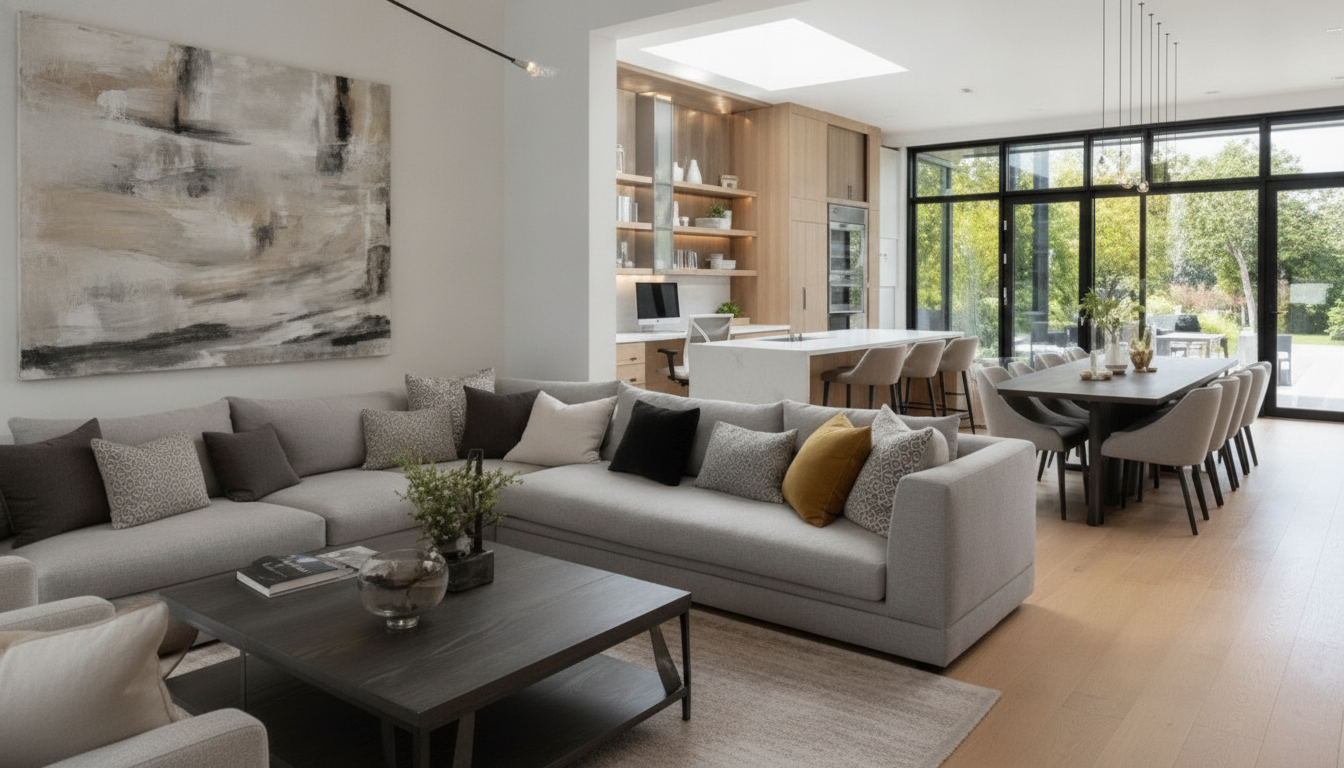
Open-plan rooms can feel airy and welcoming, but they also tend to amplify the everyday friction of modern life: competing schedules, visual clutter, noisy distractions, and constant “resetting” just to use the same space for work, meals, play, and downtime. The goal isn’t to stuff more furniture into the room—it’s to make the room easier to read at a glance, so each activity has a natural home.
The From Open Rooms to Intentional Zones Bundle – 10-in-1 Guide for Multi-Functional Living Spaces is built around that idea: turn one big room into clear, purpose-driven zones—without renovating—so routines run smoother and the space feels calmer day to day.
Environmental stressors add up over time. The American Psychological Association notes how day-to-day conditions can influence stress levels and well-being, making the home’s usability more than just a style issue (APA overview).
Zoning works best when it starts with what actually happens in the space—not what looks good on a mood board.
Lighting plays a major role in making zones feel distinct. Mixing task, ambient, and accent lighting is also an easy efficiency win; the U.S. Department of Energy breaks down practical lighting basics and options (Energy Saver: lighting choices).
The From Open Rooms to Intentional Zones Bundle – 10-in-1 Guide for Multi-Functional Living Spaces is designed as a practical system, not a one-off “redecorate” push. It centers function first—what happens where—then helps you refine boundaries, storage, lighting, and flow.
Most open rooms improve dramatically when the following zone types are clear—even if each one is small.
| Zone purpose | Simple boundary | Must-have elements | Fast reset tip |
|---|---|---|---|
| Work / study | Rug + desk lamp + chair orientation | Task light, comfortable chair, cable management | Desk tray + one catch-all bin for paper/tools |
| Relax / read | Accent chair + floor lamp + side table | Soft light, small surface for drink/book, throw | One lidded basket for remote/charging items |
| Meals / planning | Pendant light or centered table runner | Table, wipeable surface, nearby storage | Tray for daily items; clear table nightly |
| Kids’ play / hobbies | Low shelf or rolling cart as divider | Open floor space, labeled bins, durable mat | “One-bin rule” per activity to avoid sprawl |
| Entry drop | Console + hooks + runner | Hooks, bowl/tray, shoe storage | Daily 60-second reset before bedtime |
For rest-focused zones, the sleep environment matters more than many people expect. The National Sleep Foundation highlights how light and environmental factors can affect sleep quality (sleep topics).
If the room needs to support more social moments—hosting, family gatherings, or simply feeling more at ease interacting in shared spaces—communication confidence can help the space function better too. Speak Easy: How to Talk to Anyone with Confidence and Authentic Charm pairs well with a hosting zone setup by making conversations feel smoother and less stressful when the room is “on.”
Base it on daily routines and the space you actually have. Most rooms work well with 3–5 clear zones, each with one anchor and one simple boundary.
Define the work footprint with a rug and dedicated lighting, then orient the desk away from the lounge area. A low shelf or console adds a visual divider while keeping the room open and bright.
Design for fast resets: use closed storage for visual calm, keep one dedicated catch-all per zone, and stick to a short nightly routine that restores key surfaces.




Leave a comment