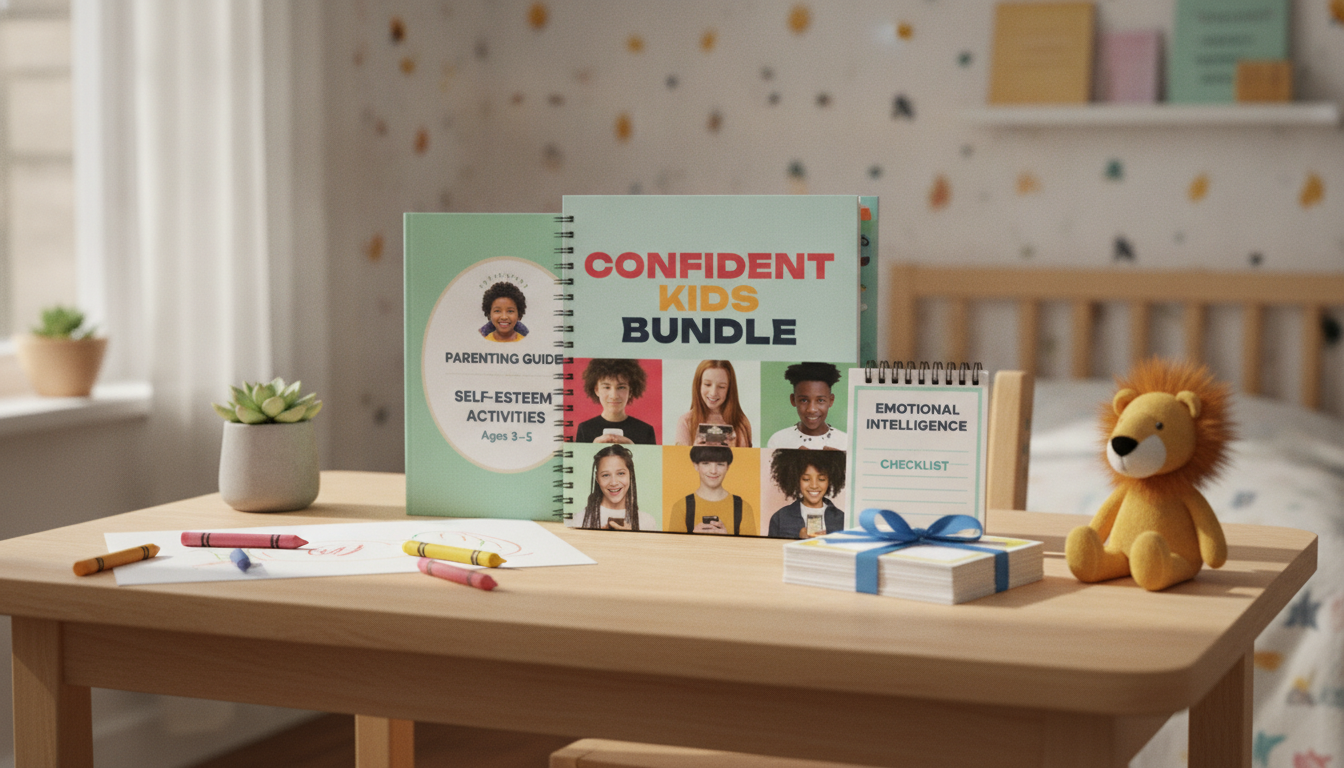
Big feelings are normal in the preschool years, but many families want clearer, calmer ways to coach emotions without power struggles. The Confident Kids Bundle is a 3-in-1 set designed for ages 3–5 that blends a practical parenting guide, self-esteem-building activities, and an emotional intelligence checklist to help children name feelings, practice coping skills, and build confidence through everyday routines. For more guidance, see Raising Emotionally Intelligent Children – HelpGuide.org.
Preschoolers are still learning how to manage frustration, handle transitions, and recover when something doesn’t go their way. With consistent language and short daily practice, emotional skills can become part of the family rhythm—without turning “working on emotions” into a big project. For further reading, see Emotional Intelligence Creates Loving and Supportive Parenting.
Emotional strength at this age doesn’t mean staying calm all the time. It looks like small, repeatable skills that grow with support, sleep, and practice.
These are also aligned with what many child-development resources describe as typical preschool social-emotional growth. For a helpful reference point, see the CDC developmental milestones (ages 3–5) and the American Academy of Pediatrics overview of preschool social-emotional development.
The bundle is designed to be used in short bursts (about 5–15 minutes), plus quick “in-the-moment” scripts when emotions spike.
| Component | Best time to use | What it supports | Example outcome |
|---|---|---|---|
| Parenting guide | In-the-moment coaching (meltdowns, conflicts) | Language, limits, repair steps | Child accepts comfort and follows a simple calm-down routine |
| Self-esteem activities (3–5) | Playtime, quiet time, weekends | Confidence, persistence, positive identity | Child says “I can try again” after frustration |
| Emotional intelligence checklist | Weekly check-ins or planning | Tracking progress, choosing next skill | Parent spots patterns and focuses on one skill per week |
Confident Kids Bundle: Nurturing Emotional Strength (3-in-1 Bundle) is currently in stock and priced at $50.99.
Preschoolers learn best through repetition and predictable steps. This routine keeps the practice short while building real carryover into hard moments.
When the same steps show up during tantrums, transitions, and bedtime, children begin to recognize the pattern: name it, calm the body, then solve the problem.
The checklist works best when it’s treated like a map, not a grade. Skills develop unevenly at ages 3–5, and context can temporarily “shrink” a child’s ability to cope.
Confidence grows from capability and connection—not from constant hype. The activities in the bundle support “real” self-esteem by reinforcing effort, kindness, and persistence.
Get the full bundle here: Confident Kids Bundle: Nurturing Emotional Strength (3-in-1 Bundle).
If strengthening caregiver communication and confidence would help support calmer coaching at home, this in-stock companion resource may also fit: Speak Easy: How to Talk to Anyone with Confidence and Authentic Charm.
Yes. The parenting guide focuses on in-the-moment coaching with short scripts and “calm body first” steps, which is essential before attempting problem-solving. Daily practice in small doses helps tantrums become shorter and recovery become faster over time.
Plan for about 5–15 minutes per day, and repeat a few favorite activities rather than trying to do everything at once. The checklist can be used weekly to notice progress and pick one next skill.
Start with two-choice labels (“mad or sad?”) and visuals through play, and model your own simple feeling words out loud. Focus first on body-calming skills, then gradually build toward naming feelings during calmer moments.







Leave a comment