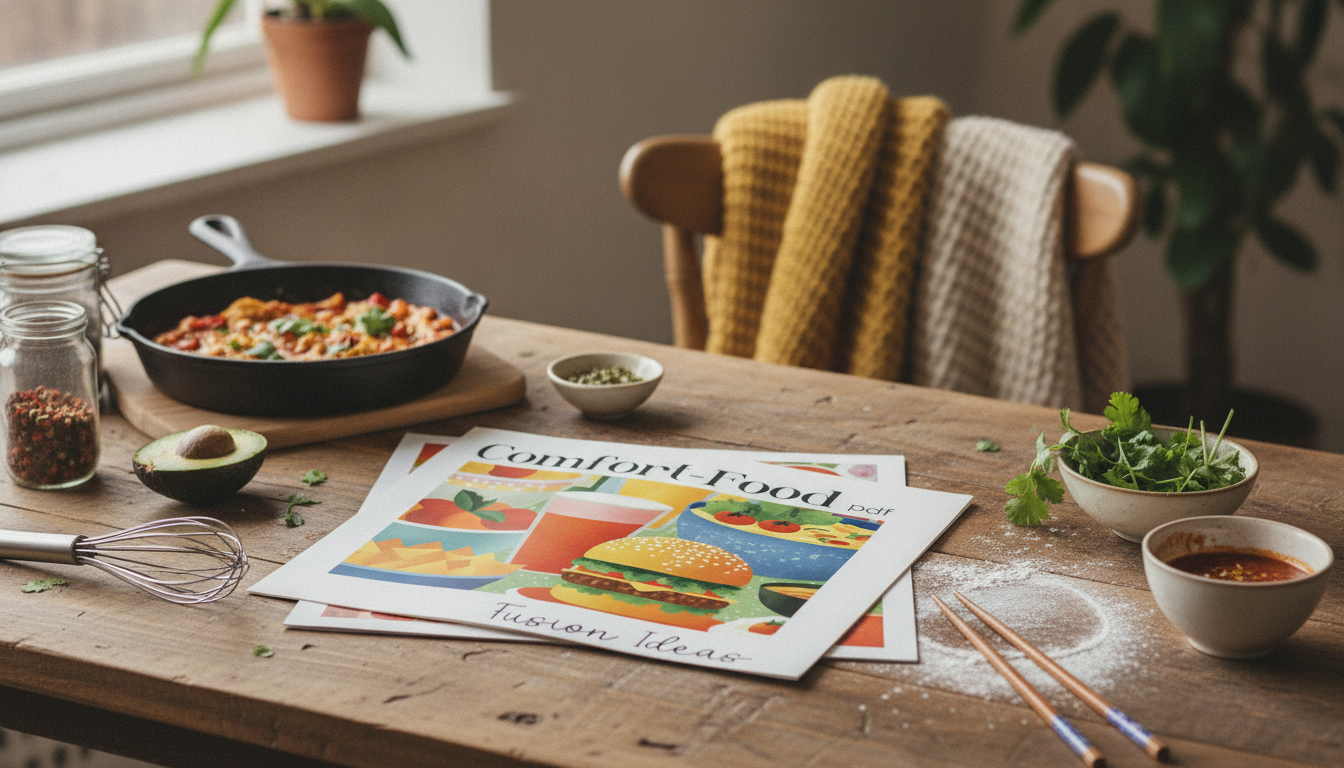
Comfort food can feel both familiar and adventurous when two cuisines meet in one cozy dish. A fusion checklist keeps the creativity flowing without overcomplicating dinner—guiding choices like base + sauce + crunch + garnish, while staying practical for weeknights, pantry limits, and dietary needs. The ideas below organize fusion building blocks, flavor pairings, and a simple process for turning “that sounds good” into repeatable, crowd-pleasing meals.
Comfort-food fusion combines familiar textures and formats (bowls, casseroles, noodles, stews, sandwiches) with flavors, toppings, and techniques from another cuisine. The goal is cozy and satisfying first—fusion elements should support the comfort factor, not overwhelm it.
A reliable rule is to keep one anchor that feels classic (the base), then add 1–2 global twists (a sauce, spice blend, topping, or garnish). Where fusion goes sideways is the “everything at once” approach: too many competing acids, heat sources, or aromatic profiles can muddy the dish and make it taste unfocused.
Start with something that already reads as comforting: rice, noodles, potatoes, bread, dumplings, polenta, grits, or a cozy soup/stew foundation.
Chicken thighs, ground meat, beans/lentils, tofu, mushrooms, eggs, or cheese-forward components all work. Pick what’s easiest for a weeknight and what matches your sauce direction.
Think in families: creamy, tomato-based, miso-butter, coconut, gochujang, harissa, mole-inspired, herb-forward, or broth-based.
Toasted crumbs, fried shallots, pickles, crunchy slaw, roasted nuts, sesame, or crispy cheese add the “can’t-stop-eating” contrast that makes comfort food memorable.
Citrus, vinegar, yogurt, fresh herbs, scallions, chili oil, or a quick pickle balances richness and keeps fusion flavors tasting intentional.
| Comfort Base | Global Flavor Direction | Sauce/Braise Idea | Crunch/Finish |
|---|---|---|---|
| Macaroni | Korean BBQ vibes | Gochujang-cream sauce | Sesame + scallions |
| Mashed potatoes | Indian-inspired | Butter chicken-style gravy (mild) | Cilantro + quick onion pickle |
| Chicken soup | Mexican street-corn twist | Broth + lime + a little crema | Toasted corn + cotija |
| Fried rice | Mediterranean comfort | Lemon-garlic olive oil + feta | Crispy chickpeas |
| Grilled cheese | Italian-American + kimchi | Mozzarella + kimchi + a touch of honey | Chili flakes + pickles |
When you want a sure win, choose a familiar format and let the twist live in the sauce, seasoning, or topping. These combinations tend to taste cohesive because each has a clear “main idea.”
Fusion comfort food shines when it’s rich but not flat. A few balancing habits make almost any mashup taste more “finished.”
For technique-driven ways to build better browning, crispness, and sauce texture, Serious Eats’ Food Lab is a practical deep dive into what makes comfort food taste “restaurant-good” at home.
For safe cooling and reheating practices, follow the time-and-temperature guidance from the USDA Food Safety and Inspection Service.
Cozy International Comfort-Food Fusion Checklist (printable)
If fusion night doubles as a casual hangout, a simple conversation prompt can make hosting feel easier too: Speak Easy: How to Talk to Anyone with Confidence and Authentic Charm | eBook Guide for How to Talk to Anyone with Ease and Confidence, Social Skills, Communication Confidence.
To keep the plate satisfying (not just rich), the Harvard T.H. Chan School of Public Health Healthy Eating Plate offers an easy way to think about balancing protein, vegetables, and whole grains—helpful when comfort food starts to skew heavy.
Two is usually the sweet spot. Keep one familiar base as the anchor, then add 1–2 distinct global elements (like a sauce and one topping) so the final dish tastes clear and cohesive.
Pick one primary flavor direction (a single sauce or spice profile), then choose garnishes and crunch that naturally match it. Finish with a little acid and a fresh herb to “lift” rich flavors and make the whole bowl taste planned.
Add brightness (citrus or vinegar), increase vegetables, and rotate in broth-based sauces instead of only cream or cheese. Serving a crunchy salad or quick pickles on the side also makes rich mains feel lighter.







Leave a comment