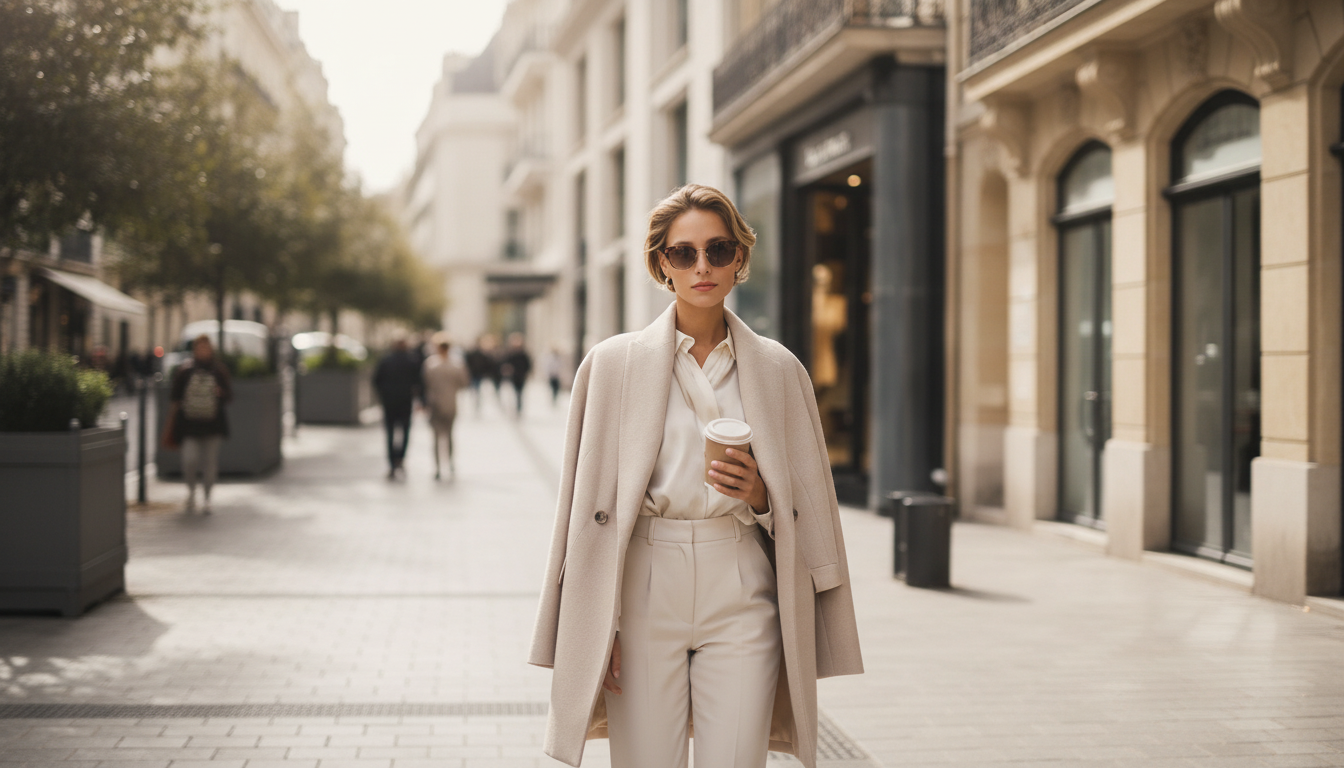
A rectangle body shape is defined by shoulders, waist, and hips that read as relatively balanced, with less natural waist indentation. The most flattering outfits don’t “fix” the body— they use proportion, structure, and strategic emphasis to create definition where desired and highlight a long, streamlined frame.
Most rectangle frames share a few visual cues: shoulders and hips are close in width, the waist is subtly defined, and the torso can appear straight up-and-down. That’s not a limitation—it’s a strong base for modern silhouettes.
Rectangle styling works best when the clothing does the shaping—through fit, fabric, and strategic “high points.”
If you want a deeper, step-by-step wardrobe roadmap, the digital guide Shaping Style: Dressing the Rectangle Body – Ultimate Guide for Flattering Fashion is an easy way to keep outfit choices consistent when you’re shopping or getting dressed.
With a rectangle frame, tops are a powerful place to introduce shape—especially through neckline geometry, shoulder structure, and intentional hem lengths.
For a polished effect, consider color placement: higher-contrast tops naturally draw the eye upward, while tonal pairings create a longer line. For a quick refresher on how color works visually, Encyclopaedia Britannica’s overview of color is a helpful grounding point.
Bottoms influence the silhouette more than most people expect. A small change—like rise height or pocket placement—can add definition without adding bulk.
One-piece outfits are rectangle-friendly because they can create shape in a single move—especially when they include a waist feature or sculpting seams.
If you’re building confidence in how you present yourself (and not just what you wear), Speak Easy: How to Talk to Anyone with Confidence and Authentic Charm pairs well with a refined wardrobe—because style lands best when you feel comfortable owning it.
For broader fashion education and design fundamentals, the Fashion Institute of Technology (FIT) is a respected authority worth exploring.
| Category | Most flattering choices | Why it works |
|---|---|---|
| Tops | Wrap, square neck, tie-front, peplum (subtle) | Creates visual waist and adds shape to the torso |
| Pants | High-rise wide-leg, bootcut, tailored taper | Defines waist and adds curve through leg silhouette |
| Skirts | A-line, wrap, pleated, bias-cut | Builds movement and hip dimension without clinging |
| Dresses | Wrap, fit-and-flare, belted shirt dress | Adds structure and definition in one piece |
| Outerwear | Cropped jacket, belted trench, shaped blazer | Creates a waistline and balances proportions |
Avoid relying only on straight, unshaped silhouettes layered together (boxy top + straight bottom + unstructured outerwear). Add one defining element—like a tuck, wrap line, shaped seams, or intentional volume—to keep the look from turning rectangular.
No. Waist definition can come from wrap fronts, princess seams, strategic tucks, and high-rise bottoms; belts are simply the fastest, most adjustable option when you want emphasis at the waist.
Yes. Choose versions with drape (cowl neck, ruching, side gathering) or add structure with a shaped blazer or cropped jacket to introduce contrast and dimension.



Leave a comment