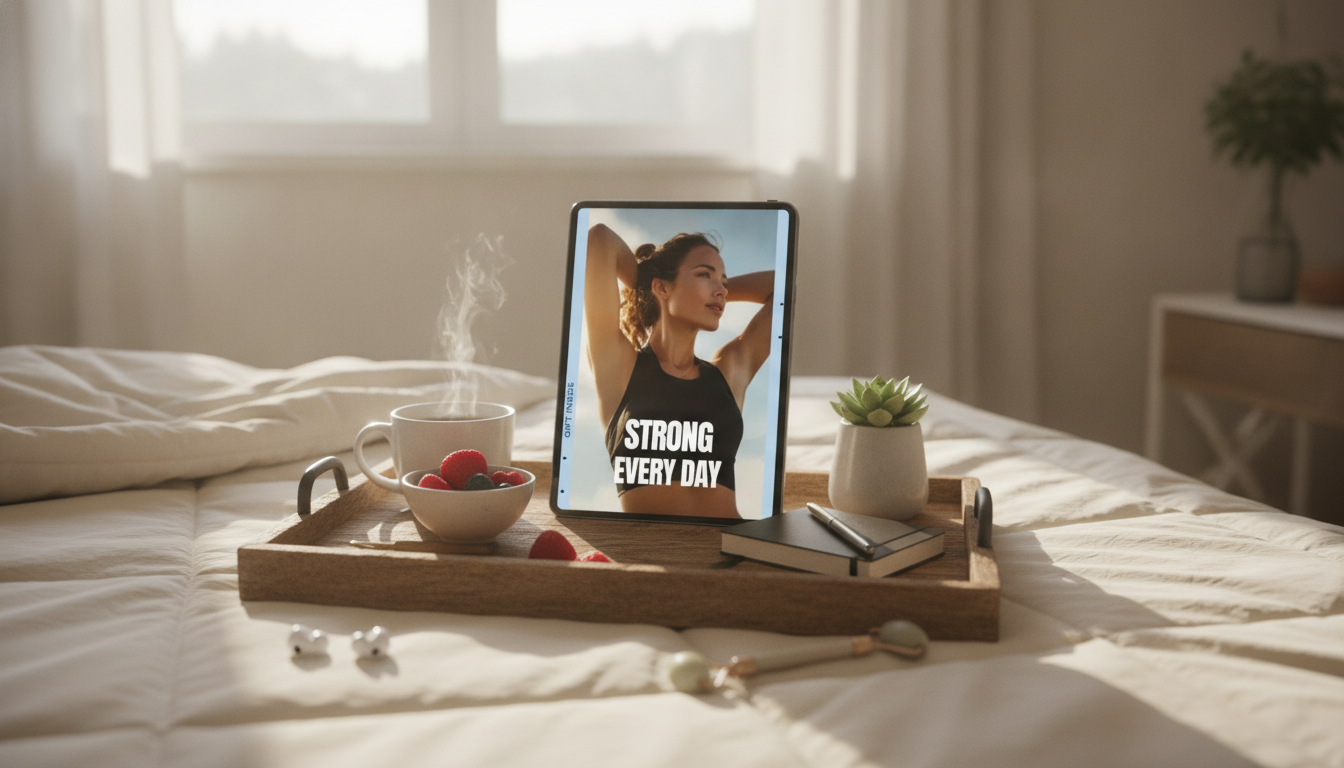
Confidence in fitness rarely comes from a single breakthrough. It’s built through small, repeatable choices that teach the body and mind: “I do what I say I’ll do.” The goal isn’t to be hyped up every morning—it’s to build daily habits that make movement feel safer, more doable, and more connected to self-trust, especially on busy or low-motivation days. For more guidance, see Role of Physical Activity on Mental Health and Well-Being: A Review.
Fitness confidence is the expectation that you can handle a workout—even when energy, mood, or time is limited. Motivation is emotional and unpredictable. Confidence is practical and evidence-based. For further reading, see Weight Loss Ninja Technique Love Couplegoals Shorts ….
Each time you follow through in a realistic way, you create proof that you can be relied on. That proof becomes a steady foundation even during imperfect weeks.
For a reality check on what “enough” movement can look like, the Physical Activity Guidelines for Americans outline weekly targets—yet daily habits are what help those targets happen in real life.
A simple loop turns effort into identity-level confidence: Promise → Action → Proof.
This approach is especially powerful because it removes the pressure to “feel ready.” You’re not chasing the perfect mood; you’re building a reliable pattern.
Consistency gets easier when your plan has a safety net. Use a two-tier structure:
To reduce decision fatigue, repeat 2–4 primary movement patterns (squat/hinge, push/pull, core, carry or cardio). Repetition accelerates confidence because you spend less mental energy choosing and more energy doing.
Keep intensity flexible. Many people stay consistent longer with one challenging day, one moderate day, and one easy day—rather than going hard every time. After each workout, add a short closing ritual (a 2-minute stretch, a shower routine, or a protein-forward snack) so your brain registers completion.
| Situation | Minimum (5–12 min) | Base (20–45 min) | Confidence Win |
|---|---|---|---|
| Low energy | Gentle walk + mobility | Steady-state cardio or light full-body | Keeps the habit alive without draining willpower |
| No time | 3 rounds: squat + push + plank | Full-body strength circuit | Proof that “busy” doesn’t equal “stopped” |
| High stress | Breathing + easy movement | Moderate session with longer warm-up | Regulates mood and prevents spiral |
| Feeling strong | Warm-up + 1 hard set each | Progressive strength session | Builds capability and pride |
| Sore/tight | Mobility + easy core | Technique-focused lifting | Body trust through smart adjustments |
Body trust doesn’t mean “do whatever you feel like.” It means reading signals accurately and responding intelligently.
Over time, “train smarter” prevents the boom-bust cycle that breaks confidence. The CDC’s overview of physical activity benefits reinforces why steady movement supports both physical and mental well-being—another reason minimum workouts still count.
If you want a focused, low-pressure approach to daily confidence habits, body trust, and a consistency mindset, consider Strong Every Day – Fitness Confidence Guide, Daily Confidence Habits, Body Trust & Consistency Mindset eBook for Women. It’s built to help you keep promises small enough to keep—and meaningful enough to change how you show up.
For a complementary confidence boost that supports follow-through outside the gym (work, social settings, and everyday self-advocacy), Speak Easy: How to Talk to Anyone with Confidence and Authentic Charm can pair well with a “strong every day” identity.
Confidence grows from repeated follow-through, so many people feel a shift within 2–4 weeks of consistent small habits. Stronger identity-level change often shows up over 8–12 weeks as “showing up” becomes automatic.
Pick something safe, repeatable, and easy to start in 5–12 minutes—like a brisk walk, a mobility flow, or a short bodyweight circuit (squats, push-ups, planks). The best minimum workout is the one you’ll actually do without negotiating.
Consistency improves through sustainable routines, flexible intensity, supportive tracking, and recovery—not restriction. When workouts scale to your real life and you measure success by follow-through, it’s easier to stay steady without burnout.






Leave a comment