×
Back to menu
HomeBlogBlogBright Side Living Bundle: Reframe Fast, Build Momentum

Bright Side Living Bundle: Reframe Fast, Build Momentum

Bright Side Living Bundle: Reframe Fast, Build Momentum

Positive Attitude Builder: Bright Side Living Bundle for Daily Reframing and Momentum

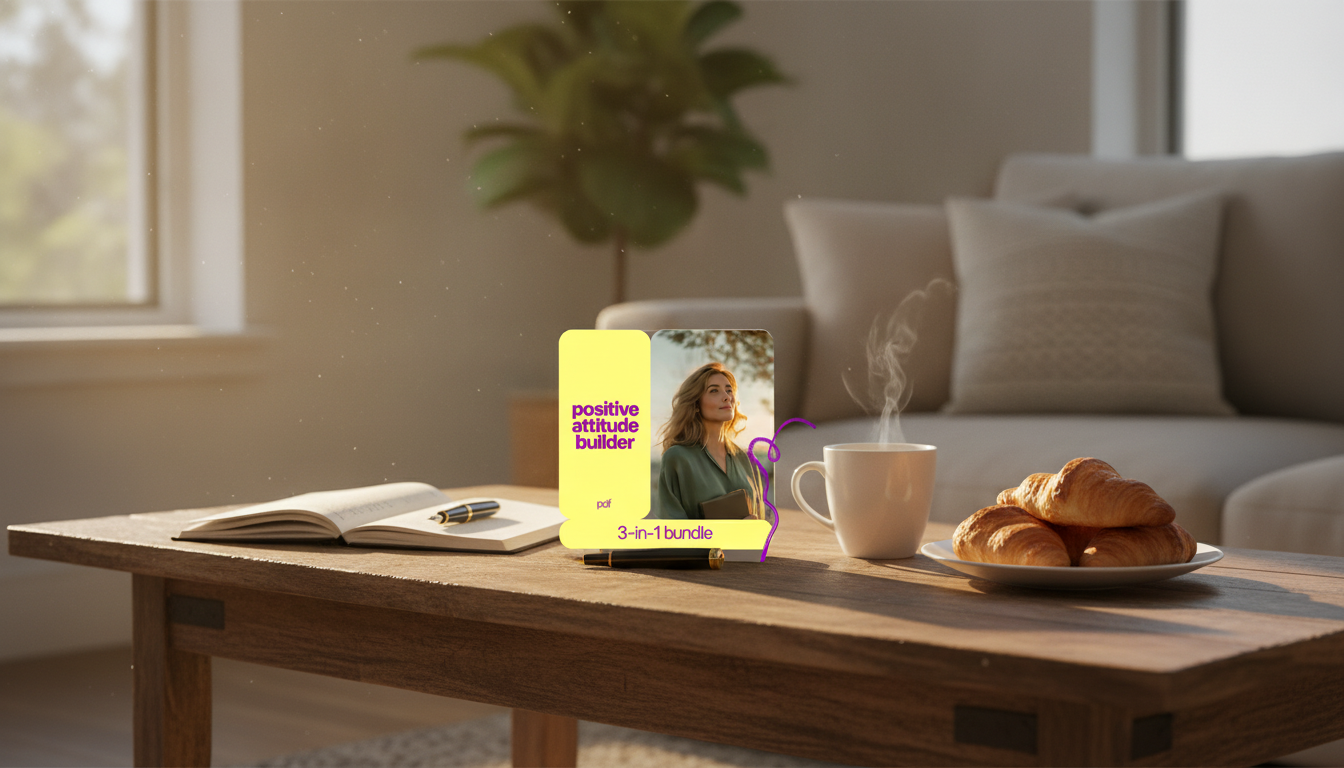
A positive attitude is less about forcing optimism and more about building repeatable habits that make it easier to notice options, regulate stress, and respond with intention. The Positive Attitude Builder – 3 in 1 Bundle: Bright Side Living, Your Bright Side Checklist, Flip the Script combines a guided approach (Bright Side Living), a practical routine tool (Your Bright Side Checklist), and a reframing method (Flip the Script) to support steady day-to-day progress—especially when motivation is low or life feels noisy.

Instead of trying to “think positive” on command, this system helps you build a calmer baseline: clearer self-talk, fewer spirals, and more follow-through on small actions that shift mood and momentum.

What “positive attitude” looks like in real life

A workable positive attitude is noticeable in how you respond, not in how cheerful you appear. It often shows up as:

  • Shifts from automatic reactions to chosen responses, especially under pressure
  • More flexible thinking: seeing more than one explanation, option, or next step
  • Consistent self-talk that is realistic and supportive rather than harsh or all-or-nothing
  • Greater follow-through on small actions that improve mood (sleep, movement, boundaries, connection)
  • Quicker recovery after setbacks—less rumination, more reset

This aligns with well-established resilience skills: acknowledging stress, using coping tools, and returning to what you can control. For a deeper overview of resilience and how it’s built over time, see the American Psychological Association’s resilience resources.

What’s inside the 3-in-1 bundle

The bundle is designed to work as a daily system: learn the approach, run the checklist, then reframe what’s blocking progress.

  • Bright Side Living: structured guidance for building a steadier outlook through everyday habits and perspective practices
  • Your Bright Side Checklist: a repeatable routine that turns “I should” into clear, doable steps
  • Flip the Script: a reframing tool to challenge unhelpful thoughts and replace them with balanced alternatives
  • Best used together: the guidance shows you what to look for, the checklist makes it repeatable, and reframing helps when your brain resists change
Bundle components at a glance

Component Best for How to use it
Bright Side Living Creating a foundation and understanding patterns Read in short sessions; highlight triggers and go-to responses
Your Bright Side Checklist Consistency when motivation dips Use daily or 3–5x/week; track what improves mood and focus
Flip the Script Breaking negative loops quickly Use anytime a thought feels stuck, harsh, or catastrophic

How the method supports change: mindset, behavior, and environment

Lasting attitude shifts are easier when you work on more than one lever at a time. This bundle supports change through:

  • Mindset: reframing turns “this is hopeless” into “this is hard, and there’s one step I can take.” This approach mirrors cognitive-behavioral methods that focus on the link between thoughts, emotions, and actions. For background on evidence-based CBT frameworks, see the National Library of Medicine overview.
  • Behavior: checklists reduce decision fatigue and make progress measurable, which is especially helpful during stressful weeks when motivation isn’t reliable.
  • Environment: small adjustments (boundaries, cues, supportive routines) make positivity easier to maintain. When your environment “nudges” you toward helpful choices, you don’t have to rely on willpower as much.
  • Self-compassion: replacing self-criticism with accountability increases persistence over time. A calm, realistic tone (“What’s one doable step?”) often works better than harsh pressure.

If negative self-talk is a recurring stress trigger, the Mayo Clinic’s guide to positive thinking and reducing negative self-talk offers practical examples of how thoughts can intensify stress—and how to interrupt that pattern.

A simple daily rhythm using the bundle (10–15 minutes)

This routine is intentionally short. The goal is consistency, not intensity.

  • Start (2 minutes): scan the checklist to choose one “bright side” action for today (something small enough that you’ll actually do it).
  • Middle (5 minutes): when stress spikes, use Flip the Script to reframe the loudest negative thought—especially the one that makes you want to quit, procrastinate, or lash out.
  • End (3–8 minutes): reflect on what helped—identify one win, one lesson, and one adjustment for tomorrow.
  • Weekly reset: review patterns (common triggers, recurring thoughts, most effective actions) and update the checklist so it stays relevant.

Over time, this builds a personal “user manual” for your mood: what drains you, what stabilizes you, and what gets you back on track faster.

When this bundle is most useful

For an additional skill set that pairs well with mindset work, communication confidence can reduce social stress and prevent misunderstandings from becoming all-day spirals. Speak Easy: How to Talk to Anyone with Confidence and Authentic Charm can be a helpful next step for building calmer, clearer conversations.

Getting better results: common blockers and quick fixes

If you want a structured, repeatable way to build those shifts into your week, the Bright Side Living Bundle is designed to be used in short bursts—so you can keep moving even when life feels crowded.

FAQ

How quickly can a positive attitude habit start to feel different?

Small shifts can show up within days if you keep the routine simple and consistent (like fewer intense spirals or quicker resets). Deeper, more automatic pattern changes typically take weeks, so it helps to track small wins and reduced duration of negative loops.

Is reframing the same as ignoring negative emotions?

No. Reframing works best when you acknowledge the emotion first, then challenge the thought that’s amplifying it. The goal is accuracy and options, not denial.

What if the checklist feels like one more thing to do?

Start with a minimal version (1–3 items) and treat it like a menu, not a mandate. Try using it three times a week and “stack” it onto an existing habit so it doesn’t require extra planning.


Leave a comment

Why jocunda.com?

Uncompromised Quality
Experience enduring elegance and durability with our premium collection
Curated Selection
Discover exceptional products for your refined lifestyle in our handpicked collection
Exclusive Deals
Access special savings on luxurious items, elevating your experience for less
EXPRESS DELIVERY
FREE RETURNS
EXCEPTIONAL CUSTOMER SERVICE
SAFE PAYMENTS
Top

Shopping cart

×