The Beginner’s Fish Food Checklist: Simple Feeding Choices for a Healthy Aquarium
Feeding new aquarium fish is less about finding a “perfect” food and more about matching the right type, size, and schedule to the fish in the tank. A simple, repeatable routine keeps water clearer, fish less stressed, and maintenance easier. Below is a beginner-friendly breakdown of staple foods, safe add-ons, label checks, and an easy portion rule—plus a printable checklist to keep feeding consistent.
Start With the Fish: What They Actually Eat
Before buying anything, match food to the fish—not the other way around. Most “community” aquariums include different feeding styles in one tank, so the goal is a reliable staple plus a few targeted add-ons.
- Diet type: Identify each fish as primarily omnivore, herbivore/grazer, or carnivore/insectivore. Many community fish do best on an omnivore staple with occasional species-specific extras.
- Feeding zone: Surface feeders do well with floating flakes or pellets; midwater fish often prefer slow-sinking micro pellets; bottom dwellers need sinking wafers/pellets.
- Mouth size matters: Choose micro pellets or crushed flakes for small fish. Oversized pellets get spit out, sink, and quickly turn into waste that clouds water.
- Special cases: Fry need tiny foods multiple times daily; shrimp/snails benefit from grazing foods and minerals; nocturnal fish may eat best after lights-out.
Staple Foods for Beginners (What to Buy First)
If you only buy one food to start, make it a high-quality staple that matches the tank’s main residents.
- Pick one “daily base”: Flakes work well for small-mouthed community fish; pellets are great for most mid-size fish and are often less messy when portioned correctly.
- Scan the first ingredients: Look for whole proteins and marine ingredients near the top (fish meal, krill, shrimp meal) instead of mostly wheat or filler-heavy blends.
- Choose the right sink rate: Floating for top feeders, slow-sinking for mixed tanks, and sinking for bottom dwellers.
- Buy small containers: Choose the smallest size you’ll use within a few months. Older food loses vitamins and can become less appealing.
- Herbivore-leaning tanks: Add an algae/spirulina-based staple or rotate it several days per week for grazers and plant-leaning omnivores.
Helpful tools to keep routines consistent
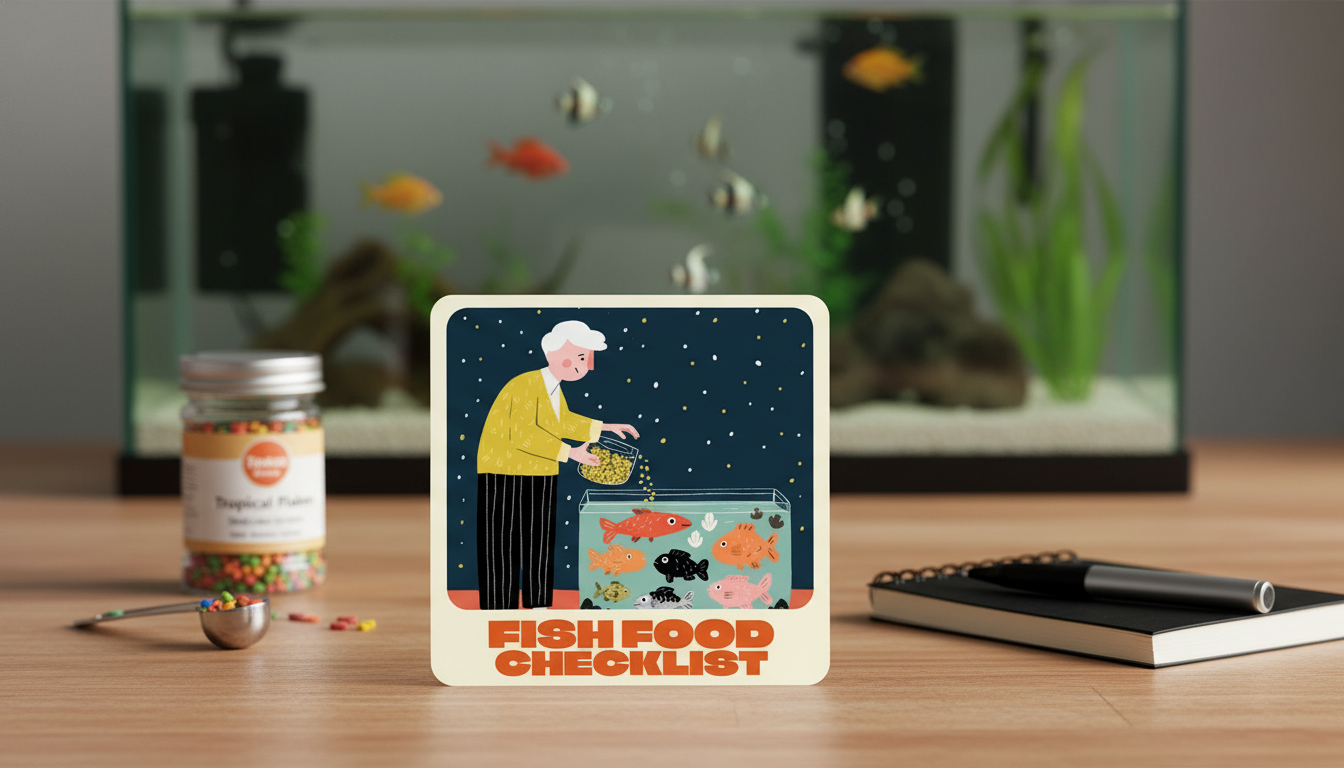
For a simple, repeatable schedule (especially in the first months), use a written routine and a tiny measuring spoon. A ready-to-print reference can reduce “just one more pinch” moments.
Fresh, Frozen, and Live Foods: Safe Add-Ons (Not Mandatory)
Add-ons can improve variety and enrichment, but they’re not required for a healthy beginner setup. Keep the staple consistent and treat add-ons like “side dishes,” not the main course.
- Frozen foods: Brine shrimp, daphnia, bloodworms, and mysis add variety. Thaw a small portion in a little tank water and feed sparingly to avoid leftovers.
- Freeze-dried: Convenient, but it can expand after fish swallow it. Pre-soak to reduce bloating risk for fish prone to digestive issues.
- Vegetable add-ons: Blanched zucchini/spinach or algae wafers work well for grazers. Remove leftovers before they soften and break down.
- Treat schedule: For most community tanks, 1–3 treat feedings per week is plenty.
- Be cautious with live foods: Avoid wild-caught live foods unless the source is trusted; parasites and pollutants can hitchhike into the aquarium.
How Much to Feed: A Beginner Portion Rule That Works
Overfeeding is the fastest path to cloudy water, algae spikes, and stressed fish. A timed approach keeps portions realistic.
Quick Feeding Guide by Tank Type
| Tank setup |
Staple food |
How often |
Beginner portion tip |
| Small community fish (tetras, rasboras) |
Micro pellets or crushed flakes |
1–2x/day |
A tiny pinch; finish within 45 seconds |
| Mixed community (top + midwater) |
Slow-sinking pellets |
1–2x/day |
Feed in two small drops instead of one large |
| Bottom dwellers (corydoras, loaches) |
Sinking wafers/pellets |
Daily or every other day |
Only what’s gone by morning (or within 2 hours) |
| Algae grazers (plecos, some livebearers) |
Algae wafers + veggie add-on |
Wafers 3–5x/week |
Remove veggies after 6–12 hours |
| Fry / juvenile grow-out |
Powdered fry food + baby brine shrimp |
3–5x/day |
Micro portions; keep water changes consistent |
Label and Ingredient Checks That Prevent Common Problems
For general consumer guidance on pet food and labeling, see the FDA pet food information for consumers and AAFCO consumer resources.
Weekly Routine Checklist: Keep Feeding Consistent
Printable Checklist: What to Keep on Hand for a New Tank
FAQ
Is it better to feed flakes or pellets for a beginner aquarium?
Pellets are often easier to portion cleanly and come in floating, slow-sinking, and sinking options. Flakes work well for small-mouthed fish, but they can be messier if overfed—choose based on fish size and feeding zone.
How often should new fish be fed after bringing them home?
After acclimation, many fish do fine with a small meal later the same day or the next day. Start with small portions once daily, then move to a steady routine (often 1–2 times daily) as appetite and behavior normalize.
What are the signs of overfeeding in an aquarium?
Common signs include uneaten food on the bottom, cloudy water after meals, rising nitrates, excessive algae, persistent bloating, and lethargy. Smaller portions, removing leftovers, and consistent tank maintenance usually solve the issue.
Recommended for you






Leave a comment