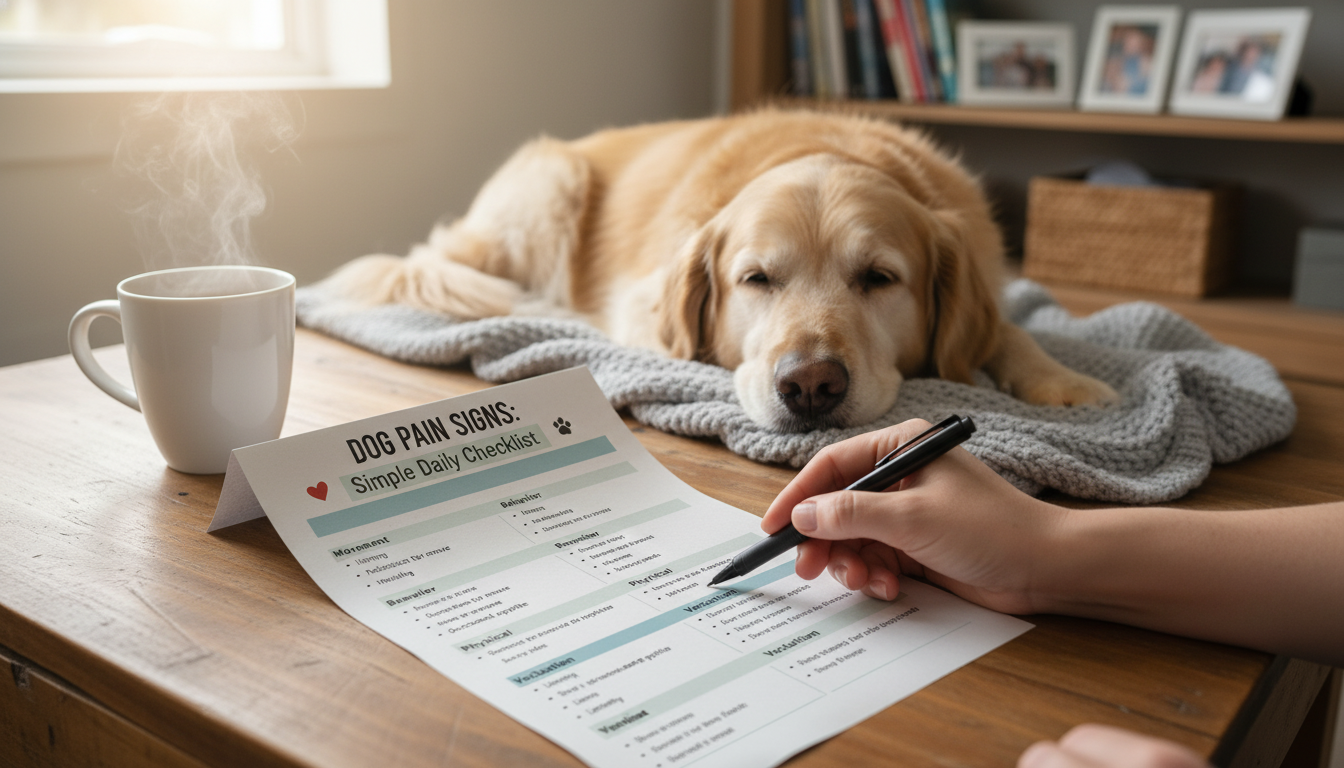
Dogs are famously tough—and that toughness can make pain easy to miss. Many dogs instinctively hide weakness, especially in unfamiliar places or around new people. At home, discomfort may show up as “behavior problems” (avoiding family members, irritability, accidents indoors) rather than a dramatic limp.
Early signs are often subtle: a little stiffness after a nap, less enthusiasm for a favorite game, or a hesitant pause before jumping into the car. Those small changes are easier to catch when they’re tracked over a few days instead of judged from a single moment.
It also helps to remember that age, breed, and personality change the picture. A quiet dog may withdraw or sleep more. A social dog may become clingy, restless, or reactive. The goal isn’t to diagnose at home—it’s to notice patterns early and share clear observations with your veterinarian.
A quick “nose to tail” scan can fit naturally into everyday life—during leashing up, brushing, wiping paws, or settling in for the night. Look for changes compared to your dog’s normal baseline.
Squinting, tight facial muscles, a furrowed brow, or a tense “worried” expression can signal discomfort. Some dogs avoid eye contact or turn their head away when something hurts.
Watch for a hunched back, tucked tail, head held low, or guarding one side. Frequent shifting—standing up, circling, lying down, repeating—can be a clue that your dog can’t get comfortable.
Stiffness when rising, a slower pace, hesitation before jumping, or an uneven gait are classic. Dogs in pain may also avoid slick floors, take stairs one at a time, or use “both back legs together” on steps.
Panting at rest (when it’s not hot and your dog hasn’t exercised), shallow breathing, whining, or growling when touched can all point to pain. Some dogs go the opposite direction and become unusually quiet.
Notice changes in sleep, reduced play, less interest in walks, or altered grooming patterns. Persistent licking in one spot often signals soreness, itching, or an underlying issue that needs attention.
Accidents, straining, frequent attempts to urinate, or reluctance to squat can indicate pain. Difficulty posturing can also show up with back, hip, or abdominal discomfort.
When something feels “off,” a simple daily log helps turn vague worry into useful information. Use the checklist once a day for 3–7 days, marking whether each sign is new, occasional, or frequent. Include the time of day and what was happening right before you noticed it (after a walk, after waking up, during grooming, etc.).
| Area | Sign to Watch | Today (Yes/No) | Notes (when, where, severity 1–5) |
|---|---|---|---|
| Face | Squinting or tight facial expression | ||
| Movement | Stiffness when getting up | ||
| Movement | Reluctance to jump/climb stairs | ||
| Behavior | Withdrawn, hiding, or less social | ||
| Touch | Flinching or guarding when handled | ||
| Breathing | Panting at rest or shallow breathing | ||
| Eating | Appetite drop or chewing changes | ||
| Licking | Persistent licking/chewing one spot | ||
| Bathroom | Straining or accidents |
If you want a ready-made page you can print and keep near the leash or food bin, see our Printable checklist for spotting signs of pain in dogs.
Important: avoid giving human pain medications unless specifically directed by your veterinarian; many common products are dangerous for dogs. For deeper background on pain treatment principles, AAHA’s guidelines are a helpful reference: AAHA Pain Management Guidelines for Dogs and Cats. If you suspect ingestion of a harmful product, the ASPCA resource can help you identify risks quickly: ASPCA Animal Poison Control.
For general emergency-preparedness tips (what to do while you’re arranging care), the AVMA has a practical overview: AVMA First Aid Tips for Pet Owners.
Common “easy to overlook” clues include stiffness after rest, a tighter facial expression or squinting, reduced enthusiasm for play, avoiding stairs or jumps, panting at rest, licking one spot repeatedly, and irritability when touched.
Go immediately if your dog can’t bear weight, has swelling, seems distressed, or the limp started suddenly after an injury. If it’s mild but not clearly improving within 24–48 hours (or keeps coming back), schedule a veterinary visit and limit activity while you document what you’re seeing.
Don’t give human over-the-counter pain meds unless your veterinarian specifically instructs you to; several are toxic to dogs and can cause serious harm. Contact your vet for safe, dog-appropriate options and dosing guidance.







Leave a comment