
A check engine light can signal anything from a loose gas cap to a problem that could damage the catalytic converter. The good news: you don’t have to guess. With a calm triage routine, a quick code scan, and a few smart observations, it’s usually possible to decide whether you can drive normally, drive cautiously to service, or stop and arrange a tow.
The check engine light (CEL) is tied to your vehicle’s OBD-II system, which continuously monitors engine and emissions-related components. When the computer sees a reading outside its expected range, it stores a diagnostic trouble code (DTC) and may turn on the CEL. The light itself doesn’t name the failed part—it’s a “something isn’t right” indicator that points you toward a system and operating condition that needs diagnosis.
Many CEL issues start as emissions or fuel-economy problems before they become drivability problems. Put another way: ignoring a mild warning can quietly increase fuel costs, stress the catalytic converter, and turn a small fix into an expensive repair. Some problems are intermittent, too; even if the symptoms come and go, the stored code history can still reveal what happened.
If you want a deeper overview of how OBD works and why codes exist, the U.S. Environmental Protection Agency provides a helpful reference on On-Board Diagnostics (OBD).
A steady CEL typically means the computer has detected a fault that isn’t immediately catastrophic. The car may still feel normal, but it’s wise to scan the codes soon—delays can lead to worsening fuel economy, repeated misfires, or damage to emissions equipment.
A flashing CEL is different. Flashing commonly indicates an active misfire severe enough to overheat the catalytic converter. If it starts flashing, reduce speed, avoid heavy acceleration, and stop driving if the engine runs rough, shakes, or loses power.
Any CEL combined with overheating, an oil pressure warning, loud knocking, or heavy smoke is a stop-now situation. Also, make a quick note of when the light appears (cold start, rain, highway cruising, right after refueling). That context often saves diagnostic time later.
| Light status | Common meaning | What to do now | Drive or stop? |
|---|---|---|---|
| Steady (no symptoms) | Stored fault; often emissions-related | Check gas cap; schedule code scan soon | Drive short trips cautiously |
| Steady + poor performance | Fault affecting fuel/air/spark | Scan codes; avoid hard acceleration; service soon | Drive only if safe |
| Flashing | Active misfire risk | Reduce load; scan ASAP; tow if rough running | Stop if shaking/losing power |
| CEL + overheating/lighted oil pressure | Potential engine damage | Shut down; check coolant/oil; call for help | Stop immediately |
Before you focus on codes, make sure the basics look safe:
To move from worry to facts, use an OBD-II scanner (handheld or Bluetooth) and pull the DTCs. Record:
If you’re curious about how DTC definitions are standardized, SAE J2012 is the foundational reference for code definitions (overview available from SAE).
If you suspect the issue might be tied to a known defect, it’s also worth checking open recalls at the NHTSA recalls lookup.
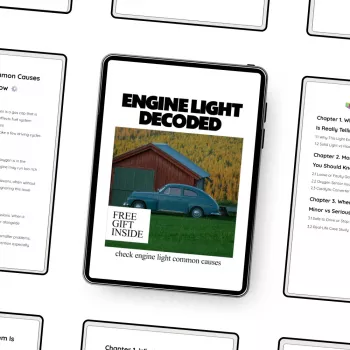
For drivers who prefer a structured, repeatable workflow, Engine Light Decoded – Check Engine Light Guide, Car Diagnostic eBook, Engine Warning Light Checklist for Drivers is designed as a quick-reference companion for capturing codes, organizing notes, and arriving at a shop with clearer questions.
If you like documenting patterns (dates, conditions, what changed) to spot repeats over time, a general tracking toolkit can also help you stay consistent. The No-Buy Year Wardrobe Discipline Toolkit | 3-in-1 Digital Bundle for Fashion Enthusiasts includes structured templates that can be repurposed as a simple “maintenance and repair log” for recurring warning lights and service visits.
Yes. A loose or damaged cap can let fuel vapors leak from the EVAP system, and the computer may set an EVAP leak code and turn on the CEL. After tightening the cap until it clicks (and checking the seal for cracks), it may take a few drive cycles for the system to retest and the light to turn off.
Sometimes. A steady light with normal performance is often safe for short, cautious driving until you can scan codes, but a flashing light can indicate an active misfire that risks catalytic converter damage. If you have overheating, oil pressure warnings, heavy smoke, or severe shaking/loss of power, stop driving and arrange service.
No—record the codes and freeze-frame data first because clearing can erase valuable clues and make diagnosis harder. Clearing is best done after repairs or when a technician directs it as part of a test plan.






Leave a comment