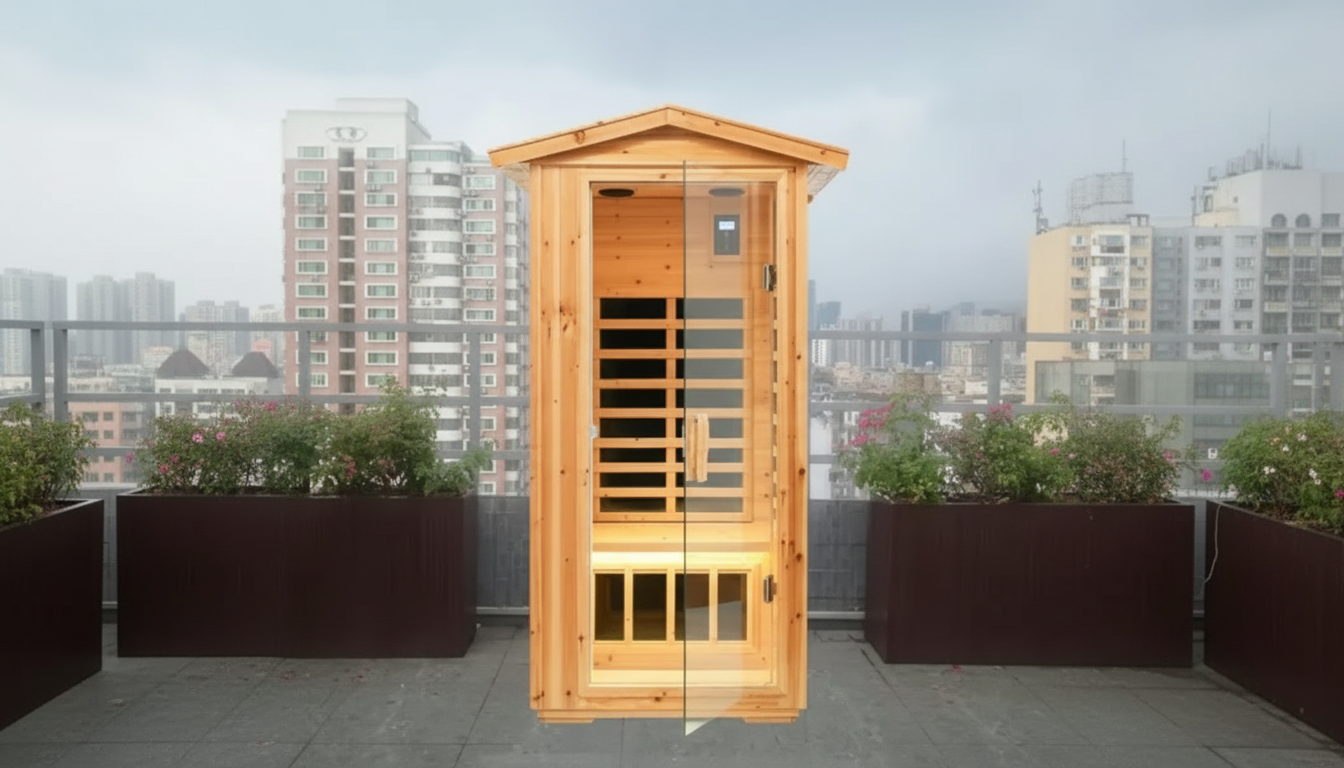
A far infrared wooden outdoor sauna combines the timeless feel of a wood cabin with radiant heat designed to warm the body without requiring extreme air temperatures. That blend can make it appealing for backyard routines—especially for people who want a consistent, repeatable session and a setup that looks at home on a patio or near a garden path. Below is what to expect from this sauna style, what matters most for outdoor installation, and how to use and maintain it comfortably.
Far infrared saunas use infrared panels to deliver radiant heat that many people find comfortable at lower cabin temperatures than traditional hot-rock saunas. Instead of primarily heating the air, the panels radiate warmth that’s felt directly on the body, which can reduce the need to “chase” very high thermometer readings to feel a satisfying session.
Wood construction adds both comfort and aesthetics. A wooden cabin tends to feel cozier than an all-metal enclosure, and the wood helps buffer temperature swings—important when your sauna is exposed to chilly mornings, hot afternoons, and seasonal shifts.
Outdoor placement brings practical considerations that don’t show up indoors: weather exposure, safe power routing, stable footing, and the reality that winter air can slow warm-up if the cabin is exposed or poorly sealed. The upside is convenience and ambiance—stepping into a dedicated backyard wellness space can make short, frequent sessions easier to stick with.
Look for wood that tolerates humidity and temperature changes, and confirm whether the exterior is treated (or designed to be stained/sealed) for sun and rain. Even durable wood benefits from an outdoor-appropriate protective finish to reduce fading, checking, and moisture staining over time.
Panel placement shapes comfort. Back and side panels often provide the most noticeable warmth, while calf/foot zones can be a major upgrade for overall “even heat” during seated sessions. More balanced coverage typically means fewer cold spots and less need to rotate frequently.
For colder months, pay attention to how the door closes and whether gaskets and seams are well finished. Small air gaps can make heat feel inconsistent, especially when outside temperatures drop.
Clear thermostat and timer controls, overheat protection, and thoughtful safety details matter more outdoors—where kids may wander into the area and where wet footwear can increase slip risk near the entry. If local rules require it, plan for a professional electrical install.
Good airflow helps sessions feel fresh and supports faster drying afterward. A sauna that clears residual humidity more easily tends to stay cleaner-smelling and more pleasant between uses.
Verify voltage and amperage needs before you buy. Many outdoor-capable units require a dedicated circuit, and the wiring path should be outdoor-rated and code-compliant. If your sauna location is far from the panel, that distance can affect installation complexity.
| Feature | Far Infrared (panel heat) | Traditional (stones/steam-capable) |
|---|---|---|
| Typical feel | Radiant warmth; lower air temperature | Hotter air; can add water for steam (if designed for it) |
| Warm-up | Often quicker to reach a comfortable session | Often longer to heat stones and air |
| Humidity | Usually dry | Dry to humid depending on water use |
| Outdoor considerations | Needs protected electrical setup and weather-ready cabin | Also needs electrical/wood-fired setup plus higher heat retention |
Health and safety guidance varies by person and medical history, so it’s worth reviewing medically grounded overviews from sources like Cleveland Clinic and Mayo Clinic—especially if you’re managing blood pressure, pregnancy, or heat sensitivity.
If you’re building a backyard routine around consistent radiant heat, the Far Infrared Wooden Outdoor Sauna is a cabin-style option designed for outdoor placement and repeatable sessions. Before purchasing, confirm your installation surface, required clearances, and whether a dedicated circuit is needed so delivery day and setup go smoothly.
For a separate at-home resource that pairs well with any relaxation routine, consider Speak Easy: How to Talk to Anyone with Confidence and Authentic Charm—a digital guide that can complement a calmer, more consistent wellness schedule.
Yes, year-round use is common when the sauna sits on a stable base, is placed with weather exposure in mind, and is properly sealed and maintained. In colder climates, warm-up time and comfort can be affected if the cabin is fully exposed to wind or has air gaps.
It depends on the unit’s voltage and amperage requirements, but many higher-powered outdoor saunas do require a dedicated circuit. Check the product’s electrical specs and plan for outdoor-rated wiring and a code-compliant installation, using a licensed electrician where required.
Wipe down sweat after sessions, sit on towels, and leave the door slightly open to dry the interior. Use mild cleaners periodically, and keep up with exterior sealing and seasonal inspections so moisture doesn’t accumulate in the wood or around the base.




Leave a comment