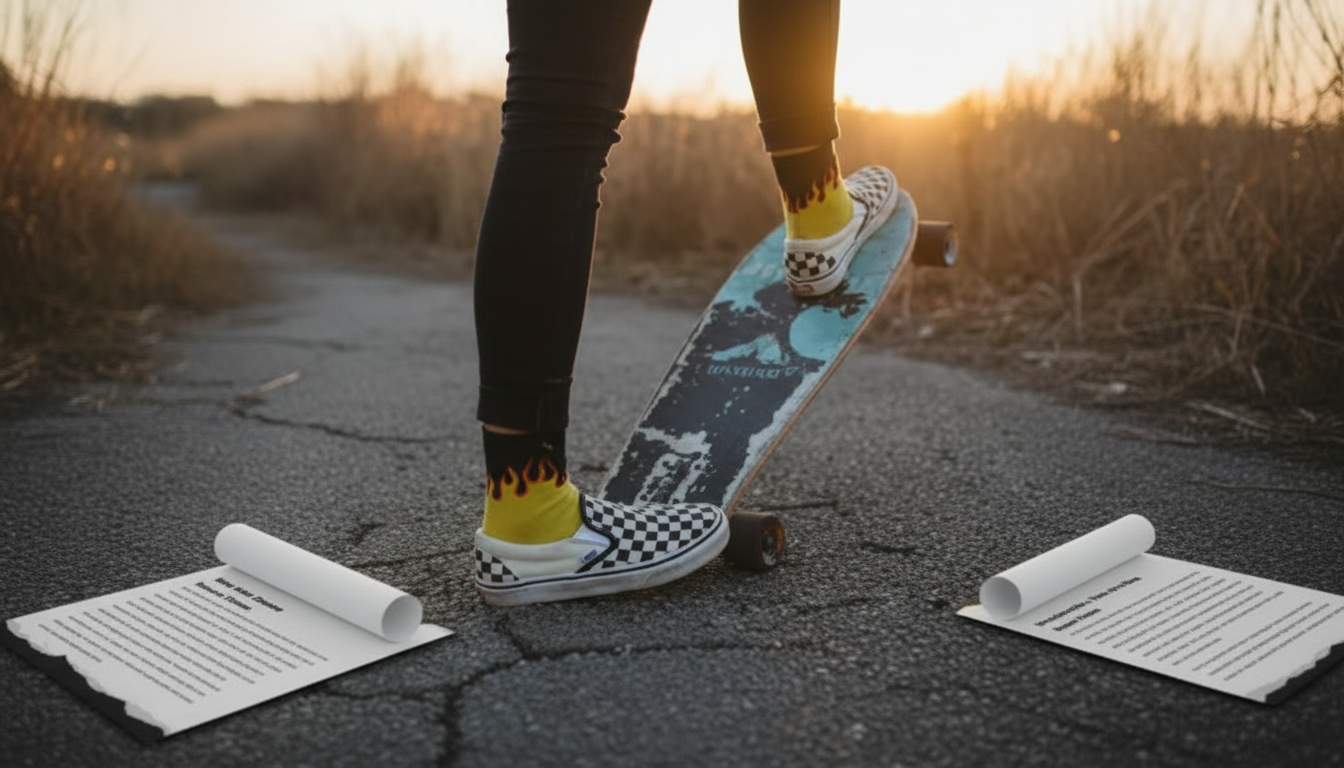
From local skate spots to global streetwear, Vans earned its place by meeting skaters where they were: on grip tape, concrete, and DIY style. This guide traces the moments, models, and cultural shifts that turned Vans from a practical canvas shoe into a defining marker of skate fashion and identity. For more guidance, see The Invention of the Iconic Vans Skateboarding Shoe.
Skateboarding didn’t start with purpose-built gear. Early skaters were experimenting with balance, speed, and control on surfaces that punished weak soles and flimsy uppers. The repeated friction of grip tape, the impact of landings, and the constant toe drag from ollies and kickflips demanded shoes that could survive real sessions—not just casual wear. For further reading, see The Fascinating History of Vans Footwear.
The baseline performance needs were straightforward: strong grip on grip tape, durable uppers that resisted tearing, toe protection in high-wear areas, and a stable sole that still felt responsive. Too stiff and the board felt distant; too soft and the shoe blew out quickly. Skaters needed a sweet spot where control and durability met.
At the same time, skate style formed right alongside function. Whatever held up best became the uniform—then got personalized through scuffs, marker art, swapped laces, and the unspoken “proof” that you actually skate. In skating, wear isn’t a defect; it’s a record.
Vans’ rise is tied to geography as much as design. With early momentum in Southern California, the brand sat close to the neighborhoods, skate shops, and DIY spots where modern skateboarding was taking shape. That proximity mattered: when skaters adopt something organically, it carries a different kind of credibility than trend-driven hype.
Simple silhouettes and reliable rubber soles fit what skaters needed—grip, board feel, and predictable traction. Pricing and availability also played a role: shoes that were easier to get and easy to wear every day became common on skate crews, which is where real influence begins.
Over time, adoption turned into recognition. As skate culture expanded beyond local scenes through magazines, videos, and later the internet, Vans didn’t have to “invent” relevance. The shoes were already there—on the board, at the spot, and in the photos.
Different eras of skating emphasized different needs. Low-profile shoes offered immediate board feel and an easy, everyday vibe—especially for skaters who valued responsiveness and simplicity. As tricks became bigger and sessions got longer, protection started to matter more, and padded collars, sturdier builds, and tougher materials became part of the equation.
Then there’s the visual language. Certain colorways and repeating patterns became shorthand for belonging—recognizable in a way that didn’t require explanation. You could spot them at a distance and know someone likely shared the same references, spots, and habits.
Durability upgrades tracked the sport’s progression from cruising and transition to technical street skating. Reinforced stitching, more resilient uppers, and construction tweaks weren’t just product changes; they mirrored what skating was asking of shoes.
| Era | Skate scene shift | What Vans represented |
|---|---|---|
| 1970s | Local pools, ramps, DIY spots | Practical grip and a regional badge of authenticity |
| 1980s | Bigger tricks, faster progression | More protection-focused silhouettes and stronger identity signaling |
| 1990s | Street skating mainstreams | Everyday uniform status; shoes as part of the skater silhouette |
| 2000s–2010s | Global spread via media and brands | Bridge between core skate and broader streetwear |
| Today | Skate + fashion ecosystems overlap | Classic shapes reinterpreted while heritage remains a key draw |
Skate fashion has always been a mix of practicality and message. The core kit—shoes, pants, tees, layers—has to move, breathe, and hold up. But it also signals taste and scene. Subcultures don’t just dress for aesthetics; they dress for the reality of what they do.
Vans became a visual anchor because the design language is clean. The shoes are simple enough to pair with almost anything, but distinctive enough to be instantly recognized. That balance is powerful: you can blend in at the spot without disappearing.
Just as important, skate style embraces honest wear. Scuffed toe caps and blown-out ollie areas read as time on the board, not as neglect. Personalization—lace swaps, marker sketches, patches, and mismatched choices—reinforces the DIY ethic that runs through skating’s history and continues today.
Compare related options such as Vans and the Rise of Skate Culture Guide: Discover the Role Vans Played in Shaping Skate Fashion and Identity, and Sunday Spark: Quotes to Fuel Your Week with Purpose and Positivity | Sunday Motivation Quotes eBook for Inspiration, Faith, and Productivity to match features, dimensions, and use case before choosing.
Skaters gravitated to Vans for grip, board feel, and everyday durability at a price and availability that fit real skate life. Local adoption came first, which built credibility long before broader fashion attention arrived.
Low-profile classics are tied to board feel and ease, while later padded-collar and sturdier builds align with the need for more protection as tricks progressed. Across eras, recognizable colorways helped certain silhouettes become cultural shorthand.
Yes—many pairs are still skated, especially skate-focused constructions made for durability and impact. Lifestyle versions exist too, but skate credibility continues to come from being used and trusted in the scene.







Leave a comment